
There are rifles that get purchased because of marketing, and there are rifles that get purchased because of reputation the kind built over years of consistent field results and word-of-mouth among people who actually shoot. The Tikka T3X has always belonged in the second category. It doesn’t have a flashy marketing campaign. What it has is a trigger that surprises people the first time they pull it, an action that feeds smoother than many rifles costing twice as much, and a track record in precision shooting that keeps it relevant year after year.
This review is for the shooter who’s done the initial research and wants a straight answer: is the T3X actually worth it for precision work in 2026?
What Is the Tikka T3X?
The Tikka T3X is a bolt-action rifle manufactured by Sako in Riihimäki, Finland. Tikka is a subsidiary brand of Sako the same company responsible for some of the most respected factory rifles in the world and the T3X represents Tikka’s current production lineup, succeeding the original T3 series that debuted in 2003.
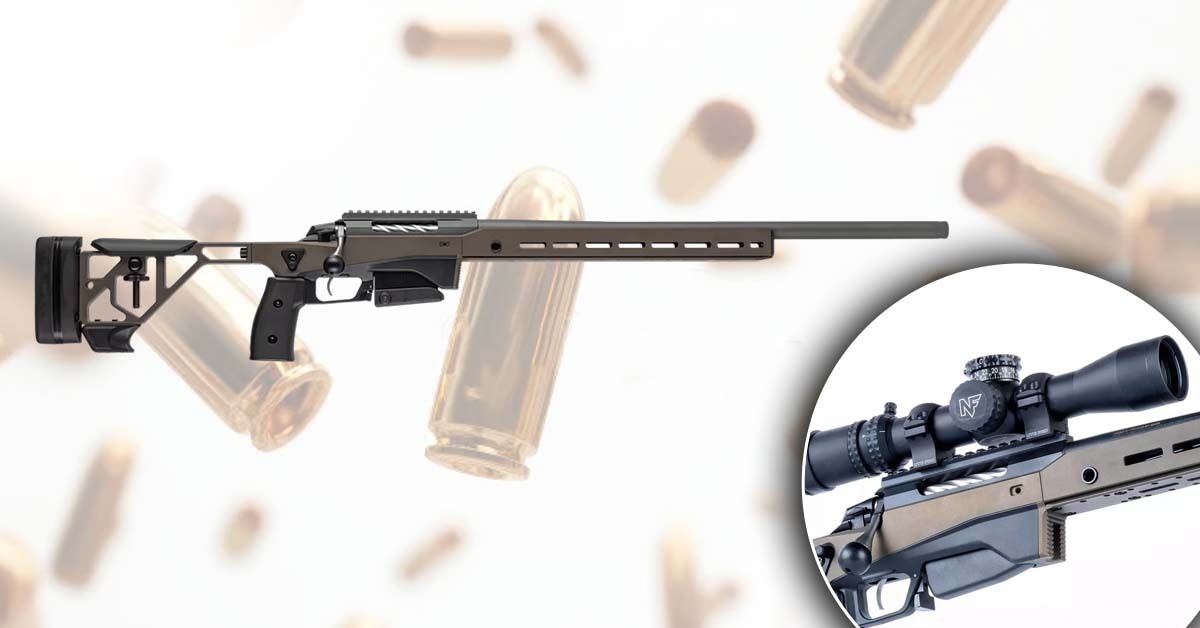
The T3X designation covers a wide family of models: Lite, Varmint, Sporter, Compact Tactical Rifle (CTR), and Hunter variants, among others. Each is built on the same fundamental action but differs in stock configuration, barrel profile, and intended use. For precision shooting purposes, the T3X CTR and T3X Varmint are the most relevant though many long-range hunters run the standard T3X Hunter variants and get excellent results.
Tikka T3X Specs, What You Need to Know
| Spec | Detail |
|---|---|
| Action | Bolt action, two locking lugs |
| Calibers Available | .223 Rem, .243 Win, .260 Rem, 6.5 Creedmoor, 6.5 PRC, .308 Win, .30-06, .300 Win Mag, and more |
| Barrel Length | 20″, 22″, 24″ (varies by model and caliber) |
| Trigger Pull | Approx. 2 lbs factory (adjustable 2–4 lbs) |
| Magazine | Detachable box, 3–5 rounds depending on caliber |
| Stock | Modular synthetic (T3X) with multiple grip options |
| Rail | Picatinny rail included on CTR; drilled and tapped on others |
| Weight | Approx. 6.0–7.5 lbs depending on variant |
| Country of Origin | Finland (manufactured by Sako) |
| Price Range | $700 – $1,200 depending on variant |
The Trigger : Where Tikka Earns Its Reputation
If you ask anyone who has shot a Tikka T3X what impressed them most, the trigger comes up within the first thirty seconds. It’s not hyperbole: the factory trigger on the T3X is genuinely exceptional for a production bolt gun in this price range.
The single-stage trigger breaks cleanly at approximately two pounds with very little take-up and minimal overtravel. For precision shooting, this matters more than many shooters initially realize. A heavy, creepy factory trigger forces you to manage the break rather than simply execute the shot and at 500 yards, trigger management errors translate directly into missed targets.
What makes the T3X trigger particularly useful is that it’s user-adjustable between two and four pounds without specialized tools or gunsmithing. Some precision shooters run it at the lighter end for bench work; hunters who carry the rifle in varied field conditions often set it slightly heavier for safety margin. The adjustment is done via a set screw in the trigger housing the process takes about five minutes once you understand the mechanism.
Aftermarket trigger options exist Bix’n Andy makes a highly regarded drop-in for the T3X platform but the honest assessment is that most precision shooters won’t need to upgrade the factory unit unless they’re competing at a seriously advanced level.
Accuracy What the T3X Actually Does Downrange
Sub-MOA accuracy from a factory bolt gun sounds like marketing until you put one in a vice and watch it happen repeatedly. The T3X has documented sub-MOA performance across multiple calibers in factory form, and it’s not an anomaly it’s a consistent characteristic of the platform.
In 6.5 Creedmoor, which is arguably the T3X’s most popular precision chambering, typical five-shot groups at 100 yards with quality match-grade ammunition run between 0.4 and 0.7 MOA. Quality factory ammunition like Hornady ELD Match 140gr or Federal Gold Medal Match 140gr Sierra MatchKing consistently produce these results without handloading. For shooters who do reload, the T3X’s 6.5 Creedmoor chamber is forgiving and consistent — brass life is good and pressure signs are predictable.
In .308 Winchester, the T3X performs similarly well. It’s a slightly more forgiving platform for new precision shooters because .308 is easier to read in terms of recoil and spotting, and factory match ammunition is more widely available at varying price points.
The cold bore shot — the first round from a cold barrel is where many factory rifles show their weaknesses. The T3X cold bore is consistent enough that experienced shooters can account for it with a known offset rather than treating each cold shot as a wildcard. This is a meaningful quality at hunting ranges and at the start of a precision rifle stage.
Caliber Selection : What to Run in the T3X for Precision Work
The T3X is available in a wide range of chamberings, but for precision shooting specifically, a few stand out:
6.5 Creedmoor remains the strongest choice for most precision applications. Excellent ballistic coefficient bullets in the 140gr class, manageable recoil, and deep ammunition availability make it the practical default for most T3X precision builds. If you’re looking to stock your supply, browsing the rifle ammo selection at Golden Brothers Co. gives you a good view of what’s available in both factory match and practice loads.
6.5 PRC is worth considering for shooters who want extended range capability typically 1,000+ yards with more retained energy than 6.5 Creedmoor. The trade-off is higher recoil, faster barrel wear, and higher cost per round. If your target distances are primarily inside 800 yards, the Creedmoor is the smarter choice.
308 Winchester is the practical recommendation for new precision shooters. Ammunition is more affordable for volume training, recoil is manageable, and the .308 T3X variants are widely available. The drop-off in long-range performance compared to 6.5 Creedmoor doesn’t matter as much when you’re still building fundamentals inside 600 yards.
Stock and Ergonomics, More Capable Than It Looks
The modular synthetic stock on the T3X was a meaningful improvement over the original T3. It accepts three interchangeable pistol grip options (standard, straight, and wide), which matters for shooters with different hand sizes or those who have already established a grip preference on other platforms.
The stock is rigid without being heavy. It doesn’t flex under load the way older-generation polymer stocks did, and the action bedding is consistent across examples. For shooters who want to step up, aftermarket chassis systems from Manners, MDT, and KRG are available for the T3X action and represent a legitimate precision upgrade path.
Cheekweld is solid in the factory configuration with standard scope heights. The length of pull is on the shorter side at factory spec tall or long-armed shooters may want to add a recoil pad or spacer, both of which are straightforward additions.
Tikka T3X vs Bergara B14, The Honest Comparison
These two rifles share a price bracket and compete directly for the same buyer. Both are legitimate precision platforms. The differences matter at the margins.
| Feature | Tikka T3X | Bergara B14 |
|---|---|---|
| Trigger | Exceptional factory | Very good factory |
| Action Smoothness | Slightly smoother | Smooth but stiffer |
| Stock Options | Modular grip system | More aftermarket chassis |
| Caliber Availability | Wider range | Good selection |
| Barrel Quality | Excellent | Excellent |
| Price | $700–$1,200 | $900–$1,400 |
| Country of Origin | Finland | Spain |
| Aftermarket Support | Good | Slightly better chassis options |
The Bergara B14 has a slight edge in the aftermarket chassis ecosystem MDT and KRG have more established Bergara options. The Tikka has a slight edge in trigger feel and action smoothness out of the box. For a shooter who plans to run the rifle largely in factory form, the T3X wins. For a shooter planning to immediately chassis the rifle and prioritize aftermarket parts, the Bergara’s support ecosystem is worth considering.
Who Is the Tikka T3X Best For?
Strong match for:
- Hunters who want a rifle that transitions well to precision range work
- Precision rifle shooters building their first dedicated bolt gun under $1,200
- Shooters who want exceptional factory trigger performance without immediate upgrades
- Anyone who wants consistent sub-MOA results with quality factory ammunition
Less ideal for:
- Shooters requiring an immediate chassis-ready platform with the widest aftermarket selection
- PRS/NRL competitors at the national level who need every possible advantage (though regional competitors do run T3X setups successfully)
- Shooters who specifically need a heavy barrel profile from the factory (the T3X CTR addresses this, but options are limited vs. dedicated tactical platforms)
Mounting a Scope on the T3X
The T3X CTR ships with a Picatinny rail. Standard T3X Hunter and Lite variants come drilled and tapped for Tikka’s own proprietary rings which are actually very good or you can install a Picatinny rail for universal scope mounting flexibility.
For precision work, a 20 MOA canted base is worth adding to provide additional elevation adjustment for extended range shooting. This is a common setup among T3X precision builds targeting 800–1,000 yards.
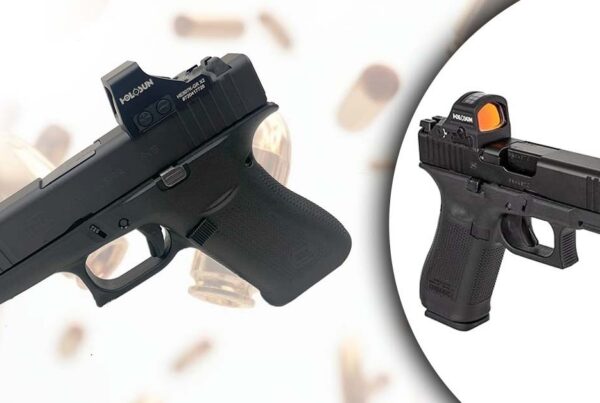
Scope selection for a T3X precision build deserves its own conversation. If you’ve already thought through the optics side of your build, our breakdown of the Holosun 507C for Glock pistols touches on how we approach optic evaluation more broadly the same principles of tracking reliability, zero retention, and glass clarity apply to rifle scopes just as much as pistol red dots.
Final Verdict, Is the Tikka T3X Worth It in 2026?
Yes, and with less qualification than you’d expect.
The Tikka T3X continues to earn its place in the precision shooting conversation by doing the fundamentals at a level that costs significantly more to replicate on competing platforms. The trigger is genuinely exceptional. The action is smooth and consistent. The accuracy in quality calibers like 6.5 Creedmoor and .308 Winchester is reliably sub-MOA with match-grade ammunition. And the modular stock system gives the rifle meaningful upgrade flexibility without forcing an immediate chassis investment.
For the money, it’s difficult to build a more complete package for precision shooting. That’s been true for several years, and the T3X hasn’t given any indication of losing that edge.
Rating: 4.8 / 5
Where to Find Rifles for Your Precision Build
If you’re researching bolt-action platforms for precision work, Golden Brothers Co. carries a curated selection of bolt-action and precision rifles from established manufacturers. As a fully licensed FFL dealer since 1909, every transfer is handled compliantly and shipped nationwide. Browse the full rifle inventory here to see current availability and brands in stock.
Frequently Asked Questions
Is the Tikka T3X accurate enough for precision rifle competition?
Yes. The T3X is regularly used in regional PRS and NRL matches with strong results. At the national elite level, competitors tend to move toward more specialized chassis platforms, but for club-level and regional competition, the T3X is fully capable.
What is the best caliber for the Tikka T3X for long-range shooting?
6.5 Creedmoor is the most practical choice for most precision shooters excellent ballistics, wide ammunition availability, and manageable recoil. 6.5 PRC is worth considering for shooters consistently shooting 1,000+ yards.
Does the Tikka T3X need to be bedded for accuracy?
No. The factory action-to-stock fit on the T3X is consistent and does not typically require glass bedding for sub-MOA performance. Shooters building competition-level precision setups often move to a chassis rather than bed the factory stock.
How does the Tikka T3X trigger compare to aftermarket options?
The factory trigger is excellent and the majority of precision shooters won’t need to upgrade it. Bix’n Andy makes a drop-in replacement for shooters who want a two-stage trigger or lighter pull for competitive shooting.
What scope should I mount on a Tikka T3X for precision shooting?
A first focal plane scope in the 4-16x or 5-25x range with a mil reticle is the standard starting point for precision work. Zero-stop turrets and reliable tracking are the priority features. Quality glass from Vortex, Nightforce, or Leupold in the $600–$1,500 range suits the T3X platform well.
For technical reference on bolt-action rifle accuracy standards and precision shooting competition frameworks, the National Rifle League (NRL) provides current match regulations and equipment standards that reflect what precision rifle competition actually demands at various levels.