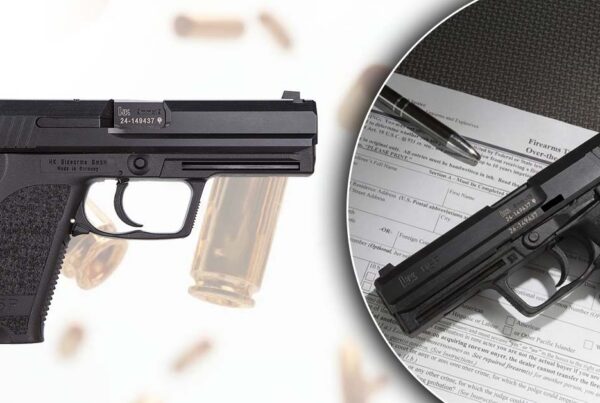

Most people hear “FFL dealer” for the first time when they’re trying to buy a firearm, either online or from a private seller, and hit a wall they didn’t expect. The seller tells them the gun has to go through an FFL. They nod, smile, and immediately open Google.
If that’s you, you’re in exactly the right place.
This guide explains what an FFL dealer actually is, why the transfer system exists, how it works legally from start to finish, and what you’ll personally experience when you walk into a licensed dealer to pick up your firearm. No legal jargon. No unnecessary complexity. Just everything you actually need to know.
What Does “FFL” Actually Mean?
FFL stands for Federal Firearms License.
It’s a license issued by the Bureau of Alcohol, Tobacco, Firearms and Explosives (ATF) that authorizes a specific person or business to legally manufacture, import, or deal in firearms under federal law.
The FFL system was created by the Gun Control Act of 1968 (GCA), a federal law that established the foundation of modern firearm commerce in the United States. Before the GCA, firearm sales had far fewer federal guardrails. After it, any interstate firearms transaction had to involve a licensed dealer.
An “FFL dealer,” in everyday language, refers to a licensed firearms retailer, your local gun shop, a sporting goods store with a firearms section, or even a licensed home-based dealer. What they all have in common: the ATF has vetted them, they’re legally authorized to transfer firearms to buyers, and they maintain federal records of every single transaction.
The 9 Types of FFL Licenses | And the One That Matters to You
Most buyers don’t know this, but there are actually nine different types of FFL licenses, each authorizing different activities:
| FFL Type | What It Authorizes |
|---|---|
| Type 01 | Dealer in firearms (most common gun shops) |
| Type 02 | Pawnbroker dealing in firearms |
| Type 03 | Collector of curios and relics |
| Type 06 | Manufacturer of ammunition |
| Type 07 | Manufacturer of firearms |
| Type 08 | Importer of firearms |
| Type 09 | Dealer in destructive devices |
| Type 10 | Manufacturer of destructive devices |
| Type 11 | Importer of destructive devices |
For the average buyer, whether you’re picking up a handgun, rifle, or shotgun, Type 01 is almost always the license held by the dealer you’ll work with. That’s your standard licensed gun shop.
If you’re ever transferring an NFA item (silencer, short-barreled rifle, etc.), you’ll need a dealer who also holds a Special Occupational Taxpayer (SOT) designation, sometimes called a Class III dealer. But for standard firearms, Type 01 is your world.
What Is an FFL Transfer?
An FFL transfer is the legal process by which a firearm changes hands from one party to another, specifically, through a licensed FFL dealer who serves as the legal intermediary.
Think of the FFL dealer as a checkpoint. They receive the firearm, verify it’s legally eligible for transfer, confirm the buyer is legally eligible to own it, complete the required federal paperwork, run a background check, and only then release the gun to the buyer.
This is the legal requirement whenever:
- You buy a firearm from an out-of-state seller or online retailer, the gun cannot ship directly to your home; it must go to your local FFL dealer
- You buy from a licensed dealer in person, the dealer IS the FFL, so the transfer happens on-site
- You’re involved in certain private party transfers, federal law, strengthened by the 2022 Bipartisan Safer Communities Act, now requires background checks on nearly all sales, even many private ones
Under federal law, you, as a private individual, cannot legally receive a firearm shipped across state lines without an FFL dealer accepting it on your behalf. This isn’t optional, and it isn’t something you can work around.
Why Does This System Exist?
The FFL transfer system exists for two core reasons: traceability and eligibility verification.
Traceability: Every firearm an FFL dealer receives or transfers must be recorded in their Acquisition and Disposition (A&D) book, a federally required ledger of all firearms that move through their business. These records must be kept for a minimum of 20 years. If a firearm is ever used in a crime, law enforcement can trace it back through this system.
Eligibility verification: Before any firearm is released to a buyer, the FFL dealer is legally required to run a NICS background check through the FBI. This check cross-references the buyer’s information against federal and state criminal databases to confirm they’re legally permitted to own a firearm. No transfer happens without this step, period.
This is why you can’t just buy a gun on the internet and have it show up at your door like an Amazon package. The system is designed so that every transfer is documented, every buyer is checked, and every gun is traceable.
How Does the FFL Transfer Process Work?
Here’s what the gun transfer process actually looks like from the buyer’s perspective, not just a theoretical flowchart, but what you’ll actually experience.
Step 1 — The Firearm Is Purchased
You find a firearm you want — either on an online retailer, from a private seller, or from an out-of-state dealer. You complete the purchase. At this point, you don’t have the gun yet. The seller has it.
For online purchases, you’ll need to provide the seller with your chosen FFL dealer’s information during checkout. If you haven’t figured out your local FFL yet at this stage, do that first. For a complete walkthrough of the online purchase process specifically, see our guide: How to Buy a Firearm Online and Pick It Up at an FFL Dealer.
Step 2 — The FFL Dealer Receives the Firearm
The seller ships the firearm directly to your chosen FFL dealer’s licensed address, not your home. Federal law prohibits direct shipment to individuals for most transactions.
When the firearm arrives, the FFL dealer:
- Inspects it and verifies it matches the shipping documentation
- Logs it into their A&D book, required by law, must be done by the close of the next business day
- Contacts you to let you know your firearm has arrived and is ready for pickup
The gun is now in the dealer’s legal custody. They are responsible for it until the transfer is completed.
Step 3 — You Come In and Complete ATF Form 4473
This is where you physically show up at the dealer. You’ll need:
- Valid government-issued photo ID (driver’s license in most cases) that shows your current address
- Payment for the transfer fee
- Any state-specific permits required in your state
The centerpiece of your visit is ATF Form 4473, the Firearms Transaction Record. This is a federal form that:
- Captures your personal identifying information
- Asks a series of eligibility questions (are you a U.S. citizen or legal resident? Have you ever been convicted of a felony? Are you under indictment? Are you subject to a domestic violence restraining order? And others)
Critical: Every answer on Form 4473 must be truthful. Providing false information on a federal firearms form is a federal felony, regardless of whether you would have passed the background check anyway.
The dealer also completes their section of the form, capturing firearm information (make, model, caliber, serial number) and their dealer license details.
Step 4 — NICS Background Check
Once Form 4473 is complete, the dealer submits your information to the FBI’s National Instant Criminal Background Check System (NICS), or, depending on your state, to a state-level system.
There are three possible outcomes:
Proceed : The check came back clean. You’re cleared and the transfer can happen immediately.
Delayed : The system flagged something for additional review. This doesn’t mean you’re denied; it means the check needs more time. Federal law allows up to three business days for review. If no response comes back within three business days, the dealer may proceed at their discretion (this is called a “default proceed”). Most dealers choose to wait for clarity.
Denied : The system found a disqualifying record and the transfer cannot proceed. If you believe this is an error, you have the right to appeal through the FBI’s NICS Section.
Note: Some states, called Point of Contact (POC) states, use their own background check systems rather than NICS directly. Georgia uses NICS. If you’re buying through Golden Brothers Co in Thomasville, GA, the dealer submits directly to NICS.
Step 5 — Transfer Complete, You Take Your Firearm
Once you receive a “Proceed,” the dealer finalizes the paperwork, records the transfer in their A&D book (must be done within 7 days of the transaction), collects the transfer fee, and releases the firearm to you.
You are now the lawful owner. The entire in-person process typically takes 20 to 45 minutes from walking in to walking out, assuming no delays on the background check.
What Does an FFL Transfer Cost?
The FFL transfer fee is what the dealer charges you for their time, paperwork, and compliance work involved in facilitating the transfer. It is paid by the buyer (you) at pickup.
Typical transfer fee ranges:
- Home-based or small dealers: $15–$30
- Mid-size local gun shops: $25–$50
- Large sporting goods retailers: $35–$75
Fees vary widely. Some dealers charge a flat fee regardless of how many firearms are on one Form 4473. Others charge per firearm. A few bundle in state fees or storage fees if the pickup is delayed.
How to think about transfer fees when comparing online vs. in-store prices:
If you find a rifle online for $50 less than your local dealer has it for, but the transfer fee is $40, you’re really only saving $10, and you’re adding shipping time, additional steps, and the possibility of damage in transit.
Sometimes the online deal wins clearly. Sometimes, especially for firearms Golden Brothers Co carries in stock, buying direct from us is the better play overall. No transfer fee, handle it before you buy, walk out the same day.
What Firearms Go Through FFL Transfer?
Standard firearms — yes:
All handguns, rifles, and shotguns purchased from an out-of-state source or online retailer go through FFL transfer. The process is identical regardless of firearm type.
- Handguns — pistols, revolvers, all calibers
- Rifles — bolt-action, semi-automatic, modern sporting rifles
- Shotguns — pump-action, semi-auto, over-under, all gauges
NFA items — more complex:
Suppressors, short-barreled rifles (SBRs), short-barreled shotguns (SBSs), and machine guns fall under the National Firearms Act (NFA) and require a separate, additional transfer process that includes ATF Form 4 (or Form 5 for transfers from government), a $200 tax stamp, and approval times that can stretch months. NFA transfers must go through a dealer who holds both an FFL and an SOT designation.
Ammunition — no FFL required:
Ammunition does not require FFL transfer. You can order handgun ammo, rifle ammo, or shotgun ammo online and ship directly to your home (subject to state laws and carrier policies). There are age requirements (18 for rifle/shotgun ammo, 21 for handgun ammo) but no background check or dealer middleman. We carry a full selection of ammunition both online and in-store.
Private Party Transfers — Do They Need an FFL?
This is where it gets nuanced, and where a lot of buyers and sellers get confused.
Under federal law (pre-2022): Private sales between two individuals in the same state generally did not require FFL involvement. You and your neighbor could swap guns without a dealer.
Post-2022 (Bipartisan Safer Communities Act): The definition of who must be licensed as a firearms dealer was significantly expanded. Anyone who is “engaged in the business” of selling firearms, even casually and without a storefront, is now required to have an FFL and conduct background checks. The line between “occasional private seller” and “engaged in the business” is fact-specific and still being defined through ATF rulemaking.
State laws: As of 2026, many states (including California, Colorado, Illinois, New York, and others) have universal background check laws requiring ALL firearm transfers, including private ones, to go through a licensed FFL dealer. Georgia does not currently have a universal background check requirement for private sales, but federal law increasingly applies.
The smart move regardless of legal requirement: If you’re buying or selling a firearm privately, running it through an FFL dealer protects both parties. The seller gets documentation that they transferred the gun legally. The buyer gets a background check run and a paper trail. The cost is typically the same as any standard transfer fee.
How to Find a Good FFL Dealer Near You
Not every FFL dealer accepts incoming transfers. Some don’t want the administrative work. Others specialize only in their own inventory. Always confirm before you buy.
What to ask when you call:
- Do you accept FFL transfers from [specific retailer or seller]?
- What is your transfer fee?
- Do you charge per firearm or per Form 4473?
- What ID do I need to bring?
- How long after you receive the firearm before I can pick it up?
What separates a great FFL dealer from a mediocre one:
Reasonable fees are table stakes. What matters more is how the dealer treats transfer customers, do they treat you like a one-time transaction, or like someone they want to earn for life? A good dealer answers your questions, walks you through the paperwork without rushing you, and has the expertise to actually help you if you have questions about the firearm you’re picking up.
We’ve written about this in detail for buyers in our area: How to Choose the Best Gun Store in Thomasville, GA what to look for, what red flags to avoid, and why the cheapest transfer fee isn’t always the best deal.
What Could Delay or Stop Your Transfer?
Most transfers go through without a hiccup. But these are the most common friction points:
NICS Delay: Usually resolves in 1–2 days. Common causes include similar names in the system, incomplete data, or records that need manual verification. Not a denial, just more time.
NICS Denial: The check found a disqualifying record. You can appeal through the FBI’s NICS Section. The dealer cannot proceed with the transfer.
Form 4473 Error: A mistake on the form, wrong date format, missed question, address doesn’t match ID, will need correction before the dealer can proceed. Common and not a big deal, but it does slow things down. Read carefully before you sign.
State Waiting Periods: Some states mandate a waiting period between purchase and pickup, typically 3 to 14 days, regardless of background check results. Georgia does not currently have a mandatory waiting period.
Age Restrictions:
- 21+ to purchase a handgun from a licensed dealer
- 18+ to purchase a rifle or shotgun from a licensed dealer
Firearm Eligibility: In rare cases, the specific firearm being transferred may have issues, serial number problems, stolen property flags, or NFA registration issues. The dealer will flag this before the transfer proceeds.
In-Store vs. Online — Does FFL Transfer Change the Math?
Here’s an honest comparison:
Buying online + FFL transfer makes sense when:
- The specific firearm you want isn’t available locally
- The online price difference is significant (more than $75–100) after factoring in the transfer fee
- You want access to a wider selection of handguns, rifles, or shotguns than any single local shop carries
Buying in-store from Golden Brothers Co makes sense when:
- You want to handle the firearm before committing to it
- You want same-day pickup with no shipping wait
- You want expert input on caliber, fit, purpose, or accessories
- You want to avoid the transfer fee entirely
- The price difference online isn’t substantial enough to justify the extra steps
Both are valid paths. At Golden Brothers Co, we sell in-store and we facilitate incoming FFL transfers. Either way, you get the same team, the same expertise, and the same experience.
Frequently Asked Questions
What is an FFL dealer in simple terms?
A federally licensed gun shop or dealer authorized by the ATF to legally sell and transfer firearms. Every legal firearm sale from or to a non-licensee goes through one.
Do I need an FFL dealer if I buy a gun locally in person?
If you buy from a licensed gun shop in person, they ARE the FFL dealer, the transfer happens right there. You don’t need a separate FFL dealer involved.
How long does an FFL transfer take?
The in-person process at the dealer, paperwork + background check takes 20 to 45 minutes in most cases. If you’re shipping a firearm from an online purchase, add 3–7 business days for shipping on top of that.
What is Form 4473?
The ATF Firearms Transaction Record. It’s the federal form every buyer completes at the FFL dealer before receiving a firearm. It captures your personal information and your answers to eligibility questions. It is not a registry, copies are kept by the dealer for 20 years, not sent to a government database.
What does NICS stand for?
National Instant Criminal Background Check System. It’s the FBI database used to verify a buyer’s eligibility to own a firearm. Most checks return results in minutes.
Can an FFL dealer refuse to transfer a firearm?
Yes. An FFL dealer has the legal right to decline a transfer at their discretion, even if the buyer is legally eligible. Most reputable dealers won’t do this without cause, but it is within their rights.
Is there a gun registry in the United States?
Federal law (the Firearm Owners Protection Act of 1986) explicitly prohibits a national gun registry for standard firearms. Form 4473s are kept at the dealership level, not in a centralized government database. NFA items (suppressors, SBRs, machine guns) are registered differently.
Does ammo go through FFL transfer?
No. Ammunition can be shipped directly to your home. No background check, no FFL dealer required. We carry a full selection of ammo including handgun ammo for common calibers.
The FFL system is one of those things that seems complicated until you do it once. and then it just feels like part of the process.
Find a good dealer. Bring your ID. Answer the 4473 honestly. Wait a few minutes for the background check. Pay the transfer fee. Walk out with your firearm. That’s really it.
What makes the difference between a smooth experience and a frustrating one is almost always the dealer. A good FFL dealer treats every customer, whether they bought from the shop or transferred from online, with the same respect and attention.
That’s the standard we hold ourselves to at Golden Brothers Co. We’ve been South Georgia’s trusted firearms resource since 1909. Whether you’re picking up a transfer, buying direct, or just figuring out which firearm is right for you, we’re here.
Come see us in Thomasville, GA, or browse our full firearms inventory online.
Golden Brothers Co — 1710 Smith Ave, Thomasville, GA 31792 | (229) 226-9150 | Licensed FFL Dealer