
Walk into any gun shop and ask which shotgun shell is “the best,” and you’ll get as many opinions as there are people behind the counter. That’s because the honest answer is, it depends entirely on what you’re using it for.
When it comes to choosing the best shotgun ammo for home defense vs hunting, there’s no one-size-fits-all option. The right choice depends on your goal, your environment, and how the ammo performs in real-world situations.
The shotgun is one of the most versatile firearms ever made. The same platform that anchors your home defense setup can chase pheasants through South Dakota cornfields, drop mallards over flooded timber, or take a Georgia whitetail at 75 yards. But that versatility comes with a catch: the ammo that excels at one job can be completely wrong for another. Loading your home defense gun with birdshot because it’s “safer” is a mistake. Heading into a duck blind with buckshot just because it’s available isn’t any better.
This guide breaks down the best shotgun ammo for home defense vs hunting, what each type is designed for, why it works, and exactly what you should keep stocked for each situation, so you can make the right call when it matters most.
The Three Shell Types You Need to Understand
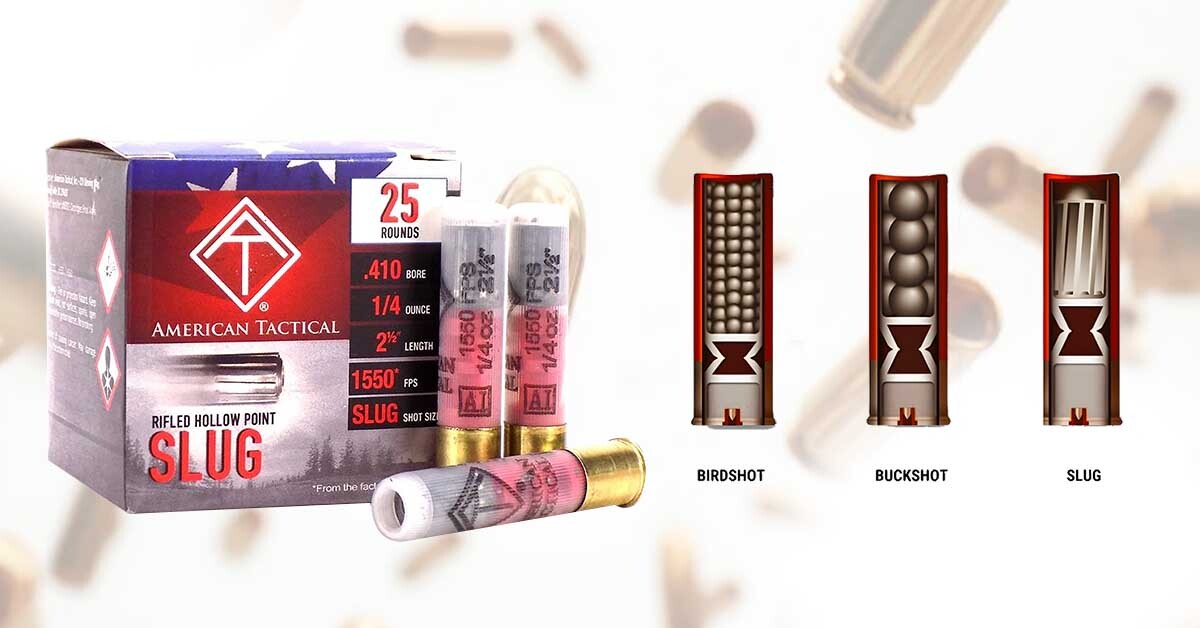
Before diving into specific applications, you need a solid foundation on the three main categories of shotgun shells. Everything else builds from here.
Buckshot fires multiple large pellets typically between 8 and 27 of them depending on the size from a single shell. The sizing works on a reverse scale, so #4 buck is smaller than #00 buck (“double-aught”). The most common buckshot sizes you’ll encounter are #4, #1, #0, #00, and #000. Pellets range from about .24 inches in diameter (#4) up to .36 inches (000). Buckshot was originally designed for deer hunting the name literally comes from harvesting bucks, and it remains the dominant choice for both deer hunting in restricted areas and home defense.
Birdshot packs a much larger number of smaller pellets into each shell. A standard 12-gauge birdshot load can carry anywhere from 175 to nearly 400 pellets depending on the shot size, with the numbering again working in reverse #7.5 is larger than #9. Common birdshot sizes run from #9 (finest) through #2 (largest non-toxic steel loads for waterfowl). Birdshot is designed for exactly what the name suggests: birds, clays, and small game.
Slugs fire a single large projectile rather than a payload of pellets. A typical 12-gauge lead slug weighs around 1 ounce, roughly 440 grains, and travels with devastating energy. Slugs are used for hunting deer and other large game, particularly in states where rifle hunting is restricted near populated areas, and occasionally for home defense in specific situations.
If you’re still figuring out which shotgun makes the most sense for your setup before you start building your ammo selection, it’s worth thinking through platform first, the gun you’re running affects which loads pattern best and how much felt recoil you’re managing.
Home Defense: What Actually Works and What Doesn’t
This is where the most dangerous myths live, and getting it wrong is a problem you can’t afford.
Why Buckshot Is the Right Answer
For home defense, #00 buckshot is the industry standard, used by the U.S. military, law enforcement agencies across the country, and the majority of informed civilian defensive shooters. There’s a reason for that consensus, and it comes down to the fundamentals of stopping power and penetration.
The FBI’s ballistic testing protocol recommends a minimum of 12 inches of penetration through calibrated ballistic gel to reliably reach vital organs through clothing, muscle, and bone. #00 buckshot typically achieves 18 to 19 inches of penetration in gel testing, which meets the standard comfortably. Each shell delivers 8 to 9 individual .33-caliber projectiles simultaneously, the rough equivalent of firing nine 9mm bullets with a single trigger pull.
The most proven home defense buckshot loads:
Winchester Super-X #00 Buckshot (2¾”) : This is the load that has been standard issue for civilians, police, and military for decades. Nine pellets of .33-caliber lead at around 1,325 fps. It’s not flashy, it’s not expensive, and it works. Many experienced home defense shotgun owners keep this exact load in their bedside gun and don’t overthink it further.
Federal Premium Vital-Shok #00 Buckshot (Flight Control Wad) : Federal’s Flight Control wad is one of the most significant advances in defensive buckshot design in recent history. It holds the pellet payload together longer before releasing, producing dramatically tighter patterns than conventional buckshot at defensive distances. At 7 to 10 yards, you’ll see the difference on paper immediately. This is widely considered the gold standard among defensive shooting instructors.
Hornady Critical Defense #00 Buckshot : Eight pellets of #00 buck designed specifically for home defense, with Hornady’s proprietary Versatite wad for consistent patterns across a range of shotgun configurations. This is the load to reach for if you want purpose-built defensive ammo rather than hunting buckshot that doubles as home defense.
Reduced Recoil Loads : If you’re newer to shotguns, managing a smaller frame, or simply want faster follow-up shots, reduced recoil buckshot loads from Federal (Low Recoil) and Remington (Managed Recoil) reduce felt kick noticeably without giving up meaningful stopping power at typical indoor distances. For a home defense application where shots are almost always inside 15 yards, the small velocity trade-off is a non-issue.
What About #4 Buckshot?
You’ll hear arguments for #4 buck as a home defense load because it produces less over-penetration through interior walls. There’s truth to this #4 buck’s smaller pellets (.24 caliber) do lose energy through drywall faster than #00. But #4 buck also penetrates less reliably through heavy clothing and at angles, and it doesn’t always meet the 12-inch ballistic gel standard consistently. It’s a reasonable choice for someone genuinely concerned about over-penetration in a dense living situation, but #00 or #1 buckshot remains the more reliable defensive option for most people.
Why Birdshot Falls Short for Defense
The argument for birdshot in home defense goes like this: the small pellets won’t over-penetrate walls, it’s cheaper, and it still hurts like hell at close range. All of that is technically true, and at under 10 feet, a load of birdshot will absolutely cause devastating wounds.
The problem is what happens outside that 10-foot window. Birdshot pellets are small and light, and they shed energy rapidly once they leave the barrel. In most indoor situations where a home intruder is in a doorway, hallway, or across a room, you’re looking at distances of 10 to 25 feet. At those distances, birdshot may not penetrate deeply enough to reach vital organs through heavy clothing, muscle, and bone, exactly the conditions you’d face against a serious threat. No law enforcement agency or credible defensive training organization recommends birdshot for home defense, and that consensus exists for good reason.
If birdshot is all you have, use it, it’s better than nothing. But building a defensive setup around it is the wrong call when buckshot is readily available.
Hunting: Matching the Shell to the Target
Here’s where the fun begins. Unlike home defense, where the answer is mostly “load #00 buckshot and pattern-test your gun”, hunting ammo selection actually requires paying attention to what you’re hunting, where you’re hunting, and what the regulations say.
Upland Birds: Pheasant, Quail, Grouse, and Dove
Upland hunting is birdshot territory. The goal here is a wide, even pattern of small pellets that increases your hit probability on fast-moving birds at typical flush distances.
#7.5 and #8 shot are the workhorses for dove, quail, and grouse at closer ranges. They produce dense patterns and are effective on lighter-bodied birds within 25 to 35 yards.
#5 and #6 lead shot are the go-to for pheasants. Roosters are tough birds with heavy feathers and a nasty habit of running instead of dying. You need enough pellet energy to punch through those feathers and reach vitals. #5 lead at 1,200 to 1,330 fps through a modified choke is a classic pheasant combination that has worked for generations.
For practical guidance on matching load selection to specific upland species at real-world distances, MeatEater’s wingshooting load guide is one of the best resources available, it’s written by hunters who have actually patterned and used these loads in the field, not just on paper.
Waterfowl: Ducks and Geese
Waterfowl hunting has a hard rule that changes everything: lead shot is federally prohibited. All waterfowl hunting requires non-toxic shot steel, bismuth, or tungsten. This matters for your ammo selection more than almost any other category.
Steel shot is the most affordable and widely available non-toxic option. Because steel is less dense than lead, you need to move up one to two shot sizes to approximate lead performance. If you’d use #5 lead for pheasants, you want #3 or #2 steel for ducks. For large Canada geese at longer distances, steel BBs or BBBs are appropriate.
Bismuth is denser than steel and can be used in older shotguns with fixed chokes that shouldn’t shoot steel, an important consideration if you’re running a classic gun. It patterns more like lead and is significantly more expensive.
TSS (Tungsten Super Shot) is the premium option, nearly three times denser than steel. It allows the use of very small shot sizes #9 TSS for turkeys, for instance that would be laughably underpowered in lead or steel. At $6 or more per shell, it’s not an everyday waterfowl load, but it’s the top-of-line choice for long-range geese or late-season birds with heavy plumage.
Deer Hunting with a Shotgun
In states where rifles are restricted for deer hunting, densely populated areas, certain zones in the Southeast, parts of the Midwest, the shotgun becomes a deer gun, and that changes the ammo conversation entirely.
Buckshot for deer works inside 40 yards in tight cover. #00 buck is the standard choice, giving you multiple large projectiles that increase hit probability on a moving animal or through light brush. Beyond 40 yards, pattern spread becomes a problem and individual pellets lose the energy needed for reliable kills.
Rifled slugs are the better choice for anyone who needs to make shots beyond 50 yards. A standard 1-ounce lead slug delivers massive energy, comparable to a heavy pistol cartridge, and is accurate to 75 to 100 yards from a smoothbore barrel with rifle sights. For hunters running a fully rifled slug barrel, sabot slugs dramatically improve accuracy and can extend effective range to 150 yards or beyond. Federal TruBall and Remington Slugger are proven rifled slug loads for smoothbore barrels; Hornady SST and Federal Trophy Copper are the go-to sabot loads for rifled barrels.
The Quick Reference Guide | What to Load for What
| Application | Best Choice | Why |
|---|---|---|
| Home defense | #00 or #1 buckshot | Reliable penetration, stopping power, law enforcement standard |
| Home defense (reduced recoil) | Federal Low Recoil #00 | Easier follow-up shots, same effectiveness at indoor distances |
| Dove, quail, grouse | #7.5 or #8 lead | Dense pattern for small, agile birds |
| Pheasant | #5 or #6 lead | Enough energy for tough-bodied birds to 40 yards |
| Ducks (close range) | Steel #3 or #4 | Non-toxic requirement, effective pattern density |
| Ducks (longer range) | Steel #2 or bismuth #4 | More energy retention at distance |
| Geese | Steel BB or BBB | Large birds need pellet weight |
| Deer (inside 50 yards) | #00 buckshot | Multiple projectiles, tight cover |
| Deer (50–100 yards) | Rifled slug | Single accurate projectile, penetration |
Pattern Testing | The Step Nobody Skips Twice
Here’s the thing about shotgun ammo that rifle and handgun shooters don’t have to think about: two different buckshot loads in the same shotgun can produce wildly different patterns. A load that prints a 6-inch group at 10 yards in one gun might spread to 18 inches in another. Choke, barrel length, and the specific wad design of the load all interact.
Before you commit to a defensive load or a hunting load for a new season, shoot it on paper at the distances you’ll actually be using it. For home defense, put up a silhouette target at 7, 10, and 15 yards and shoot each distance. For hunting, pattern at 25 and 40 yards with a proper 30-inch circle target. What you see on paper will tell you more about that load in your specific gun than any review or recommendation ever could.
Browse the shotgun ammo selection at Golden Brothers Co to stock up on the loads you want to test, having multiple boxes on hand lets you run a proper pattern comparison before you settle on the right load for your gun and your application.
FAQ | Shotgun Ammo for Home Defense and Hunting
Can I use the same shotgun for home defense and hunting?
Yes, and millions of Americans do exactly that with pump-action shotguns like the Remington 870 and Mossberg 500. The key is understanding that you need different ammo for each application, and it’s worth having your defensive load already in the gun rather than counting on remembering to swap shells in a high-stress situation.
Is birdshot ever acceptable for home defense?
Only if it’s genuinely all you have available. At distances inside 10 feet, it will cause serious wounds. But against a threat wearing heavy clothing at 20 to 25 feet, the realistic range of a hallway or bedroom doorway, birdshot may not penetrate reliably enough to stop the threat. Buckshot is the correct choice when available.
What gauge is best for home defense?
12-gauge is the standard for most people because of the wide availability of purpose-built defensive loads. 20-gauge is a legitimate option, particularly for smaller-framed shooters or those managing recoil sensitivity, Federal and Winchester both make quality 20-gauge buckshot loads. .410 is generally not recommended for defensive use because of limited payload.
What’s the difference between 2¾” and 3″ shells?
Longer shells hold more powder and shot, producing higher velocity and sometimes more pellets. For home defense, 2¾” loads are typically preferred because they’re easier to load quickly, produce less recoil, and the extra performance of a 3″ shell isn’t meaningful at 10-yard defensive distances. For hunting, particularly waterfowl and turkey, 3″ or 3½” shells can provide a meaningful advantage at distance.
Do I need to pattern my shotgun before hunting season?
Yes. Every time you switch to a new load, change chokes, or pick up a new gun, shoot it on paper before you take it to the field. A load that patterns beautifully in one gun might be mediocre in yours. Ten minutes of pattern testing saves a lot of frustration in the field.