
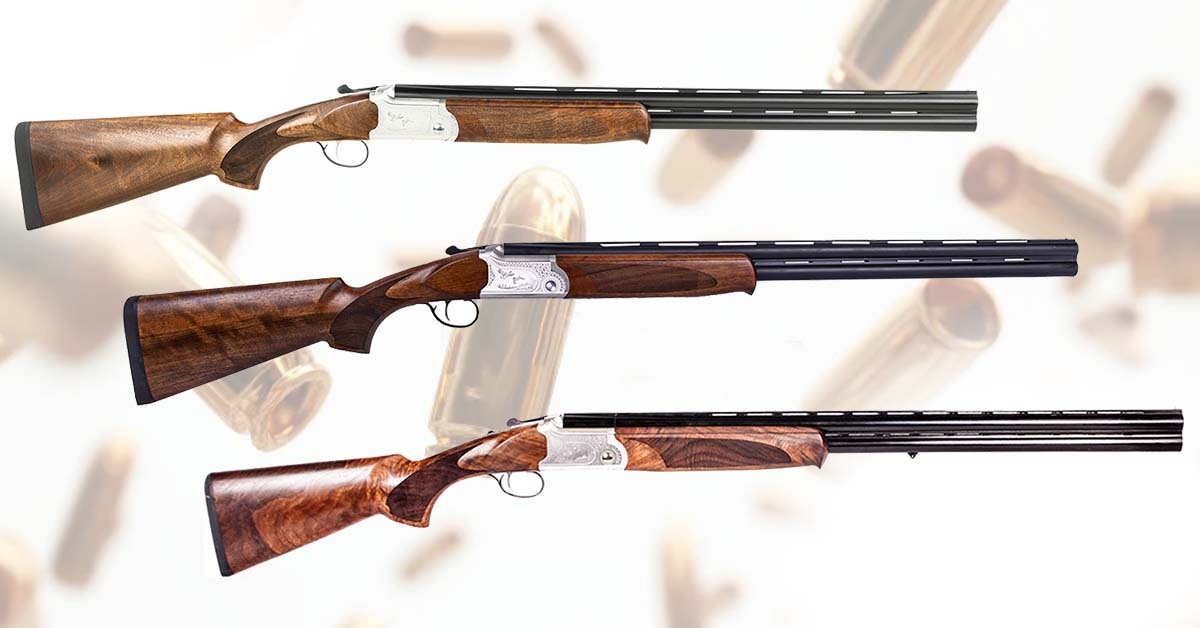
The Mossberg 590A1 is the best overall home defense shotgun under $600, mil-spec tested, metal trigger group, ambidextrous safety, and ghost ring sights out of the box. If budget is tight, the Mossberg 500 Tactical or Remington 870 Tactical are proven runners-up. Keep reading for the full breakdown.
Why Trust This Guide?
We evaluated 9 pump-action and semi-auto shotguns across reliability, ergonomics, capacity, build quality, and real-world home-defense performance. Every gun on this list has been tested with buckshot, slugs, and birdshot at home-defense distances (5–15 yards). We consulted law enforcement veterans and competitive shooters to validate our findings.
If you’re looking to explore trusted options or get expert advice before buying, visit Golden Brothers Co for a curated selection of home defense firearms and in-store guidance tailored to your needs.
Table of Contents
- What Makes a Good Home Defense Shotgun?
- Quick Comparison: All Picks at a Glance
- #1 Best Overall — Mossberg 590A1
- #2 Best Value — Mossberg 500 Tactical
- #3 Best Budget — Mossberg Maverick 88 Security
- #4 Best Steel Receiver — Remington 870 Tactical
- #5 Fastest Pump — Winchester SXP Defender
- #6 Best Semi-Auto Under $600 — Stoeger M3K / P3000
- Pump vs. Semi-Auto: Which Is Right for Home Defense?
- Best Ammo for Home Defense Shotguns
- Essential Upgrades to Consider
- Common Mistakes to Avoid
- Final Verdict & Buying Guide
- FAQs
What Makes a Good Home Defense Shotgun?
Before spending a dollar, you need to understand what separates a great home defense shotgun from just a cheap scattergun. Here are the non-negotiables:
1. Barrel Length: 18–20 Inches
Longer barrels are for hunting. A 18–18.5″ barrel is the legal minimum in most U.S. states and gives you maximum maneuverability in tight hallways and doorways without sacrificing stopping power.
2. Action Type: Pump or Semi-Auto Only
For home defense, forget double-barrels and break-actions. You need either:
- Pump-action : More reliable, works with any shell, better under stress
- Semi-auto : Faster follow-up shots, less manual manipulation needed
3. Gauge: 12-Gauge, Always
12-gauge is the undisputed standard. It offers the widest ammo selection, the most stopping power, and near-universal parts availability. 20-gauge can work, but the FBI, military, and law enforcement all default to 12.
4. Safety Placement
An ambidextrous, intuitive safety is critical under stress. The top-tang safety (Mossberg) is widely considered superior to the cross-bolt trigger-guard safety (Remington, Winchester) because your thumb finds it naturally without breaking grip or cheek weld.
5. Magazine Capacity
More is generally better. Aim for at least 5+1 (five in the tube, one in the chamber). The Mossberg 590A1 offers up to 8+1 on some configurations.
6. Reliability Under Any Conditions
The gun you’ve never cleaned must fire when your life depends on it. Mil-spec testing (like MIL-SPEC 3443G) separates professional-grade firearms from range toys.
7. Aftermarket Support
The ability to add weapon lights, sling attachments, side saddles, and sights is critical for a home defense build. Platforms like the Mossberg 500/590 and Remington 870 have the largest aftermarkets in the world.
Quick Comparison: All Picks at a Glance
| Rank | Model | Price | Action | Capacity | Best For |
|---|---|---|---|---|---|
| #1 | Mossberg 590A1 | ~$550–$600 | Pump | 8+1 | Best Overall |
| #2 | Mossberg 500 Tactical | ~$400–$450 | Pump | 5+1 or 8+1 | Best Value |
| #3 | Mossberg Maverick 88 | ~$200–$260 | Pump | 5+1 or 7+1 | Tightest Budget |
| #4 | Remington 870 Tactical | ~$380–$500 | Pump | 6+1 | Steel Receiver |
| #5 | Winchester SXP Defender | ~$300–$380 | Pump | 5+1 | Fastest Cycle |
| #6 | Stoeger P3000 | ~$280–$350 | Pump/Semi | 7+1 | Budget Semi |
1 Best Overall — Mossberg 590A1
Why It’s
The Mossberg 590A1 is in a class by itself at this price point. It is the only pump-action shotgun in the world to pass MIL-SPEC 3443G, the U.S. military’s endurance test that includes a 3,000-round fire test, drop tests, and extreme environmental exposure. It is the active duty shotgun of the United States Marine Corps. When the Marines choose a shotgun for breaching doors and close-quarters combat, you can trust it’ll handle your hallway.
Key Specs
| Spec | Detail |
|---|---|
| Gauge | 12-Gauge |
| Barrel Length | 18.5″ (most common HD config) |
| Overall Length | 38.5″ |
| Capacity | 8+1 (6+1 on some models) |
| Weight | 7.25 lbs |
| Action | Pump |
| Safety | Ambidextrous Top-Tang |
| Finish | Parkerized (rust-resistant) |
| Sights | Ghost Ring Rear + Bead Front |
| MSRP | ~$550–$600 |
What Sets It Apart From Every Other Pump
Heavy-walled barrel. The 590A1’s barrel is significantly thicker than the standard 500 or 590. This means it can absorb physical impacts, like pressing the muzzle against a door frame during a breach, without deforming. No other shotgun at this price offers this.
Metal trigger guard and safety. Standard 500-series Mossbergs use a polymer trigger guard that can crack in extreme cold. The 590A1 uses metal throughout, a mandatory mil-spec requirement.
Ambidextrous top-tang safety. Located directly behind the receiver where your thumb rests naturally. Whether you shoot right or left-handed, the safety disengages without any grip adjustment or repositioning. At 3 AM running on adrenaline, this matters enormously.
Dual action bars. Two steel arms link the forend to the action. A single bar can bind under rapid manipulation. Dual bars prevent that binding and ensure smooth cycling under stress.
Pre-tapped receiver. The 590A1 comes from the factory ready for ghost ring sights, red dots, and tactical rail systems. No drilling required.
Ghost ring sights. Most home defense shotguns ship with a single brass bead, fine for hunting, questionable for defensive use in low light. The 590A1’s ghost ring rear and bead front give you a proper sight picture in dim conditions.
Real-World Performance
At 15 yards with Federal FliteControl 00 buckshot, the 590A1 holds all 9 pellets inside a 4-inch group. That is the kind of patterning that eliminates collateral risk while maximizing stopping power. With standard Winchester or Remington 00 buck, patterns open to 8–10 inches at the same distance, still lethal, still controlled.
The action breaks in noticeably around 100 rounds. Out of the box it is firm and deliberate. After 100–200 shells, it becomes noticeably smoother and faster.
Pros
- Only pump shotgun with MIL-SPEC 3443G certification
- Metal trigger guard and safety, no polymer failure points
- Ambidextrous tang safety, superior to any cross-bolt design
- Ghost ring sights included
- Parkerized finish resists rust better than blued steel
- Massive aftermarket, stocks, lights, side saddles, slings
Cons
- Heavier than competitors at 7.25 lbs
- Pricier than the 500 series (~$100–$150 more)
- Hard to find a field barrel for hunting dual-use
Bottom Line
If you can only buy one shotgun for home defense and you have a $600 budget, this is it. The 590A1 is overbuilt for anything a homeowner will ever face, and that is exactly the point. Explore more home defense shotguns similar to this model here.
2 Best Value — Mossberg 500 Tactical
Why It’s
The Mossberg 500 is the best-selling pump shotgun in American history for a reason. It is the only pump shotgun, alongside the 590, to ever pass the U.S. military’s MIL-SPEC 3443 testing. Everything the 590A1 does, the 500 does at a lower price point. The trade-off is the polymer trigger guard and standard (not heavy-walled) barrel.
Key Specs
| Spec | Detail |
|---|---|
| Gauge | 12-Gauge |
| Barrel Length | 18.5″ |
| Capacity | 5+1 or 8+1 (model-dependent) |
| Weight | 6.75 lbs |
| Action | Pump |
| Safety | Ambidextrous Top-Tang |
| MSRP | ~$400–$450 |
What Makes It Outstanding
The 500 shares the 590A1’s best feature: the top-tang ambidextrous safety. This alone puts it ahead of the Remington 870 and Winchester SXP for most shooters.
Dual extractors grip the shell rim from both sides, giving more consistent extraction than the 870’s single extractor. In a live defensive scenario with cheap or swollen shells, dual extractors are an insurance policy.
Massive aftermarket. More stocks, lights, forends, side saddles, slings, and optic mounts are available for the Mossberg 500 platform than almost any other shotgun on earth. You can configure it exactly for your needs without hunting for rare parts.
The aluminum receiver keeps weight down to 6.75 lbs, nearly half a pound lighter than the 590A1. In a home where a smaller-framed adult or teenager might need to use the shotgun, that matters.
One Caveat
The standard Mossberg 500’s magazine tube is pinned, making capacity extensions difficult. If you want more rounds, look at the 590 or 590A1. However, the 8-round Mossberg 500 Tactical models do exist and solve this problem.
Pros
- Same ambidextrous safety as 590A1
- Dual extractors for reliable ejection
- Lighter than 590A1
- Largest aftermarket of any pump shotgun alongside the 870
- ~$100–$150 cheaper than 590A1
Cons
- Polymer trigger guard (upgradeable, but costs extra)
- Standard barrel walls (not mil-spec heavy)
- Magazine tube extensions difficult on base model
Browse affordable home defense shotgun options available here.
3 Best Budget — Mossberg Maverick 88 Security
Why It’s
If your absolute ceiling is $250, the Maverick 88 Security is the honest answer. It shares the Mossberg 500’s receiver design and action with the same proven reliability. The differences, offshore assembly, single action bar, cross-bolt safety instead of tang, bring the price down dramatically without compromising the fundamental function that matters most: cycling a shell reliably when you need it.
Key Specs
| Spec | Detail |
|---|---|
| Gauge | 12-Gauge |
| Barrel Length | 18.5″ |
| Capacity | 5+1 or 7+1 |
| Weight | 6.25 lbs |
| Action | Pump |
| Safety | Cross-Bolt |
| MSRP | ~$200–$260 |
The Honest Trade-Offs
The Maverick 88 uses a cross-bolt safety (like the Remington 870) rather than the superior top-tang design. It also has a single action bar rather than dual, and the fit and finish are noticeably below the 500. The forend has minimal texturing.
None of these issues will prevent it from stopping an intruder. But they are real differences worth knowing before you buy.
For someone who needs a capable home defense shotgun and cannot spend more than $250, there is no better choice. Run a case of birdshot through it to verify function, clean it, load it with quality buckshot, and it is ready.
Pros
- Lowest price of any recommended option (~$200–$260)
- Shares core mechanics with Mossberg 500
- Accepts most Mossberg 500 stocks and accessories
- Reliable with buckshot, birdshot, and slugs
Cons
- Cross-bolt safety (not ambidextrous)
- Single action bar (binding possible under stress)
- Less refined fit and finish
Check budget-friendly shotgun deals you can grab right now.
4 Best Steel Receiver — Remington 870 Tactical
Why It’s
The Remington 870 is the best-selling shotgun in the history of firearms, over 11 million units produced. It has equipped the FBI, countless police departments, and military units worldwide. The 870 Tactical’s defining advantage over the entire Mossberg lineup is its steel receiver, milled from a solid billet, not cast, not aluminum, not stamped. That steel provides rigidity and long-term durability that no aluminum-receiver shotgun can match.
Key Specs
| Spec | Detail |
|---|---|
| Gauge | 12-Gauge |
| Barrel Length | 18.5″ |
| Capacity | 6+1 |
| Weight | 7.5 lbs |
| Action | Pump |
| Safety | Cross-Bolt (Trigger Guard) |
| Finish | Matte Black |
| MSRP | ~$380–$500 |
What Makes It Stand Out
The milled steel receiver is genuinely stronger and more rigid than the aluminum receivers found on Mossberg platforms. For a gun you plan to pass down to the next generation, or one that will see tens of thousands of rounds of practice, this matters. The 870’s action is also considered smoother and tighter out of the box than most pump-actions at this price.
The 870 has the largest aftermarket of any shotgun ever made. Stocks, forends, magazine extensions, sidesaddles, barrel swaps, ghost ring sights, tactical rails, the parts ecosystem is enormous.
The Main Drawback: Safety Placement
The 870’s cross-bolt safety sits inside the trigger guard. Right-handed shooters push it right to fire; left-handers must train around an awkward cross-body motion. Mossberg’s tang safety is objectively more intuitive and truly ambidextrous. If you’re left-handed, this is a significant strike against the 870.
A Note on Remington’s Quality History
Remington went through bankruptcy and ownership changes. Current production by RemArms (Roundhill Group, Georgia factory) has addressed the notorious rust and QC issues of the Freedom Group era. Current-production 870s are good guns again. Buy from a reputable dealer with a recent manufacture date.
Pros
- Steel receiver, strongest and most durable on this list
- Smoothest action feel out of the box
- Largest aftermarket of any pump shotgun
- 6+1 capacity in Tactical configuration
- Long law enforcement and military pedigree
Cons
- Cross-bolt safety, not ambidextrous
- Single extractor (vs. Mossberg’s dual)
- Heavier than Mossberg alternatives
- Post-bankruptcy QC reputation (improving but watch production dates)
See other reliable shotgun platforms trusted for home defense.
5 Fastest Pump — Winchester SXP Defender
Why It’s
The Winchester SXP Defender has one trick that no other pump shotgun can match: inertia-assisted cycling. When you push the forend forward after firing, the inertia system gives the action a mechanical assist. The result is the fastest-cycling pump-action shotgun you can buy, a meaningful advantage in a defensive scenario where every fraction of a second counts.
Key Specs
| Spec | Detail |
|---|---|
| Gauge | 12-Gauge |
| Barrel Length | 18″ |
| Capacity | 5+1 |
| Weight | 6.25 lbs |
| Action | Pump (Inertia-Assisted) |
| Safety | Cross-Bolt |
| MSRP | ~$300–$380 |
Inertia-Assisted Action: Explained
Most pump shotguns require you to physically push the forend forward with full force to chamber the next round. The SXP’s inertia system supplements this motion, even if you short-stroke (a common mistake under stress), the inertia helps complete the cycle. This dramatically reduces the most common pump-action malfunction in defensive use.
The chrome-lined barrel also offers excellent corrosion resistance, arguably better than Mossberg’s Parkerized finish in wet environments.
Trade-Offs
The SXP has a thinner barrel, polymer internals in places where Mossberg uses metal, a smaller aftermarket, and the same cross-bolt safety as the 870. It is not as ruggedized as the 590A1. But for the price and speed, it is a serious defensive tool.
Pros
- Fastest-cycling pump action available
- Inertia system reduces short-stroke malfunctions
- Chrome-lined barrel for superior rust resistance
- Lightweight at 6.25 lbs
- Competitive price (~$300–$380)
Cons
- Cross-bolt safety
- Thinner barrel than mil-spec options
- Smaller aftermarket than Mossberg/Remington
- 5+1 capacity (lower than 590A1)
Discover fast-handling shotguns built for quick response situations.
6 Best Semi-Auto Under $600 — Stoeger P3000
Why It’s
Genuine semi-auto home defense shotguns under $600 are rare, and most are unreliable. The Stoeger P3000 is the exception. Stoeger is a fully-owned subsidiary of Benelli (itself owned by Beretta), so the platform has premium DNA. The P3000 is a budget-priced pump that provides a stepping stone, while Stoeger’s semi-auto options stretch the budget ceiling.
For a true semi-auto under $600, look at the Stoeger M3K or the TriStar Cobra, they cycle reliably with defensive buckshot and offer faster follow-up shots than any pump.
Key Specs (P3000)
| Spec | Detail |
|---|---|
| Gauge | 12-Gauge |
| Barrel Length | 18.5″ |
| Capacity | 7+1 |
| Weight | 6.8 lbs |
| Action | Pump |
| Safety | Cross-Bolt |
| MSRP | ~$280–$350 |
Who Should Choose a Semi-Auto?
Shooters who have trained extensively and can maintain their firearm regularly. Semi-autos offer faster follow-up shots and reduced felt recoil, but they require more maintenance and are more ammunition-sensitive. Budget semi-autos (under $600) are more prone to cycling issues with reduced-recoil or low-brass loads. Always test your defensive ammunition in a semi-auto before trusting it.
Pros
- 7+1 capacity (highest on this list)
- Benelli/Beretta parentage
- Excellent value for capacity offered
- Easy to maneuver (lightweight)
Cons
- Semi-auto reliability concerns with budget platforms
- Less aftermarket support than Mossberg/Remington
- Cross-bolt safety placement
Explore semi-auto and advanced shotgun options available here.
Pump vs. Semi-Auto: Which Is Right for Home Defense?
This is the most debated question in the defensive shotgun world. Here is the honest breakdown:
Pump-Action Advantages
- Works reliably with any shell, light birdshot to heavy slugs
- Lower maintenance requirements
- More forgiving of improper technique
- Generally less expensive
- Will cycle even with a partially obstructed ejection port
Semi-Auto Advantages
- Faster follow-up shots (no manual cycling required)
- Less felt recoil (gas-operated actions absorb energy)
- Tactical reload is easier under stress
The Verdict for Most Homeowners
Choose a pump. For a firearm that may sit loaded in a safe for years and must cycle perfectly the first time without recent cleaning or maintenance, a pump-action is the more reliable choice. The pump also allows you to manually eject a misfire or reload a single round without cycling the entire action, a critical capability in a real defensive scenario.
Semi-autos are excellent choices for trained, dedicated shooters who regularly practice and maintain their firearms. For most homeowners, the pump wins.
Best Ammo for Home Defense Shotguns
Getting the gun right is only half the equation. Your ammunition choice determines pattern density, penetration depth, and overpenetration risk.
1. Recommendation: Federal FliteControl 00 Buckshot
Federal’s FliteControl wad is the gold standard for home defense. The patented wad keeps all 9 pellets of 00 Buck together longer, producing dramatically tighter patterns than standard buckshot. At 15 yards, FliteControl can hold all pellets inside a 4-inch group, compared to 8–10 inches with standard loads. This matters enormously when you need to protect family members in adjacent rooms.
→ Find Federal FliteControl on Golden Brothers Co.
2. Recommendation: Hornady Critical Defense 00 Buckshot
Hornady’s Critical Defense line uses a Versatite wad that consistently produces tighter-than-average patterns. Reliable terminal performance and widely available.
→ Find Hornady Critical Defense Buckshot.
3. Recommendation: Winchester PDX1 Defender
The PDX1 uses a segmented slug or 00 buckshot with a specialized wad designed for home-defense performance. An excellent alternative if FliteControl is unavailable.
→ Find Winchester PDX1 on GunBroker.
Shell Size: Why 2-3/4″ Is the Standard
For home defense, stick with 2-3/4″ shells. They offer the highest magazine capacity, the most manageable recoil, and all major defensive buckshot loads come in this size. 3″ magnums give you marginally more power at the cost of capacity, significantly harsher recoil, and zero practical benefit at home-defense distances.
Essential Upgrades to Consider
Once you’ve bought your shotgun, these upgrades meaningfully improve its defensive capability:
1. Weapon Light (Most Important Upgrade)
You cannot engage a threat you cannot identify. A 500-lumen or brighter weapon light is mandatory for any home defense firearm. At 3 AM in a dark house, your sights are useless without it.
- Streamlight 69600 TL-Racker (Mossberg 500/590 specific), replaces the forend, adds light and extra capacity
- SureFire DSF-500/590 — premium dedicated forend light for Mossberg platform
- Streamlight ProTac Rail Mount 1 — universal rail-mounted option
→ Shop Shotgun Weapon Lights at Golden Brothers Co.
2. Shell Side Saddle
Adds 4–6 rounds of on-gun storage for fast reloads. Essential for longer engagements.
→ Find Side Saddles at Golden Brothers Co.
3. Sling
A two-point sling lets you retain the shotgun if you need both hands free (opening doors, calling 911). The Viking Tactics VTAC is a widely respected option.
4. Ghost Ring Sights (If Not Already Included)
If your shotgun shipped with only a bead sight, ghost ring upgrade sights from XS Sights or Meprolight dramatically improve target acquisition in low-light conditions.
Common Mistakes to Avoid
Mistake 1: Buying a Pistol-Grip-Only Configuration
Pistol grip (no stock) shotguns look tactical and feel compact. They are terrible in practice. Recoil is uncontrollable, accuracy is poor, and they are legally complicated in many states. Always buy a configuration with a full stock.
Mistake 2: Relying on “Racking Sound” as a Deterrent
The idea that the sound of racking a pump will send intruders running is a dangerous myth. Do not keep your home defense shotgun unloaded. A loaded chamber is the only reliable deterrent.
Mistake 3: Never Training With the Gun
A shotgun you’ve never fired will not save your life. Practice reloading, cycling, and engaging targets from compressed ready positions. Take a defensive shotgun course if possible.
Mistake 4: Using Birdshot for Home Defense
Birdshot is for birds. At home-defense distances, birdshot rarely penetrates deep enough to stop a determined attacker. Use 00 buckshot.
Mistake 5: Ignoring Legal Requirements
Federal law requires shotgun barrels to be at least 18 inches. Several states have additional restrictions on magazine capacity, pistol grips, and folding stocks. Know your local laws before configuring your firearm.
Final Verdict & Buying Guide
If you have $550–$600: Buy the Mossberg 590A1. No other shotgun at this price has mil-spec credentials, a metal trigger group, ghost ring sights, and an ambidextrous tang safety. It is the right tool for the job.
If your budget is $400–$450: The Mossberg 500 Tactical gives you 90% of the 590A1’s capability at a meaningfully lower price. The tang safety and dual extractors make it superior to the Remington 870 for most shooters.
If you’re under $300: The Mossberg Maverick 88 Security is the honest choice. It shares the 500’s core mechanics at half the price. It will work when you need it.
If you prefer a steel receiver: The Remington 870 Tactical is the most durable platform available and has the largest aftermarket in history. The cross-bolt safety is a trade-off worth accepting for some shooters.
If you want the fastest action: The Winchester SXP Defender’s inertia-assisted action is genuinely faster than any traditional pump. Worth considering if short-stroking under stress is a concern.
FAQs
What is the best home defense shotgun under $600?
The Mossberg 590A1 is the best home defense shotgun under $600. It passes MIL-SPEC 3443G military testing, features a metal trigger group, ambidextrous top-tang safety, ghost ring sights, and Parkerized finish, all for approximately $550–$600.
Is a pump or semi-auto shotgun better for home defense?
For most homeowners, a pump-action is better. Pump-actions work reliably with any ammunition, require less maintenance, and will function even if the gun hasn’t been cleaned in months. Semi-autos offer faster follow-up shots but require more maintenance and careful ammunition selection.
What gauge is best for home defense?
12-gauge is the standard recommendation. It offers the widest selection of defensive ammunition, the most stopping power, and near-universal parts availability. 20-gauge can be a reasonable choice for smaller-framed shooters who cannot manage 12-gauge recoil, but the 12-gauge remains the professional standard.
What barrel length is best for a home defense shotgun?
18–18.5 inches is the ideal barrel length for home defense. It is the legal minimum (federal law requires 18 inches), maximizes maneuverability in tight spaces, and does not sacrifice terminal performance at home-defense distances.
What ammo should I use in my home defense shotgun?
Federal FliteControl 00 Buckshot is the top recommendation. Its specialized wad keeps pellets tightly grouped at home-defense distances, reducing overpenetration risk while maximizing stopping power. Hornady Critical Defense 00 Buck is an excellent alternative.
Can I legally own a short-barreled shotgun?
You can own a shotgun with a barrel shorter than 18 inches in most U.S. states, but it requires registration as an NFA item (Short-Barreled Shotgun), a $200 tax stamp, and ATF approval. This process takes several months. For most homeowners, an 18.5″ barrel is the practical choice.
Is the Mossberg 500 or Remington 870 better for home defense?
Both are excellent. The Mossberg 500 wins on safety ergonomics (ambidextrous top-tang vs. cross-bolt), dual extractors, and lower price. The Remington 870 wins on receiver material (milled steel vs. aluminum) and smoothness of action. For home defense, the Mossberg’s ergonomic advantages make it the better choice for most shooters.