
If your trigger finger barely reaches the trigger on a standard compact, or your palm is swimming inside a grip that was built for someone else’s hand, you already know the frustration. Most “best handgun” lists are written for average-sized hands, which leaves a huge chunk of shooters, women, smaller-framed men, and newer shooters, stuck with guns that don’t actually fit.
This guide is different. Every recommendation here was evaluated specifically for shooters with smaller hands, with real attention to trigger reach, grip circumference, slide pull weight, and how the gun actually handles under recoil when you don’t have the leverage of a larger grip. If you’re specifically searching for compact pistols for small hands, this guide is built for you.
Best Compact Pistols for Small Hands in 2026
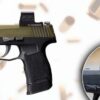
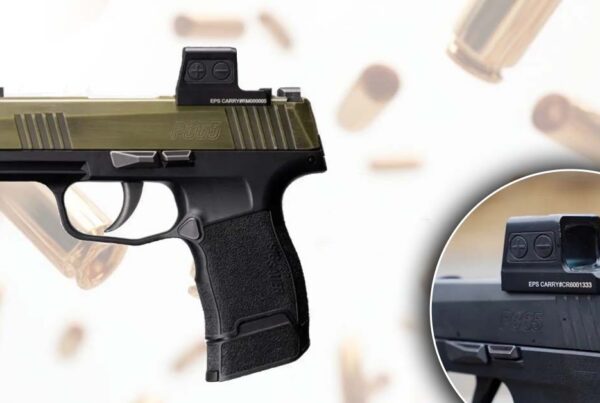
The best compact pistols for small hands in 2026 are the Sig Sauer P365, Smith & Wesson M&P Shield EZ, Walther PDP F, Glock 43X, and Springfield Hellcat. Each of these pistols offers a shorter trigger reach, a slimmer grip circumference, and lighter slide resistance compared to standard compacts, the three factors that matter most for shooters with smaller hands. The Sig P365 is the top overall pick for most people, combining a 1-inch width, 10–17 round capacity, and an ergonomic grip that fits a wide range of hand sizes.
The S&W Shield EZ is the best choice if slide manipulation is a concern. The Walther PDP F was purpose-built for smaller hands and remains one of the most underrated options on the market in 2026, making it a standout choice among compact pistols for small hands.
Why Hand Size Actually Matters When Choosing a Pistol
Most people who walk into a gun store and grab a full-size or standard compact off the rack have one of two experiences: either the gun fits well and they feel immediately comfortable, or the trigger feels miles away, the grip is too thick, and they’re straining to reach the controls. For shooters with smaller hands, generally defined as those with a hand length under 7 inches or a hand width under 3.5 inches, the second experience is far more common than the industry typically acknowledges.
Here’s why it matters beyond just comfort. When your trigger finger has to stretch to reach the trigger, you’re no longer pulling straight back, you’re pulling at an angle, which pushes the muzzle off target. When the grip is too thick, you lose control during recoil and your split times between shots suffer. When the slide is too stiff to rack confidently, you may hesitate in a situation where hesitation costs you. These aren’t small problems. They’re the difference between a gun that you shoot well and a gun that you shoot okay at the range but will struggle with under stress.
The good news is that the micro-compact revolution of the last several years, led largely by the Sig P365 when it launched, has produced a generation of pistols that are genuinely excellent for smaller hands. You no longer have to choose between a gun that fits and a gun that’s capable, especially with the rise of compact pistols for small hands designed specifically for better ergonomics.
What to Look For — The 4 Specs That Matter for Small Hands
Before we get into specific models, here are the four measurements you should be evaluating when you handle any compact pistol at the counter:
1. Trigger Reach (Most Important) : Trigger reach is the distance from the backstrap of the grip to the face of the trigger in the resting position. For smaller hands, a trigger reach of 2.6 to 2.9 inches is generally the sweet spot. Anything above 3.0 inches will require most smaller-handed shooters to stretch, which compromises accuracy and control.
2. Grip Circumference : A single-stack or slim double-stack magazine keeps the grip narrower, typically 0.9 to 1.1 inches wide. This is significantly more manageable for smaller hands than the 1.2 to 1.4-inch width of standard double-stack compacts. Grip width affects not just comfort but how securely you can hold the gun during recoil.
3. Slide Pull Weight : This is the force required to rack the slide to chamber a round. Standard slides often require 20–25 pounds of force. For shooters with smaller hands or reduced grip strength, pistols in the 12–18 pound range are dramatically easier to operate, particularly under stress, with one hand, or after physical exertion.
4. Control Placement : Slide stops, magazine releases, and safety levers that are positioned for an average hand will often require a hand shift or a two-handed operation for smaller hands. Look for controls that are reachable without breaking your shooting grip.
Comparison Table — Top Compact Pistols for Small Hands (2026)
| Pistol | Caliber | Capacity | Width | Trigger Reach | Slide Pull | Best For |
|---|---|---|---|---|---|---|
| Sig Sauer P365 | 9mm | 10+1 / 12+1 | 1.0″ | 2.7″ | ~16 lbs | Overall best — men & women |
| S&W M&P Shield EZ | 9mm / .380 | 8+1 | 1.1″ | 2.6″ | ~10 lbs | Easiest slide — new shooters |
| Walther PDP F | 9mm | 15+1 | 1.1″ | 2.75″ | ~18 lbs | Purpose-built for small hands |
| Glock 43X | 9mm | 10+1 | 1.06″ | 2.78″ | ~22 lbs | Glock reliability, slimmer profile |
| Springfield Hellcat | 9mm | 11+1 | 1.0″ | 2.7″ | ~20 lbs | Most capacity in smallest package |
| Ruger Max-9 | 9mm | 12+1 | 0.95″ | 2.6″ | ~18 lbs | Best value for small hands |
| Kimber Micro 9 | 9mm | 7+1 | 1.06″ | 2.5″ | ~14 lbs | Slim 1911 feel, shorter trigger |
The Top Picks — Detailed Breakdown
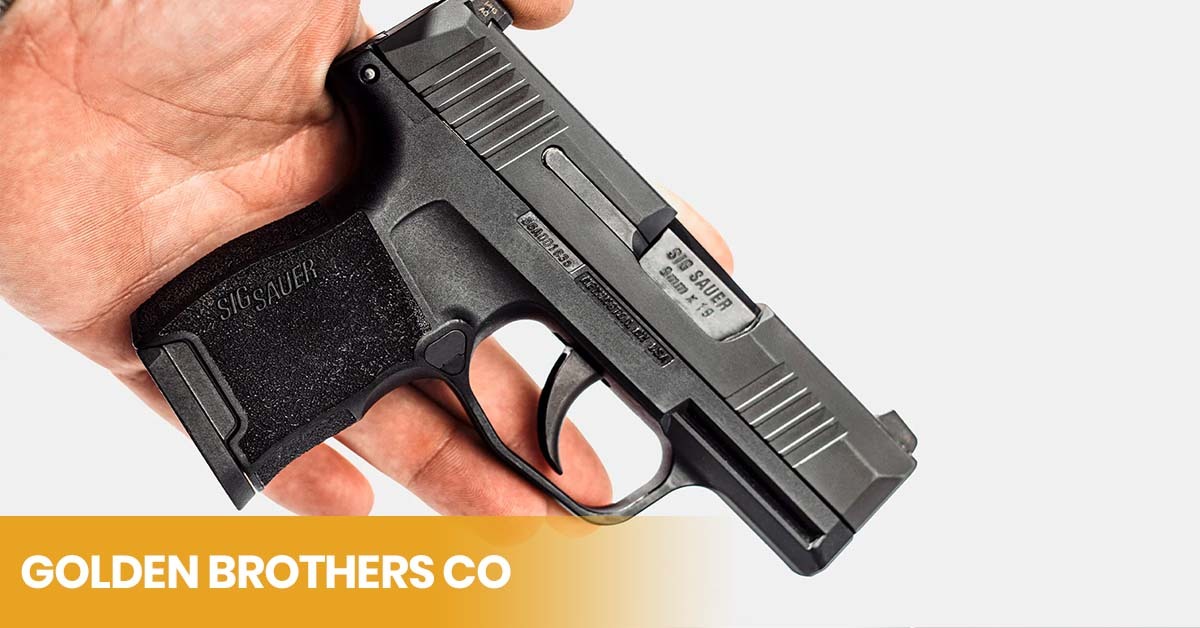
1. Sig Sauer P365 — Best Overall for Small Hands
The P365 changed the entire compact pistol market when it launched, and it remains the gold standard for small-handed shooters in 2026 for one simple reason: Sig somehow packed 10+1 capacity into a package that’s only an inch wide and fits almost every hand size without compromise. If you’re looking to explore similar models, you can browse the latest options from Sig Sauer here: https://shopgoldenbrothers.com/brand/sig-sauer/
The trigger reach on the standard P365 comes in around 2.7 inches, which puts it squarely in the sweet spot for smaller hands. The grip is narrow enough that most shooters can wrap their fingers completely around it and maintain solid contact during recoil. Recoil itself is manageable for a pistol this size, not soft by any means, but controllable, and the follow-up shot cadence is fast once you develop the muscle memory.
What actually works for small hands: The grip module system is one of the P365’s underappreciated features. You can swap the grip to different configurations, including options with a shorter trigger reach, without tools. For shooters who find the standard reach even slightly long, this is a meaningful adjustment that most competitors don’t offer.
Capacity options: The P365 now comes in configurations from 10+1 all the way up to 17+1 with the X-Macro model. The standard 10-round flush magazine fits small hands best; the extended 12 and 15-round options add grip length that some smaller-handed shooters actually prefer for a more secure hold.
The honest downside: The P365 is not the softest-shooting pistol on this list. Its light weight means you feel more of the recoil than you would on a heavier gun. For new shooters or those sensitive to recoil, the Shield EZ or Walther PDP F may be a better starting point.
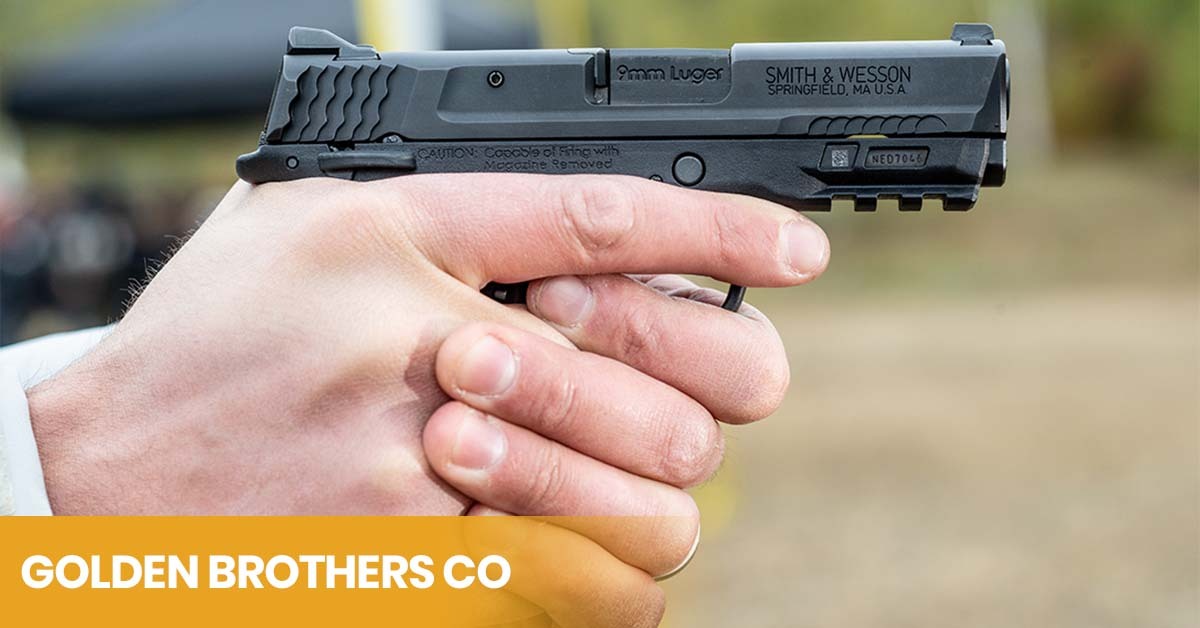
2. Smith & Wesson M&P Shield EZ — Best for New Shooters and Low-Strength Hands
If there’s one pistol on this list that deserves more credit than it typically gets, it’s the Shield EZ. Smith & Wesson designed this pistol with a genuinely different intent than most manufacturers bring to compact design, they asked what a pistol looks like when you optimize it for shooters who struggle to rack a standard slide, and built backward from that answer.
The result is a slide that requires roughly 10 to 12 pounds of force to rack, less than half of what you’d find on a standard compact. The loaded chamber indicator is tactile and visual. The grip safety eliminates the need for a manual safety operation under stress. And the trigger reach, at around 2.6 inches, is one of the shortest on the market in a full-featured defensive pistol.
Who this is actually for: The Shield EZ is the right answer for shooters who have arthritis or reduced grip strength, new shooters who haven’t yet developed the hand strength for a standard slide pull, anyone who had trouble with slide manipulation on previous pistols, and older shooters who want reliability without fighting their equipment.
The .380 ACP version offers even softer recoil at the cost of some terminal performance, a real trade-off worth considering depending on your specific situation. The 9mm version gives you the same easy operation with significantly better ballistics.
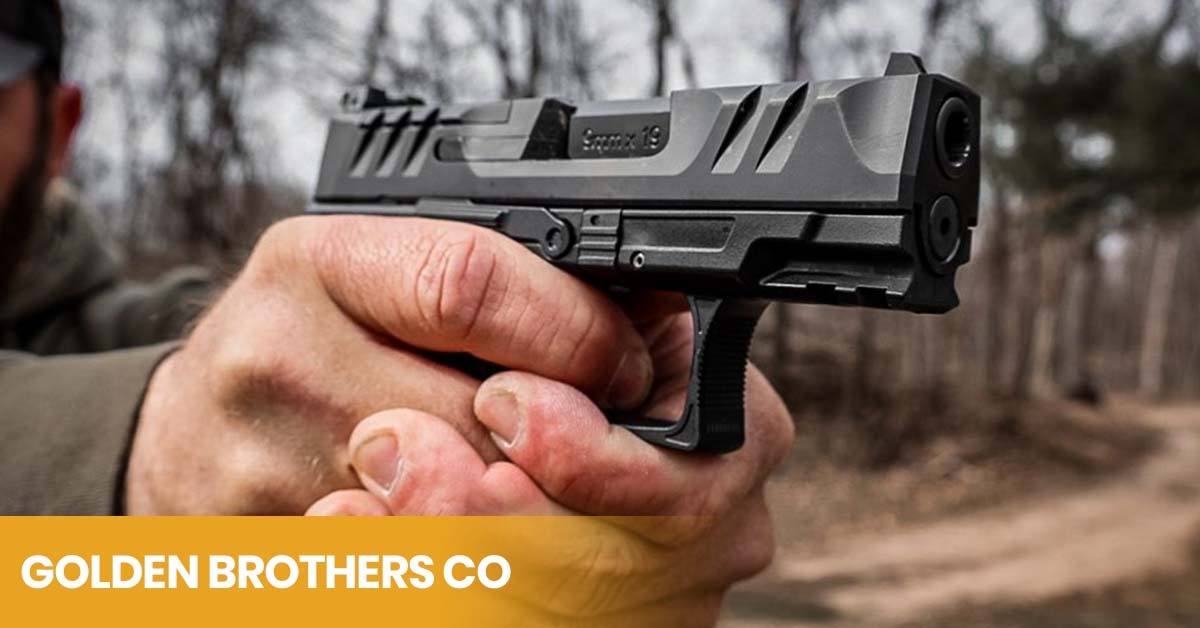
3. Walther PDP F — Purpose-Built for Smaller Hands, Genuinely Excellent
Walther did something that most manufacturers only pretend to do: they actually redesigned a pistol from the ground up for smaller hands rather than just offering the standard model in a “women’s edition” with different colors. The PDP F (F for Female, though it genuinely works for anyone with smaller hands) has a shorter trigger reach built into its geometry, ergonomic contouring that fits smaller palm sizes, and controls that are positioned for hands that don’t extend as far as a typical male shooter’s.
The result is a 9mm pistol that holds 15 rounds, runs reliably, and feels genuinely natural in hands that most other pistols fight against. Testing has shown that smaller-handed shooters consistently achieve better first-shot accuracy and faster follow-up splits with the PDP F than with most comparable-sized pistols, because the gun fits how their hand naturally positions, rather than requiring them to adjust to the gun.
What the competitors miss about this pistol: Almost every “best handgun for small hands” list recommends tiny micro-compacts under the assumption that small hands need small guns. The PDP F proves that wrong. A 15-round 9mm that fits your hand properly will outperform a 10-round gun that you’re fighting every shot.
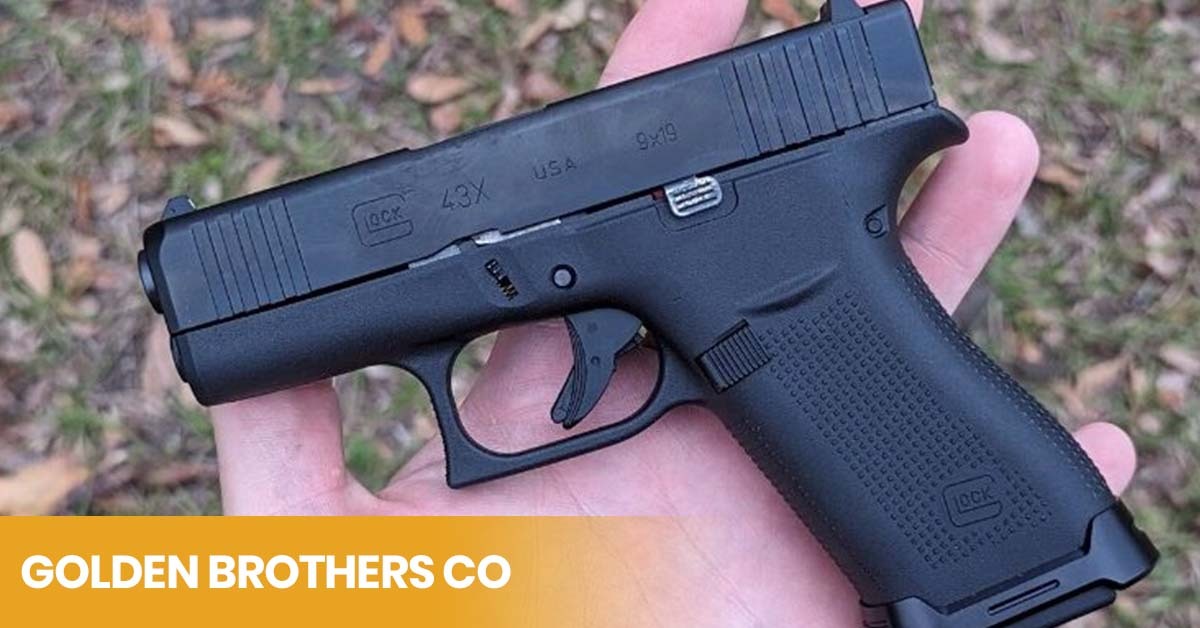
4. Glock 43X — The Reliable Slim Option
If you’re committed to the Glock platform, either because you’re familiar with it, your department uses it, or you just trust it, the 43X is the right Glock for smaller hands. It splits the difference between the ultra-slim single-stack G43 and the full-size G19, giving you a narrow grip width of 1.06 inches and a 10-round magazine capacity in a package that carries easily and runs with Glock’s legendary reliability.
The slide pull on the 43X is heavier than some alternatives on this list, around 22 pounds, which is worth knowing if slide manipulation is a concern. The MOS variant adds an optic cut standard, which is increasingly relevant as red dot sights become the preferred setup for daily carry.
The Shield Arms S15 magazine upgrade is worth mentioning here: aftermarket metal magazines from Shield Arms give the 43X a 15-round capacity while maintaining the same grip width. This is one of the best upgrades available for any pistol on this list.
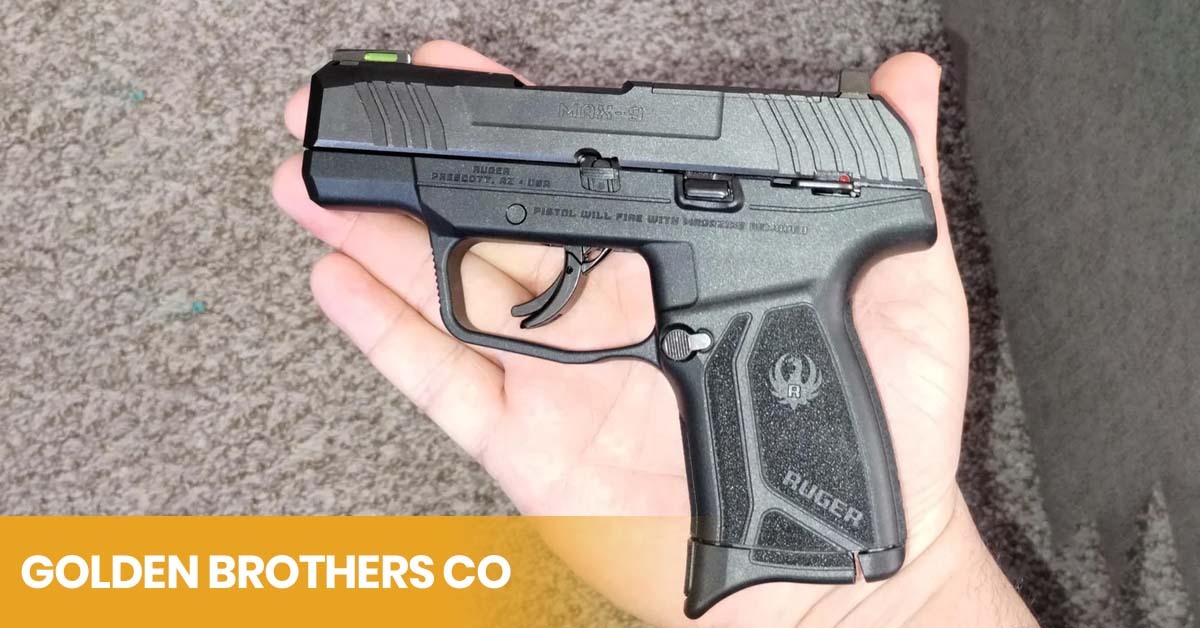
5. Ruger Max-9 — The Value Pick That Doesn’t Cut Corners
At under $400, the Ruger Max-9 delivers specs that competing pistols charge significantly more for: a 0.95-inch width (the slimmest on this list), 12+1 capacity, an optics-ready slide, and a cold-hammer-forged barrel that contributes to both accuracy and longevity. For smaller-handed shooters on a budget, or anyone who doesn’t want to spend Sig or Walther money on a first defensive pistol, the Max-9 is a serious option. If you’re exploring more options from this brand, you can check out the full range of Ruger firearms available at Golden Brothers Co.
The trigger reach is approximately 2.6 inches, putting it at the shorter end of the range we’re looking for. Ruger’s reliability reputation is well-established. The main trade-off compared to more expensive options is a thinner aftermarket ecosystem, fewer holster options, fewer grip upgrades, and a smaller community of owners to draw information from.
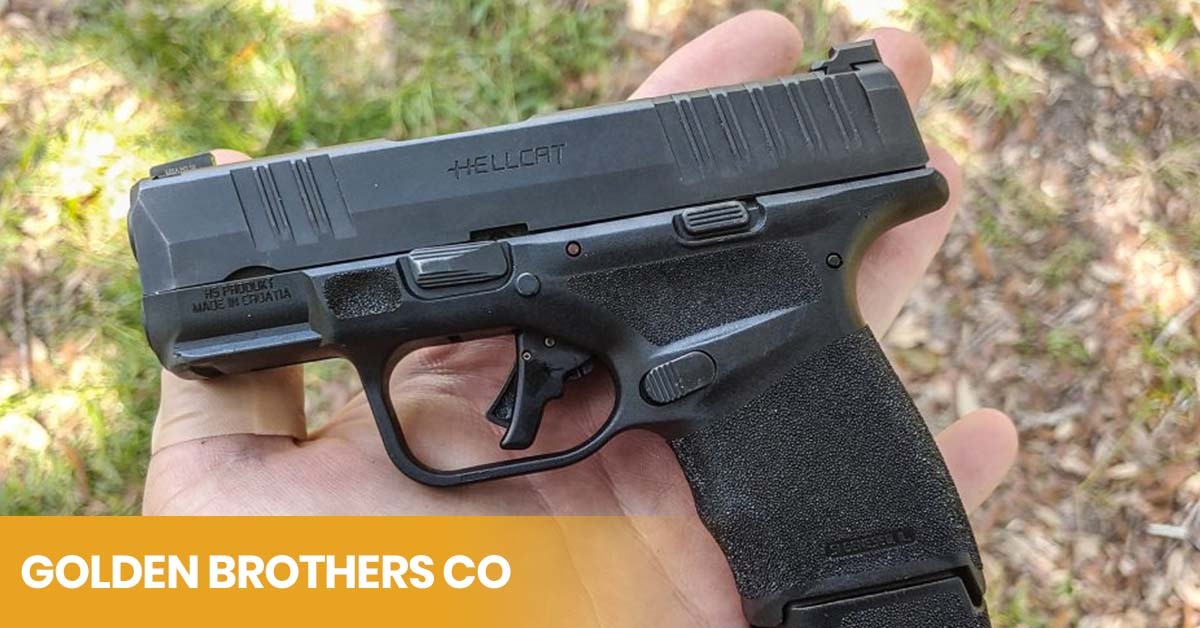
6. Springfield Hellcat — Maximum Capacity in Minimum Size
The Hellcat was the first micro-compact to seriously challenge the P365 in the market, and it holds up in 2026 primarily on one number: 11+1 capacity in the standard configuration, which is the highest standard magazine capacity in the micro-compact category. For a shooter who wants maximum rounds in the smallest possible package, the Hellcat delivers.
The honest note for small hands: the Hellcat’s light weight and compact size mean it shoots sharper than larger pistols. Recoil is snappier, muzzle flip is more pronounced, and extended range sessions become fatiguing faster than with the PDP F or P365. This doesn’t make it a bad gun, it makes it a gun that requires more deliberate practice to run well. If you’re committed to putting in range time, the Hellcat will reward that work. If you’re looking for the easiest shooter on this list, it isn’t the Hellcat.
Men vs. Women — Is the Conversation Different?
Honestly? Less different than the marketing suggests, but not identical.
The gun industry has a long history of assuming that “gun for women” means “small gun with pink options.” That assumption gets people hurt. A very small pistol, a .380 pocket pistol, for instance, is often harder to shoot well than a slightly larger compact that actually fits the hand. Sharp recoil, stiff slides, and controls that are hard to reach aren’t easier problems just because the gun is lighter.
What actually differs between most men and women with small hands is typically grip strength and hand length, not dramatically, but enough to matter in pistol selection. The slide pull weight matters more for many women shooters, which is why the Shield EZ consistently earns its recommendation. The trigger reach matters equally for both.
For men with smaller hands, a common situation that gets almost zero coverage in this type of guide, the same principles apply. A trigger you can reach properly and a grip your hand can control will always outshoot a “full-size” pistol that requires you to compensate for fit.
Caliber — Does .380 Make Sense for Small Hands?
This comes up constantly and deserves a direct answer. The .380 ACP is chambered in many of the smallest, lightest pistols on the market, and it’s often recommended to small-handed or newer shooters on the assumption that less recoil equals easier shooting.
The math isn’t quite that simple. Yes, .380 produces less felt recoil than 9mm in equivalent-weight guns. But the pistols chambered in .380 are often lighter than their 9mm counterparts — which means the recoil reduction is smaller than you’d expect, and sometimes reversed. A 14-ounce .380 can kick harder than an 18-ounce 9mm because there’s less mass to absorb the energy.
For most shooters with small hands, a compact 9mm in a properly fitting pistol will be both more effective and not significantly harder to control than a .380 in a tiny frame. The Shield EZ in 9mm is the clearest example, it’s genuinely easy to operate, genuinely easy to shoot, and genuinely more effective than most .380 options.
The cases where .380 makes sense: if you want the absolute smallest possible package for pocket carry, or if 9mm recoil is genuinely uncomfortable even after working through technique and finding a better-fitting gun.
Where to Buy and How to Choose
Buying a defensive handgun online and having it shipped to an FFL dealer is completely legal and often gives you access to better pricing and a wider selection than any single local store can carry. But nothing replaces actually handling the pistol before you commit. Grip width, trigger reach, and control placement are things you feel — not things you fully understand from a spec sheet.
Golden Brothers Co in Thomasville, GA operates both a physical store where you can handle and compare pistols side by side, and an online store that ships to your local FFL dealer. Their team knows the difference between the guns on this list in a hands-on way, not just from reading spec sheets. If you’re in South Georgia or North Florida, stopping in before you buy is worth the trip.
For handgun selection specifically, their handgun inventory covers the major platforms discussed in this guide. If you’re looking at the full picture of what you might carry, including options for home defense where a rifle or shotgun may be more appropriate than a compact pistol, their full firearms selection covers all of it.
Frequently Asked Questions
What is the best compact pistol for very small hands in 2026?
The Sig Sauer P365 is the top overall recommendation for small hands in 2026. Its 1.0-inch width, 2.7-inch trigger reach, and 10–17 round capacity options make it genuinely versatile for a wide range of hand sizes without the concealability compromises of larger compacts. The Walther PDP F is the better choice if you specifically want a pistol engineered around smaller-hand ergonomics.
What makes a pistol good for small hands?
The four key factors are trigger reach (ideally 2.6–2.9 inches), grip width (under 1.1 inches), slide pull weight (under 18–20 pounds is easier for most smaller-handed shooters), and control placement that doesn’t require a hand shift to operate the magazine release or slide stop. Lighter weight helps with concealed carry but often increases felt recoil.
Is the Shield EZ actually easier to use for small hands?
Yes, meaningfully so. The S&W Shield EZ has the lightest slide pull of any standard compact pistol on the market, approximately 10–12 pounds compared to 20–25 pounds on most competitors. For shooters with arthritis, reduced grip strength, or anyone who struggled to rack a standard slide, the EZ is genuinely different in practice, not just on paper.
Should women choose a .380 over a 9mm?
Not automatically. The assumption that women need smaller, softer-shooting guns often leads to pistol recommendations that are actually harder to shoot well, because very small guns have snappier recoil despite the lighter caliber. A properly fitting compact 9mm like the Shield EZ or PDP F is more effective and often no harder to shoot than a comparable .380 in a tiny frame. The caliber choice should follow the gun fit, not lead it.
Can I try these pistols before buying?
If you’re in the Thomasville, GA area, the team at Golden Brothers Co carries a selection of these handguns in their store and can walk you through handling several options before you decide. For online purchases, Golden Brothers Co ships to your local FFL dealer, you can browse their firearms inventory and their listed manufacturers to find the specific model and brand you’re looking for.
What’s the difference between a micro-compact and a subcompact for small hands?
A micro-compact (P365, Hellcat, Max-9) is optimized for concealment, thinner, lighter, shorter barrel. A subcompact (Glock 26, Shield) is slightly larger but often easier to control. For small hands, the micro-compact often wins because the slimmer grip width is actually more manageable than the slightly wider subcompact grip. The trade-off is that micro-compacts typically require more practice to shoot accurately because the shorter sight radius is less forgiving.
Whether you’re buying your first defensive handgun, upgrading from something that never fit quite right, or helping someone in your life find a pistol that actually works for their hand size, the guns on this list represent the best the market offers in 2026 for smaller-handed shooters. The right gun isn’t the smallest gun or the most popular gun. It’s the one that fits your hand, that you can operate under stress, and that you’ll practice with enough to shoot well when it matters.
Browse the full handgun selection at Golden Brothers Co, available online or in person at their Thomasville, GA store.