
Glock 23 Review (2026): Specs, Generations, .40 S&W Debate & CCW Guide
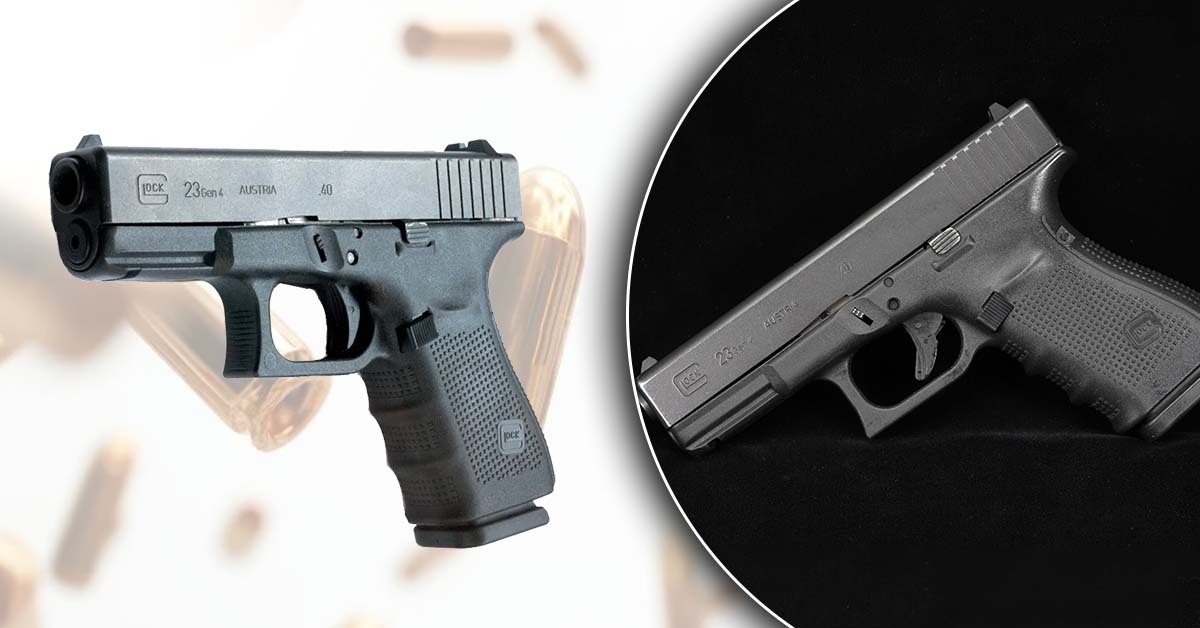
The Glock 23 is absolutely still worth buying in 2026, but with important caveats. This compact .40 S&W pistol carries 13+1 rounds, fits the same frame as the beloved Glock 19, and has a three-decade track record with law enforcement agencies across America. Its biggest strength, one most reviewers overlook, is three-caliber capability: with a simple barrel swap, your G23 becomes a 9mm or .357 SIG pistol. The recoil is snappier than 9mm, ammo costs more, and the 9mm has largely replaced .40 S&W in law enforcement. But if you want a proven, versatile defensive pistol that can convert calibers and costs less used than a new 9mm compact, the G23 makes a compelling case for itself.
About the Glock 23 in 2026
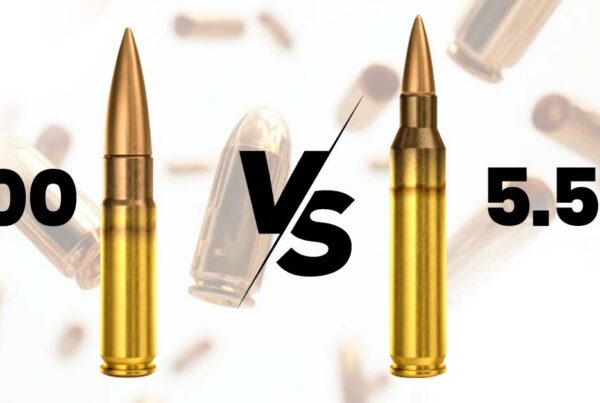
Let’s be real about where .40 S&W stands in 2026. The FBI dropped it in 2016. Most major police departments followed. Ammunition costs more than 9mm. Modern 9mm defensive loads have closed most of the ballistic gap that once justified the caliber’s existence.
And yet, the Glock 23 is still selling. Still being carried. Still showing up at ranges across the country in holsters worn by people who have no intention of switching.
Why? Because the Glock 23 is genuinely good at what it does, and “9mm has gotten better” doesn’t change the mechanics of a pistol that runs flawlessly, points naturally, and fits a holster ecosystem with more options than almost any other compact pistol on the market.
This review gives you the full picture: specs, real-world performance, every generation compared, what the .40 S&W debate actually means for buyers in 2026, and when the G23 makes sense versus when you should look elsewhere.
Full Specifications, Glock 23 Gen 5
| Spec | Detail |
|---|---|
| Caliber | .40 S&W |
| Action | Striker-fired (Safe Action®) |
| Barrel Length | 4.02 inches |
| Overall Length | 6.85 inches |
| Height | 5.04 inches |
| Width | 1.26 inches |
| Weight (unloaded) | 21.16 oz |
| Weight (loaded) | 31.03 oz |
| Magazine Capacity | 13+1 (standard), 15+1 (G22 mags) |
| Trigger Pull | ~5.5 lbs |
| Trigger Travel | 0.5 inches |
| Sight Radius | 6.02 inches |
| Frame Material | High-strength polymer |
| Slide Finish | nDLC (Gen 5) |
| MSRP | $599–$649 |
Generation Breakdown, Which One Should You Buy?
Most reviews give you vague generalities here. Below are the actual practical differences between generations, because it matters if you’re buying used.
Gen 3 : The Classic (1998–2010)
Gen 3 is what most people picture when they think Glock: finger grooves on the grip, fixed pistol grip angle, lanyard loop, and that familiar stippled texture. The Gen 3 G23 is the gun that spent more than a decade on duty belts across America.
What’s Good About Gen 3 in 2026
Parts are everywhere. Holsters fit everything. The finger grooves that Glock later removed are, for many shooters, genuinely better for a locked grip. You can find clean used Gen 3 G23s for $350–$450, making it one of the best-value compact pistols on the market right now.
What’s Not Great
No ambidextrous controls, the magazine release doesn’t reverse for left-handed shooters. Factory sights are mediocre (swap them). The “Glock knuckle” issue at the frame-to-trigger-guard junction is real for some shooters. Easy to fix with light sanding, but it’s there.
Gen 4 : The Refinement (2010–2019)
Gen 4 added a dual recoil spring assembly that genuinely tames the .40 S&W’s snappier impulse. The modular backstrap system lets you adjust grip size with small, medium, and large inserts. The magazine release got a larger profile and became reversible for left-handed shooters.
What’s Good
Recoil management is noticeably better than Gen 3. Better fit for more hand sizes. Improved grip texture.
What’s Not Great
Some early Gen 4 models had extraction issues that Glock addressed mid-production. If buying used Gen 4, look for the updated extractor and ejector any Gen 4 built after 2013 should have the revised components.
Gen 5 : The Current Standard (2019–Present)
Gen 5 is the best Glock has ever made the G23. The finger grooves are gone controversial among longtime Glock shooters, but it actually makes the pistol more accommodating for different grip styles and hand sizes. The nDLC finish on the slide is more durable than previous finishes. Front slide serrations added. Ambidextrous slide release. Flared magwell for faster reloads. Marksman barrel with improved polygonal rifling for better accuracy.
What’s Good
Everything. If you’re buying new, buy Gen 5. The Marksman barrel makes a real accuracy difference at distance. The nDLC finish handles abuse better than previous Tenifer/Melonite finishes.
One Important Caveat
Gen 5 frames do not accept the 9mm barrel conversion that works on Gen 3 and Gen 4. If the three-caliber trick matters to you, Gen 5 isn’t your best choice.
The .40 S&W Debate, Settled Honestly
Here’s the honest assessment most gun writers dance around: .40 S&W is a thoroughly capable defensive cartridge that fell out of institutional favor for reasons that are partly ballistic and partly logistical.
The Ballistic Reality
Modern 9mm defensive loads, Federal HST 147gr, Speer Gold Dot 124gr +P, Hornady Critical Duty 135gr, have genuinely closed most of the terminal performance gap that justified .40 S&W’s popularity in the 1990s and 2000s. FBI ballistic testing that previously favored .40 S&W now shows 9mm loads meeting or exceeding the same penetration and expansion standards. That’s a real change, not marketing spin.
What .40 S&W Still Does Better
The .40 S&W generates roughly 40% more felt recoil energy than 9mm about 6.3 ft-lbs versus 9mm’s 4.5 ft-lbs. That extra energy does translate to real terminal performance advantages with certain loads, particularly 180-grain loads that achieve FBI minimum penetration standards with larger wound channels than comparable 9mm loads. For one-shot stopping power in a defensive scenario, .40 is not a downgrade.
The Practical 2026 Argument for .40 S&W
Ammo availability has improved significantly since the shortage years. .40 S&W is on shelves at most sporting goods stores. The price gap versus 9mm for training ammo is real — typically $4–$8 more per 50 rounds — but not prohibitive if you’re buying in bulk. And used Glock 23s are selling at significant discounts to new 9mm compacts, which more than covers the lifetime ammunition cost difference for most buyers.
Real-World Accuracy, What to Expect at the Range
The Glock 23’s 4.02-inch barrel and 6.02-inch sight radius put it in the same accuracy tier as the Glock 19 for practical defensive distances. At 15–25 yards, the realistic range for defensive pistol work, a trained shooter should expect consistent 4–6 inch groups from the factory configuration.
With the Gen 5 Marksman barrel, accuracy improves meaningfully at distance. At 25 yards, well-trained shooters regularly produce 2–3 inch groups from a supported position with 180-grain FMJ loads.
The recoil is the primary accuracy challenge. The .40 S&W’s sharper, snappier impulse means split times between shots run slightly longer until shooters develop a solid grip technique. This is a training matter, not a disqualifying issue. Shooters who put 500–1,000 rounds through the G23 consistently learn to manage the recoil nearly as quickly as they do with 9mm.
Concealability, Is the G23 Practical for CCW?
The Glock 23’s dimensions put it in the compact category, larger than a subcompact like the Glock 43X but smaller than a full-size G22. For most people above roughly 160 lbs with an average or above-average build, the G23 is genuinely concealable in an IWB holster with appropriate clothing.
The width, 1.26 inches at the slide, is the primary printing concern. The Glock 19 is also 1.26 inches wide, so the G23 conceals identically to the most popular compact 9mm on the market.
Holster Ecosystem
The holster ecosystem for the G23 is enormous. Because the G23 shares its frame dimensions with the Glock 19, most G19 holsters fit the G23 perfectly. IWB, OWB, appendix, shoulder, you have more holster options with a G23 than with virtually any other compact pistol on the market.
First-Shot Advantage for CCW
For shooters who carry in areas where follow-up shots may be difficult or where clothing limits access speed, the first-shot performance of .40 S&W defensive loads is a legitimate consideration over 9mm.
Glock 23 vs. the Competition in 2026
Glock 23 vs. Glock 19
This is the comparison every G23 prospective buyer must make. Same frame. Same holsters. Same trigger feel. The G19 carries 15+1 vs the G23’s 13+1. 9mm ammunition costs less and recoils less. The G19 is more widely supported for aftermarket conversions in Gen 5.
The verdict: If you’re a new buyer starting fresh, the Glock 19 in 9mm is the objectively more practical choice in 2026 for most shooters. If you already own .40 S&W ammunition in quantity, prefer the caliber’s terminal performance, or are buying a used G23 at a significant discount, the G23 argument holds.
Glock 23 vs. Smith & Wesson M&P 2.0 Compact (.40 S&W)
The M&P 2.0 Compact offers interchangeable backstraps, a lower bore axis that helps manage recoil, and an improved flat-face trigger over the original M&P. Its compact capacity in .40 S&W matches the G23 at 13+1.
The verdict: The M&P 2.0 is a legitimate competitor with better ergonomics for shooters with large hands. The Glock 23 has a larger aftermarket parts ecosystem and more holster options. Choose based on which grip feels better in your hand.
Glock 23 vs. Bersa TPR9C
If budget is a consideration, the Bersa TPR9C is worth a look as a 9mm alternative. The TPR9C brings an aluminum frame with beavertail, ambidextrous controls, a threaded barrel option for suppressor use, and a steel slide, all in a compact 9mm package that carries 13+1 rounds.
The key distinction: Where the Glock 23 gives you .40 S&W ballistics and a polymer frame, the Bersa TPR9C gives you 9mm with aluminum-frame construction, ambidextrous controls out of the box, and a threaded barrel option. For buyers who want maximum flexibility in a compact defensive pistol, comparing these two side by side is worthwhile.
The Three-Caliber Conversion, The G23’s Hidden Advantage
This is the feature no Glock 23 review covers adequately, and it’s arguably the strongest argument for buying a Gen 3 or Gen 4 G23 in 2026.
With a Gen 3 or Gen 4 Glock 23 frame, you can run three different calibers:
- .40 S&W — Stock configuration. 13+1 rounds. Factory barrel.
- 9mm — Drop in a Storm Lake, Lone Wolf, or KKM 9mm conversion barrel. Use Glock 19 magazines. No other parts changes needed.
- .357 SIG — Drop in a .357 SIG barrel. Use your existing .40 S&W magazines, they work without modification because .357 SIG headspaces the same as .40 S&W. Capable of 1,350+ fps velocities from a compact frame.
Three calibers. One serialized frame. No gunsmithing. This is a legitimate and underappreciated advantage for shooters who want flexibility, preparedness, or the ability to train cheaply while carrying a higher-performance caliber.
Pros & Cons
Pros
- Exceptional reliability, decades of law enforcement validation
- Three-caliber capability (Gen 3/4): .40 S&W, 9mm, .357 SIG
- Massive holster ecosystem, fits most Glock 19 holsters
- Gen 5 Marksman barrel is genuinely accurate
- Strong used market pricing, significant discounts vs new 9mm compacts
- Enormous aftermarket parts selection
- Proven duty heritage
Cons
- Ammo costs more than 9mm (~$4–8 per 50 rounds premium)
- Snappier recoil, requires deliberate grip technique
- 9mm has largely replaced .40 S&W institutionally
- Factory sights are mediocre, plan to upgrade
- Gen 5 loses three-caliber conversion capability
- Lower capacity than 9mm compact equivalents (13+1 vs 15+1)
Who Should Buy the Glock 23 in 2026?
Buy It If:
- You already own .40 S&W ammunition or have a source at good prices
- You want a versatile platform and value the three-caliber conversion (Gen 3/4)
- You’re buying used and can get a clean G23 at a meaningful discount to new 9mm prices
- You prefer the .40 S&W’s terminal performance and are willing to train with the recoil
- You want law enforcement-proven reliability in a compact frame with the largest possible holster ecosystem
Look Elsewhere If:
- You’re a new shooter, 9mm is more forgiving to learn on and costs less to train with
- Budget is a primary concern and you’re buying new, 9mm compacts are priced similarly with cheaper ammo
- You want Gen 5 features AND the three-caliber conversion, Gen 5 doesn’t support the 9mm barrel swap
Frequently Asked Questions — Glock 23
Is the Glock 23 a good concealed carry gun in 2026?
Yes. The Glock 23’s compact dimensions match the Glock 19 exactly, making it one of the most proven and holster-compatible CCW pistols available. The .40 S&W recoil requires training to manage effectively, but experienced carriers consistently rate it as a capable and reliable daily carry choice.
What is the difference between the Glock 23 and Glock 19?
The Glock 23 and Glock 19 share the same frame dimensions and holster compatibility. The primary differences are caliber (.40 S&W vs 9mm), magazine capacity (13+1 vs 15+1), and ammunition cost. See the full Glock 23 vs. Glock 19 comparison above.
Can you convert a Glock 23 to shoot 9mm?
Yes, on Gen 3 and Gen 4 models. A 9mm conversion barrel (Storm Lake, Lone Wolf, KKM) plus Glock 19 magazines converts your G23 to 9mm with no other modifications needed. Gen 5 G23 frames do not support this conversion. See the full three-caliber conversion guide.
What generation Glock 23 should I buy?
For the best overall package, Gen 5 offers the best trigger, finish, and accuracy from the factory. For maximum caliber flexibility including the 9mm conversion, Gen 3 or Gen 4 is the better choice, and used examples offer significant value. Gen 4 specifically improved recoil management with its dual recoil spring assembly.
Is .40 S&W ammo hard to find in 2026?
No. .40 S&W availability has normalized significantly. It’s on shelves at most sporting goods stores. It costs more than 9mm, typically $0.35–$0.55 per round for FMJ training ammo versus $0.22–$0.35 for 9mm, but it is not difficult to source. See the full .40 S&W debate section for context.
How does the Glock 23 compare to the Bersa TPR9C?
The Glock 23 offers .40 S&W caliber with a proven polymer frame and the three-caliber conversion option. The Bersa TPR9C offers 9mm in a compact aluminum frame with ambidextrous controls and a threaded barrel option. Both carry 13+1 rounds in a compact frame. See the full Glock 23 vs. Bersa TPR9C comparison.