
Yes, you can legally travel across state lines with a firearm in the United States, but only if you follow specific federal and state rules. The Firearm Owners’ Protection Act of 1986 (FOPA), under 18 U.S.C. § 926A, gives you “safe passage” protection to transport firearms through any state, even states with restrictive gun laws, as long as your firearm is unloaded, locked in a container, not accessible from the passenger compartment, and you are traveling between two places where you can legally possess it. Violate any one of these conditions and FOPA protection disappears, leaving you subject to the laws of whatever state you’re in. This guide breaks down everything you need to know before you leave your driveway.
What Is FOPA and Why Does It Matter to Every Gun Owner Who Travels?
Before 1986, traveling with a firearm across state lines was a genuine legal minefield. A hunter driving from Virginia through New Jersey to a competition in Connecticut could be arrested simply for passing through New Jersey, even with a properly stored, unloaded firearm. Congress recognized this as absurd and passed the Firearm Owners’ Protection Act in 1986 to fix it.
The critical provision, 18 U.S.C. § 926A created what is commonly called the “safe passage” or “peaceable journey” protection. Here is what it actually says in plain English: if you are legally allowed to possess a firearm in the state you’re leaving AND legally allowed to possess it in your destination state, you may transport that firearm through any state in between, even if that state’s laws would otherwise prohibit you from having it.
That sounds simple. It is not. The courts have carved out exceptions, circuit courts disagree on what counts as a “continuous journey,” and certain states, particularly New Jersey, New York, Massachusetts, and California, have a documented history of arresting travelers who are, by any reasonable interpretation, FOPA-compliant.
This is not a reason to leave your firearms at home. It is a reason to understand exactly how this law works before you travel.
The Four FOPA Requirements You Cannot Ignore
To qualify for FOPA safe passage protection, every one of these four conditions must be met simultaneously. Miss even one and you are not protected.
1. The firearm must be completely unloaded.
Not just unchambered. Completely unloaded. Magazine removed, chamber clear. A round sitting in the magazine counts as “loaded” in many states even if it’s not in the chamber. Do not leave a loaded magazine in the gun and assume you’re covered.
2. The firearm must not be readily accessible from the passenger compartment. If your vehicle has a trunk, the firearm goes in the trunk. Period. If your vehicle does not have a trunk, pickup trucks, SUVs, hatchbacks, the firearm must be in a locked container that is not the glove compartment or center console. A locked hard-sided gun case in the cargo area of an SUV satisfies this requirement. A pistol in a locked glove box does not.
3. Ammunition must be handled carefully.
This is where federal circuit courts disagree. The Third Circuit (covering New Jersey, Pennsylvania, Delaware) has taken the position that ammunition should also be stored in a separate locked container from the firearm. The Ninth Circuit (covering California, Oregon, Washington, and other western states) takes a more permissive view. The safest nationwide approach: keep your ammunition in a separate locked container from your firearm. This costs you nothing and protects you in the most aggressive jurisdictions.
4. Your journey must be continuous.
FOPA protects travel, not tourism. The courts have consistently held that extended stops, side trips, and overnight stays in restrictive states can break your “continuous journey” and end your FOPA protection. In New Jersey courts, any overnight hotel stay has been interpreted as breaking FOPA protection. In the Ninth Circuit, overnight stops with the firearm remaining locked in the vehicle have been treated more leniently, but do not count on Ninth Circuit interpretations when you’re driving through New Jersey.
Carrying vs. Transporting, This Distinction Can Change Everything
The single most important distinction in interstate firearm travel law is the difference between transporting and carrying a firearm. Most gun owners confuse these two and it leads to serious legal exposure.
Transporting means your firearm is stored in a way that it is not immediately available to you, unloaded, locked, in the trunk or a locked container. FOPA protects this activity.
Carrying means the firearm is on your person, in a holster, in a bag, or somewhere in the vehicle where it is immediately accessible, glove box, center console, a mounted holster. FOPA does not protect this. If you are carrying, you are subject to the concealed carry laws of every state you pass through.
| Situation | FOPA Protects You? | What You Need |
|---|---|---|
| Unloaded gun locked in trunk | Yes | Legal possession at origin and destination |
| Unloaded gun in locked case in SUV cargo area | Yes | Legal possession at origin and destination |
| Loaded gun in center console | No | Valid CCW permit honored by that state |
| Gun in glove box (even locked) | No, glove box excluded | Valid CCW permit honored by that state |
| Concealed carry on your person | No | Valid CCW + state reciprocity |
| Firearm in bag/purse, accessible | No | Valid CCW + state reciprocity |
Concealed Carry Across State Lines, Reciprocity Matters
If you want to actually carry a firearm, not just transport it locked in a trunk, you need to understand reciprocity. Each state independently decides which other states’ concealed carry permits it will honor.
Some states are generous. Arizona, for example, accepts virtually all out-of-state permits. Others accept none. Hawaii, California, New York, New Jersey, Massachusetts, Illinois, and the District of Columbia do not honor any outside concealed carry permits and have no reciprocity with other states.
A few practical realities about reciprocity:
Constitutional (Permitless) Carry States As of 2025, over 25 states allow permitless carry for residents and/or non-residents who are otherwise legally allowed to possess a firearm. If you are driving from Texas to Florida, you may be legal to carry in both states without any permit. But the moment you cross into a state that requires a permit, you need one that state honors.
Your permit from one state may cover more ground than you think.
A Virginia concealed handgun permit, for instance, is honored in a significant number of states. A Utah non-resident permit is specifically popular among serious travelers because it adds reciprocity coverage in additional states. Carrying multiple permits from different states is a legitimate strategy for travelers who need broad coverage.
Always verify reciprocity immediately before travel.
State laws change. A state that honored your permit last year may have changed its laws. The USCCA’s concealed carry reciprocity map is a useful starting point, but verify current status through each state’s official law enforcement or attorney general website before you travel.
State-by-State Risk Level, Where to Be Extra Careful
Not all states treat FOPA transport the same way. Here is the honest reality of interstate firearm travel across different legal environments:
High-Risk States, Proceed With Maximum Caution
New Jersey is the most dangerous state in the country for traveling gun owners. New Jersey law enforcement has a documented history of arresting FOPA-compliant travelers and letting the courts sort it out, which can mean months of legal proceedings even if you ultimately prevail. The state has prosecuted travelers for having hollow-point ammunition (illegal to possess in NJ except in certain limited circumstances), for brief hotel stays during cross-country moves, and for firearms that were legal everywhere else in their journey. If you can route around New Jersey, do it.
New York, particularly New York City, has arrested travelers for simply having ammunition in a locked case. New York’s definition of illegal firearm features can make a legally purchased rifle in Georgia a felony in New York overnight. Know exactly what you are carrying and whether it is New York-legal before you drive through.
Massachusetts has strict storage requirements beyond FOPA minimums and has prosecuted travelers whose firearms were otherwise FOPA-compliant. Certain firearm features that are standard in most of the country are illegal in Massachusetts.
California has assault weapons regulations that can make legal firearms in other states illegal simply by crossing the border. Magazine capacity restrictions (10 rounds maximum), specific feature prohibitions, and handgun roster requirements create significant complexity for travelers.
Maryland, Illinois, Connecticut, Hawaii, and Rhode Island all fall into elevated-caution territory. Each has specific laws that can create problems beyond FOPA’s baseline protections.
Moderate, Know the Specific Rules
Washington, Oregon, Colorado, and Virginia have specific storage, permit, or feature regulations that differ from federal minimums. None are as aggressive as New Jersey or New York but warrant research before travel.
Lower Risk, Gun-Friendly Travel Corridor
The Southeast and South, Georgia, Florida, Alabama, Mississippi, Tennessee, Kentucky, Texas, Oklahoma, Kansas, Missouri and most of the Mountain West, generally have laws consistent with or more permissive than FOPA requirements. Travel through these states with a properly stored firearm and you face minimal legal risk.
Air Travel With Firearms, TSA Rules Are Separate From FOPA
If you are flying with a firearm, FOPA does not apply. The TSA has its own federal regulations governing air travel with firearms, and these exist alongside (not within) FOPA.
The TSA rules for flying with a firearm:
- Firearms may only travel as checked baggage, never in carry-on luggage
- The firearm must be unloaded
- The firearm must be in a hard-sided, locked container, the lock must be one to which only you have the key or combination. TSA-approved locks are specifically prohibited for firearm cases because TSA has master keys for those locks, which defeats the security requirement
- You must declare the firearm to the airline at check-in, approach the ticket counter and tell them you have an unloaded firearm in your checked baggage to declare
- Ammunition may be transported in the same locked hard-sided case as the firearm, or in a separate case. It must be in the manufacturer’s packaging or a container specifically designed for ammunition. No loose rounds
- Magazines may be transported with the firearm as long as they are unloaded
Critical air travel warning: When your flight lands at an airport in a state with restrictive gun laws, you are now in possession of a firearm in that state. FOPA’s “continuous journey” protection is complicated by air travel, particularly if your flight is diverted or delayed. If your luggage comes through the carousel in New Jersey because your connection was cancelled, you face a genuine legal problem. This has happened to travelers. Document your travel, keep your itinerary, and if diverted to a restrictive state, do not take possession of luggage containing a firearm, contact the airline and have it transferred as baggage to your actual destination.
NFA Items, Additional Requirements Apply
If you own National Firearms Act items, suppressors, short-barreled rifles (SBRs), short-barreled shotguns (SBSs), or machine guns, traveling across state lines is a more involved process.
Suppressors and SBRs/SBSs: FOPA does not give you blanket permission to travel through states where your NFA items are illegal. For interstate travel with NFA items, you need to verify that the item is legal in your destination state AND any state you are passing through. Suppressors are still illegal in several states including California, New York, New Jersey, Delaware, Hawaii, Illinois, Massachusetts, New Mexico, and Rhode Island. Driving through any of these states with a suppressor, even locked in your trunk, may expose you to serious criminal liability.
ATF Form 5320.20 (Moving of NFA Firearms): For certain NFA items (particularly those registered to a trust or corporation), you must file ATF Form 5320.20 to get permission to temporarily transport the item across state lines. Individually-owned NFA items may have different requirements. Consult a firearms attorney familiar with NFA law before traveling with any NFA item.
The “Three Gun” Threshold, What Most Travelers Don’t Know
Here is something most firearms travel guides don’t tell you: there is an informal ATF prosecution threshold around the number of firearms you are transporting simultaneously.
Based on documented ATF internal guidance and prosecutorial patterns, when a traveler is found to be transporting three or more firearms, federal prosecutors begin examining whether the transport is for lawful personal purposes or whether it constitutes trafficking. This “three gun threshold” is not written into any statute, but it influences how federal prosecutors decide who to charge.
This does not mean traveling with three or more firearms is illegal. It means that if you are transporting multiple firearms and are stopped by law enforcement, having clear documentation of your purpose (hunting trip itinerary, shooting competition registration, a sales receipt showing you are relocating) is more important than if you were traveling with one firearm.
What to Do If You Are Stopped by Law Enforcement
Being pulled over with a firearm in the car requires calm, clear communication. Here is a practical approach:
Do not volunteer the information unnecessarily. In most states, you are not legally required to inform an officer that you have a firearm in the vehicle unless the officer asks directly. Know your home state’s and your current state’s laws on this point before you travel. Some states have mandatory disclosure requirements.
If asked, be direct and calm. “Officer, I have an unloaded firearm stored in a locked case in the trunk. I’m traveling from [origin] to [destination] and transporting it in accordance with 18 U.S.C. § 926A.” This statement is factual, demonstrates knowledge of the law, and does not come across as evasive.
Have documentation accessible, but not with the firearm.
Keep your ownership documentation, any permits, purchase receipts, or competition/hunt registrations in your glove box or center console, not in the same locked case as the firearm.
Do not reach toward the firearm. If an officer asks to see it, let them retrieve it or guide them to its location verbally. Do not reach into a trunk or bag for a firearm during a law enforcement stop.
If you believe you are being wrongfully detained, note the officer’s name, badge number, and department. Be cooperative. Do not argue on the roadside about the law. The legal battle, if one is necessary, happens in court, not on the side of the highway.
Practical Pre-Travel Checklist, Do This Before You Leave
Before any interstate trip with a firearm, run through this checklist:
Legal:
- Verified that firearm is legal in destination state (features, capacity, type)
- Checked concealed carry reciprocity for every state on your route (if carrying)
- Confirmed NFA paperwork is in order if transporting NFA items
- Checked for any county or municipal restrictions in major cities on your route
Storage:
- Firearm is completely unloaded, magazine removed, chamber clear
- Firearm is in a locked, hard-sided case
- Case is stored in trunk or locked container separate from passenger compartment
- Ammunition is in a separate locked container
Documentation:
- Ownership documentation / purchase receipt accessible (not with firearm)
- Concealed carry permits accessible
- Trip itinerary or purpose documentation if transporting multiple firearms
- Route planned to minimize stops in high-risk states
Equipment:
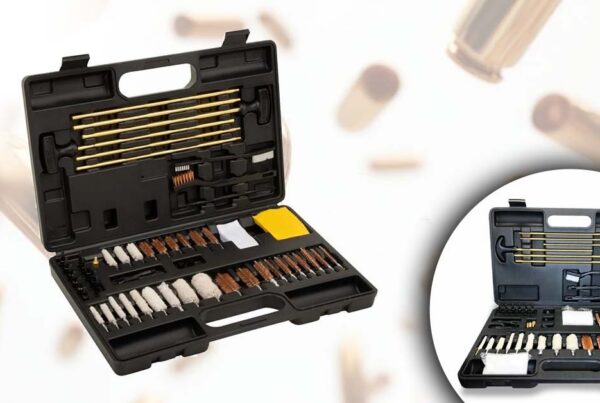
- Quality hard-sided locking gun case confirmed
- Lock quality checked, multiple lock points recommended for high-risk travel
If you need quality, compliant storage solutions or are looking to purchase a firearm that meets the legal requirements across the states on your route, Golden Brothers Co is a trusted USA-based firearm retailer with expertise in helping customers understand what they can legally purchase, transport, and carry. Browse their full firearms inventory and get advice from people who know the laws of the states they serve.
State Firearm Transport Quick Reference Table
| State | FOPA Risk Level | Key Additional Rules |
|---|---|---|
| New Jersey | Very High | Hollow points restricted, aggressive enforcement, no overnight stays |
| New York | Very High | Feature restrictions, NYC especially dangerous |
| Massachusetts | High | Storage requirements exceed FOPA, feature restrictions |
| California | High | Magazine limits, AWB, handgun roster |
| Illinois | Moderate | FOID card requirements, Chicago city ordinances |
| Maryland | Moderate | Handgun qualification license, feature restrictions |
| Connecticut | Moderate | AWB, magazine limits |
| Virginia | Moderate | Transport rules mostly FOPA-consistent |
| Georgia | Lower Risk | Generally gun-friendly, transport consistent with FOPA |
| Florida | Lower Risk | Must be in enclosed container, constitutional carry |
| Texas | Lower Risk | Constitutional carry, very permissive transport rules |
| Tennessee | Lower Risk | Constitutional carry, minimal transport restrictions |
| Alabama | Lower Risk | Constitutional carry, minimal transport restrictions |
Frequently Asked Questions
Can I drive through New York with my legally owned firearm?
Yes, if you comply with FOPA, firearm completely unloaded, locked in the trunk or a locked container not accessible from the passenger compartment, ammunition stored separately, and you are in continuous transit between two places where you can lawfully possess it. Do not stop overnight in New York. Do not make discretionary stops. Have all documentation accessible. New York City has its own additional regulations beyond state law that create even higher risk. If your route allows, going around New York entirely is the safest option.
Does my concealed carry permit work in all states?
No. Each state independently decides which other states’ permits it honors. There is no national concealed carry reciprocity law (though it has been debated in Congress). Some permits like Virginia and Utah non-resident permits, are honored in more states than others. Always verify current reciprocity status through official state sources before travel.
Can I transport a firearm I bought at an auction across state lines?
Yes, with an important caveat: if you purchase a firearm at an auction from a federally licensed dealer (FFL), it can be transferred to you directly. If it is purchased from a private party and crosses state lines, it generally must be transferred through an FFL in your home state. Golden Brothers Co can help guide you through the proper transfer process for firearms purchased anywhere in the country, including auction purchases.
What happens if my flight is diverted to a state with strict gun laws?
This is a genuine risk. If your checked baggage containing a firearm arrives in a state where you did not intend to travel, do not take possession of it. Contact the airline and have it transferred as hold baggage to your actual destination. Document everything, your original itinerary, the diversion circumstances, and your communication with the airline. Courts have generally been sympathetic to travelers in genuine diversion situations, but the documentation matters.
Do I need to tell the police I have a firearm during a traffic stop?
It depends on the state. Some states have mandatory disclosure requirements, you must inform an officer that you have a firearm if you are stopped. Other states have no such requirement. Know the disclosure law for every state you are driving through before you travel. When in doubt, disclose calmly and factually.
Can I transport a suppressor across state lines? Only if the suppressor is legal in every state you pass through AND your destination state. Suppressors are illegal in California, New York, New Jersey, Delaware, Hawaii, Illinois, Massachusetts, New Mexico, and Rhode Island. Driving through any of these states with a suppressor in your vehicle, even FOPA-compliant, may expose you to criminal liability because FOPA does not override state law for NFA items in states where they are prohibited.
Traveling with a firearm across state lines in the United States is absolutely legal, but it requires preparation, not assumptions. The Firearm Owners’ Protection Act gives you significant protection, but that protection has real limits and state-specific risks that can land you in serious legal trouble if you ignore them.
The fundamentals are not complicated: unloaded, locked, inaccessible, continuous journey, legal at both ends. Do those five things and you are covered in the vast majority of situations across most of the country.
For the high-risk states, New Jersey, New York, Massachusetts, California, do your homework in advance, route around them when possible, and never assume that being right about the law means you won’t be arrested. Being right eventually is not the same as not being arrested in the first place.
If you have questions about what firearms are legal to purchase and transport in your state, or if you are looking for properly compliant storage solutions for interstate travel, the team at Golden Brothers Co can help. They are a trusted USA-based source for legal firearm purchases, transfers, and expert guidance, with real knowledge of what gun owners traveling across state lines need to know.
Browse firearms at Golden Brothers Co, Call our store for expert help with your specific travel situation. Visit us in store, we’ll make sure you leave with the right setup and the right information