
Getting older does not mean giving up your right to protect yourself. If anything, it makes that right more important. According to FBI crime data, adults over 65 are disproportionately targeted by criminals who assume age translates to vulnerability. The firearm that served you well at 45 may no longer be the right tool at 70,, not because your judgment has declined, but because your hands, grip strength, and eyes have changed. That is not weakness. That is physics, and the right firearm accounts for it.
This guide is written for seniors, their spouses, and their adult children who want honest, practical answers,
Best Firearms for Seniors in 60 Seconds
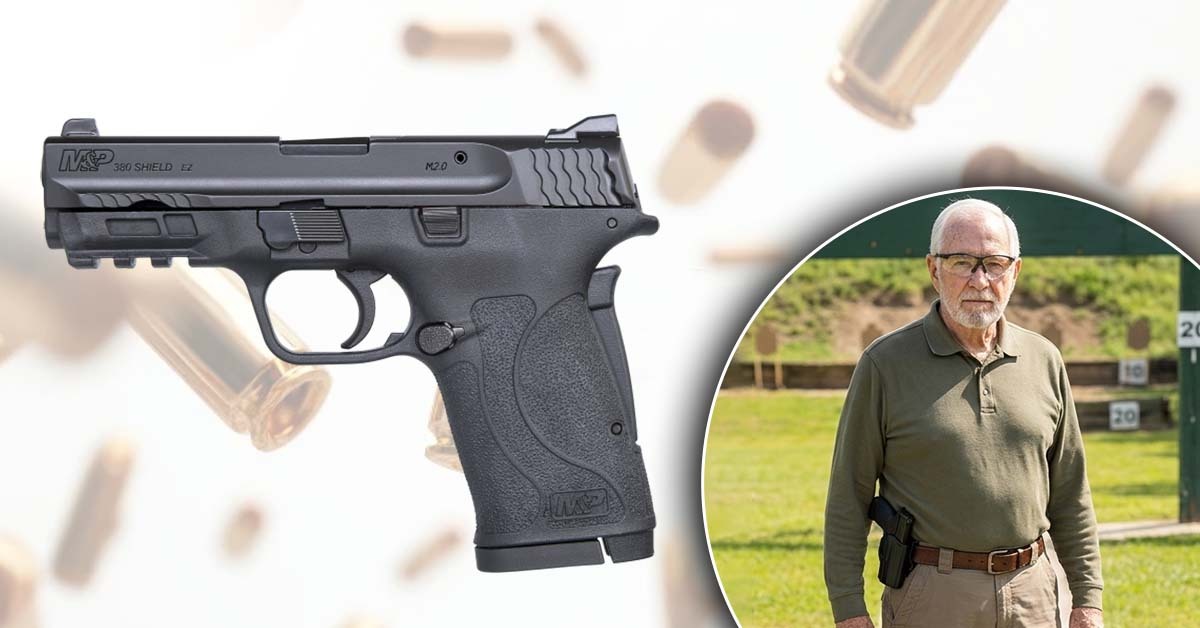
The best firearm for most seniors is the Smith & Wesson M&P Shield EZ , available in both .380 ACP and 9mm, specifically because it was engineered from the ground up for shooters with reduced grip strength and hand dexterity. The slide racks with one finger for most users, the magazine loads easily with a built-in assist tab, and the full-grip frame absorbs recoil better than smaller pistols in the same caliber. For seniors who genuinely cannot manage any semi-automatic slide, the Ruger LCR revolver in .38 Special with reduced-recoil loads eliminates the racking problem entirely. For home defense without the carrying requirement, a pump-action 12-gauge with reduced-recoil loads remains one of the most effective options regardless of age.
The Myth That Hurts More Seniors Than Anything Else
Before we get into specific firearms, we need to address the single most dangerous piece of advice given to senior shooters, and it comes from well-meaning family members and even some gun store employees:
Get something small and light. It’ll be easier to handle.
This is backwards. The smaller and lighter the firearm, the more the shooter will feel the recoil regardless of caliber. A tiny .380 pocket pistol weighs so little that your hand absorbs all the recoil energy from every shot. A full-size 9mm which is heavier and larger, spreads that same recoil across more mass and more grip surface, making it feel substantially softer to shoot.
The irony is real: the gun that looks easier because it is smaller is often harder to shoot comfortably for a senior with arthritis or reduced grip strength. A gun that is easier to conceal is frequently harder to control. Before you buy based on size alone, understand this principle, it changes the entire recommendation framework.
The second myth worth addressing: “Seniors should just use a .22.” A .22 is a legitimate option for seniors with severe physical limitations, and we will address it honestly. But modern defensive calibers like .380 ACP and 9mm with the right firearm platform are manageable for most seniors and deliver meaningfully better defensive performance. Do not automatically downgrade caliber, upgrade the platform first.
What Actually Matters for Senior Shooters, The Four Factors
Before any specific firearm recommendations, understand the four physical factors that change with age and how each one affects your firearm selection.
Factor 1 : Grip Strength and Arthritis
Arthritis hits different folks to different degrees. For some seniors, the challenge is racking a stiff slide. For others, it is loading a magazine against a heavy spring. For others still, it is maintaining a consistent grip through a full trigger pull. Knowing which limitation applies to you determines which platform makes sense.
The slide-racking test: Go to a gun shop and ask to handle the firearms you are considering. Try racking the slide using the “push-pull” method, your dominant hand pushes forward while your non-dominant hand pulls the slide rearward at the same time. If you cannot rack reliably using this method, a revolver or a specifically designed easy-rack pistol is your answer, not a standard semi-automatic.
The grip-safety consideration: The S&W Shield EZ, one of the top recommendations on every senior firearms list, has a grip safety that requires consistent palm contact to fire. If arthritis affects the web of your dominant hand, test this before you buy. Some seniors with specific arthritis patterns cannot depress this grip safety consistently. This is not a reason to avoid the EZ entirely, it is a reason to test it in your specific hand before purchasing.
Factor 2 : Trigger Pull Weight
Trigger pull weight is measured in pounds, the amount of force required to move the trigger through its travel and fire the gun. Standard double-action revolver triggers pull between 8 and 12 pounds. Standard striker-fired pistols run between 5 and 7 pounds. Specifically designed light-trigger options can run as low as 4 pounds.
For seniors with weakened trigger fingers or arthritic joints, a heavy double-action trigger can be the difference between making the shot under stress and not. The Ruger LCR revolver earned its reputation in large part because of its unusually smooth and light double-action trigger, typically around 8–9 pounds with a buttery feel that makes it tractable for seniors who cannot manage the gritty 12-pound pulls of older revolver designs.
Factor 3 : Aging Eyes and Sight Acquisition
This factor is almost never addressed by competitors, but it matters enormously for senior shooters. Presbyopia, the age-related loss of near-focus ability, affects virtually every adult over 50 to some degree. The traditional sight picture of a semi-automatic pistol requires the eye to focus on the front sight while the rear sight and target go slightly blurry. As near-focus degrades, this becomes progressively harder to execute.
The solutions:
Fiber optic sights : Bright rods in the front and rear sight positions that gather ambient light and create glowing dots that are easier to see quickly than standard black iron sights. Many of the firearms recommended below come with fiber optic sights standard or have them available as an easy aftermarket upgrade.
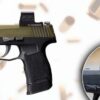
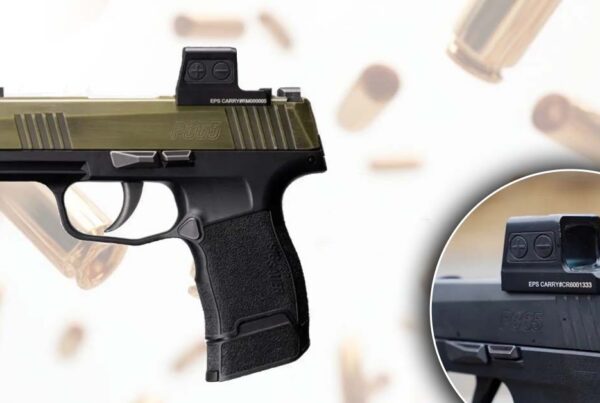
Red dot optics : A small electronic sight that places a single illuminated red dot on the target. With a red dot, you focus on the target, not the sight, and place the dot where you want the bullet to go. This is dramatically easier for eyes that can no longer focus at arm’s length, and it has become the most significant advancement in practical senior shooting in the past decade. Many modern pistols are now sold with optics-ready slides that accept red dots without additional machining.
If your eyes are your primary challenge, prioritize a pistol with an optics-ready slide and add a quality red dot early in your ownership. The difference in practical accuracy for aging eyes is not marginal, it is transformational.
Factor 4 : Maintenance and Cleaning
A compact and easy-to-use revolver like the .38 Special Ruger LCR is an excellent option for anyone with arthritis or who isn’t excited about maintaining a semi-automatic firearm.
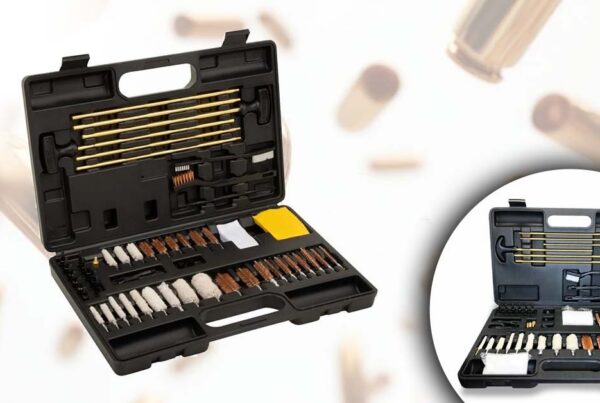
Semi-automatic pistols require disassembly for cleaning, typically field-stripping the slide from the frame, removing the barrel and recoil spring, cleaning each component, and reassembling. For seniors with severe hand limitations, this process can be genuinely difficult. Revolvers, by contrast, can be cleaned without disassembly using a cleaning rod, patches, and solvent through the cylinder chambers and barrel, a much simpler process that requires minimal hand strength.
If maintenance difficulty is a serious concern, weight the revolver options more heavily in your decision. If you are comfortable with semi-automatic maintenance, a quality pistol with tool-assisted disassembly is a manageable process that becomes routine quickly.
Best Handguns for Seniors, Complete Recommendations
1. Smith & Wesson M&P Shield EZ (9mm or .380 ACP)
Best Overall Senior Handgun
Smith & Wesson built it from the ground up for shooters who cannot manage standard recoil spring tension: a lighter recoil spring, an external hammer that can be thumb-cocked to further reduce racking resistance, an easy-load magazine baseplate, and an 18-degree grip angle that positions the gun naturally in the hand.
The Shield EZ is the most purpose-built senior firearm in the current market, and it shows in the details. The magazine loads using a lever at the base that compresses the spring as you add rounds, no more fighting a stiff spring with arthritic fingers. The slide racks with genuinely reduced effort compared to standard pistols. The full grip frame gives your hand plenty of surface area to control recoil, making it shoot softer than smaller .380 pistols despite the same caliber.
Choose the 9mm EZ if you can manage the slightly stiffer slide, the 9mm delivers meaningfully better defensive performance than .380 and is worth the small additional effort for most seniors.
Choose the .380 EZ if the 9mm slide is too difficult to rack reliably. The .380 with modern defensive hollow points is a legitimate defensive caliber at close range.
The grip safety caveat: Test this firearm before purchasing. Most seniors manage the grip safety without any issue. But if arthritis specifically affects the web of your shooting hand between the thumb and index finger, you may not depress it consistently. Handle it in the store before you buy.
Browse handguns at Golden Brothers Co the Shield EZ family is one of the most requested senior firearms we carry.
2. Ruger LCR Revolver (.38 Special)
Best for Seniors Who Cannot Manage Any Semi-Auto Slide
The Ruger LCR solves a different problem than the rest of this list. If you genuinely cannot operate a semi-auto slide, not sometimes, but reliably, this is where the conversation ends. No racking required. No magazine spring to fight. Just a trigger pull that, on the LCR, is one of the smoothest and lightest double-action pulls in its class, engineered to reduce the force required from a compromised trigger finger.
The LCR’s double-action trigger is a genuine engineering achievement. Ruger worked specifically on the trigger geometry to produce a pull that is smooth and consistent without the grittiness or stacking that makes older revolvers difficult for seniors. Load five rounds of Federal Lite .38 Special , a 90-grain reduced-recoil load specifically designed for shooters who need less kick — and you have a reliable, simple defensive firearm that requires no slide manipulation, no magazine loading, and minimal maintenance.
Limitations to be honest about: Five-round capacity is lower than semi-automatic alternatives. Reloading a revolver under stress with arthritic hands is genuinely difficult, practice with a speed strip if this is your primary firearm. But for a bedside home defense gun or a carry gun for a senior who truly cannot manage a semi-automatic, the LCR is the right answer.
3. Glock 19 (9mm)
Best for Seniors With Moderate Hand Strength Who Want Maximum Reliability
One of the softest shooting 9mms is the Glock 19. Better to have a gun that is bigger to spread more of the recoil to your hand and wrist.
The Glock 19 is not marketed as a senior firearm, but experienced shooters with arthritis consistently mention it for exactly the reason stated above, the full-grip compact frame spreads recoil across more hand surface than a sub-compact, making it feel genuinely soft for a 9mm. If you can rack the slide, and the Glock 19’s slide is not particularly stiff by semi-automatic standards, the G19 offers 15+1 capacity, universal parts availability, and a proven track record of reliability that is unmatched.
For seniors adding a red dot, the Glock 19 MOS (Modular Optic System) comes optics-ready from the factory. This is one of the most practical upgrades a senior shooter can make, a quality red dot on a Glock 19 turns a moderately challenging pistol into an extremely easy one to aim accurately.
4. Walther CCP M2 (.380 ACP)
Best for Seniors Who Need an Ultra-Easy Racking Slide
The CCP M2 features Walther’s Softcoil® gas technology, which actively reduces recoil and makes the CCP extremely easy to shoot and handle for shooters of all strength levels. The easy-to-rack slide that glides rearward is combined with this proprietary gas system known as the Softcoil system.
The Walther CCP M2’s gas-operated design uses a different mechanical system than standard blowback pistols, the slide resistance is genuinely lower than comparable .380 pistols, making it one of the easiest-racking semi-automatics available. For seniors who are borderline on slide-racking ability, can do it but find standard pistols difficult, the CCP M2 often moves them into the “can do this reliably” column.
One honest note: The only drawback is learning the takedown and reassembly for cleaning. After a few times, it gets easier. The CCP M2’s disassembly procedure is more involved than a standard pistol. Watch a video walkthrough before your first cleaning session.
5. Smith & Wesson Equalizer (9mm)
Best for Seniors Who Want Full 9mm Performance With EZ Technology
The S&W Equalizer brings the EZ platform’s easy-rack slide technology to a 9mm pistol with up to 15-round capacity, combining the senior-friendly features of the Shield EZ with genuine full-capacity defensive performance. The Smith & Wesson Equalizer is a micro-compact 9mm that features the manufacturer’s next-generation EZ technology, a 10-, 13-, or 15-round capacity, and minimal recoil. It also has an easy-to-rack slide that’s cut for optics, so you can mount your choice of sights.
The Equalizer’s optics-ready slide makes it particularly well-suited for seniors with aging eyes. Buy it, add a quality compact red dot, and you have one of the most practical senior defensive pistols on the market, easy to rack, easy to aim, and chambered in America’s most effective common defensive caliber.
Senior Firearm Comparison Table
| Firearm | Caliber | Slide Difficulty | Recoil | Best For | Maintenance |
|---|---|---|---|---|---|
| S&W Shield EZ 9mm | 9mm | Very Easy | Low | Most seniors — best overall | Moderate |
| S&W Shield EZ .380 | .380 ACP | Easiest semi-auto | Very Low | Cannot manage 9mm slide | Moderate |
| Ruger LCR .38 Spl | .38 Special | No slide | Low (lite loads) | Cannot rack any semi-auto | Easy |
| Glock 19 | 9mm | Moderate | Low | Good strength, max reliability | Easy |
| Walther CCP M2 | .380 ACP | Very Easy | Very Low | Borderline rackers | More involved |
| S&W Equalizer | 9mm | Very Easy | Low | Want EZ tech + full capacity | Moderate |
| Ruger LCR .22 Mag | .22 WMR | No slide | Minimal | Severe limitations | Easy |
The Best Shotgun for Senior Home Defense
For seniors whose primary concern is home defense rather than carrying a firearm outside the home, a shotgun deserves serious consideration, and competitors almost never give it adequate attention.
A pump-action 12-gauge with reduced-recoil buckshot loads is devastatingly effective at close range. Federal, Hornady, and Remington all manufacture reduced-recoil 12-gauge loads specifically designed to deliver defensive performance while cutting felt recoil by 30–40% compared to standard buckshot.
The Mossberg 500 with an 18.5-inch barrel is compact enough for home use while being heavy enough that the mass absorbs recoil effectively. For seniors who find the pump action difficult, a semi-automatic shotgun like the Beretta A300 Patrol removes the manual pump cycle entirely, the gas-operated action cycles automatically, and the semi-auto mechanism inherently absorbs some recoil through the cycling process.
Important note on 20-gauge: Many advisors recommend a 20-gauge as the “senior shotgun” because of its lower recoil. This is not wrong, but a 20-gauge in a lightweight shotgun can actually recoil more sharply than a heavier 12-gauge with reduced-recoil loads. If you go with a shotgun, prioritize the load selection over the gauge. Reduced-recoil 12-gauge buckshot in a full-weight pump shotgun is often more comfortable than standard 20-gauge in a lightweight gun.
Browse shotgun ammunition options including reduced-recoil loads at Golden Brothers Co.
The Couple Recommendation, Different Needs, One Household
This section appears nowhere in competitor content, but it is one of the most common real-world scenarios: a senior couple where both partners want to be able to access and use the household defensive firearm, but they have different hand strength, different physical limitations, and different levels of shooting experience.
The challenge: A firearm optimized for one partner may be impossible for the other to operate.
The practical solution for most senior couples:
Start with the S&W Shield EZ 9mm, it is the most broadly accessible semi-automatic defensive pistol currently manufactured. Most seniors, including those with moderate arthritis or reduced grip strength, can operate it reliably. Have both partners test it at a gun shop before purchasing. If both can rack the slide and load the magazine comfortably, you have found your shared household firearm.
If one partner genuinely cannot manage the EZ’s slide, consider the Ruger LCR .38 Special as a secondary option for that partner, simple, reliable, no slide operation required, and manageable with reduced-recoil .38 Special loads.
Storage for two: A quick-access biometric or push-button safe that both partners know how to open is essential. Practice the draw and presentation from the safe regularly, not just the shooting part. In a defensive situation, getting to the firearm quickly matters as much as everything else.
Training together: The best investment a senior couple can make is a basic defensive pistol course taken together. Learning the manual of arms, safe handling, and basic defensive shooting as a shared experience builds confidence and ensures both partners are comfortable with whatever firearm you choose.
Ammunition, Match Your Load to Your Physical Reality
Ammunition selection matters as much as firearm selection for senior shooters. The same caliber can feel dramatically different depending on the specific load.
For .380 ACP: Hornady Critical Defense .380, Federal Personal Defense .380, and Speer Gold Dot .380 are the top defensive loads. All deliver adequate expansion and penetration for close-range defense while keeping recoil manageable.
For 9mm: Federal HST 147-grain, Speer Gold Dot 124-grain, and Hornady Critical Defense 115-grain are the benchmark defensive loads. The 147-grain subsonic load is particularly soft-shooting, it achieves its performance at lower velocity, which reduces felt recoil compared to +P loads.
For .38 Special: Federal Lite .38 Special 90-grain is specifically manufactured for reduced-recoil applications. It delivers adequate defensive performance at close range with recoil that most seniors find completely manageable. Avoid .38 Special +P loads, the added pressure and recoil are unnecessary in a defensive scenario and harder on arthritic joints.
Quality handgun ammunition in all of these calibers and loads is available at Golden Brothers Co with nationwide shipping.
Budget Guide, What to Expect to Spend
| Budget Range | Best Options | Notes |
|---|---|---|
| Under $400 | Ruger LCR .38 Spl, Ruger Security-380 | Reliable, proven options |
| $400–$600 | S&W Shield EZ .380 or 9mm | Best overall value for seniors |
| $600–$800 | S&W Equalizer, Walther CCP M2 | Enhanced features, optics-ready |
| $800–$1,000 | Glock 19 MOS + red dot optic | Full capability setup |
| $1,000+ | Premium red-dot equipped setup | Optimized senior competition |
For most senior buyers, the $400–$600 range covers the best purpose-built options. Spending more on a quality red dot optic, typically $150–$300 for a reliable compact model, is often more valuable than upgrading the base firearm.
Sights and Optics, The Upgrade Most Seniors Skip
This is the section that competitors consistently miss, and it represents the single most impactful upgrade available to senior shooters.
Standard pistol iron sights require your eye to focus at arm’s length on the front sight while maintaining target awareness. Past 50, most eyes struggle with this. Past 65, many find it genuinely difficult to obtain a clear sight picture under stress.
Fiber optic sights ($30–$80): Affordable upgrade that adds bright colored rods to front and rear sights, creating glowing reference points that are easier to see quickly. Many senior-recommended pistols like the Shield EZ come with these standard or have drop-in options readily available.
Red dot optics ($150–$400): The transformational upgrade for senior shooters with aging eyes. A quality red dot mounted on an optics-ready pistol slide allows you to focus on the threat, not the sight, and simply place the dot where you want the shot to go. This is not a tactical preference. For eyes that cannot reliably focus at pistol-sight distance, it is a practical necessity for defensive accuracy.
If you are 65 or older and buying a defensive handgun in 2025, strongly consider an optics-ready slide and budget for a red dot from the start. It will improve your practical accuracy more than any other single purchase.
Where to Buy, Golden Brothers Co, Trusted Since 1909
Golden Brothers Co has been helping American gun owners, including senior shooters, make the right firearm decisions for over 116 years. Our staff are shooters who understand the physical realities of aging and the specific features that make a meaningful difference for senior buyers. We will never push you toward a firearm that looks impressive on a shelf but does not actually work in your specific hands.
We carry handguns, revolvers, and shotguns appropriate for senior self-defense, along with reduced-recoil ammunition and the accessories that make a real difference, fiber optic sights, red dot optics, quick-access safes, and quality holsters.
We ship our full inventory nationwide to any FFL dealer near you, so wherever you live, you can shop our selection and pick up locally. And if you are in South Georgia, our gun shop in Thomasville, Georgia is open for in-store handling and expert advice from people who take senior firearm selection seriously.
Browse our full firearms inventory and find the right firearm for where you are in life right now, not where you were twenty years ago.
Frequently Asked Questions
What handgun would be easy to shoot and easy to maintain for a senior citizen couple?
The Smith & Wesson M&P Shield EZ in 9mm is the top recommendation for a senior couple for three specific reasons. First, the slide racks with significantly less force than standard pistols, most seniors with moderate arthritis can manage it using the push-pull method. Second, the magazine loads using a built-in assist lever that eliminates fighting a stiff spring. Third, it is available in both .380 ACP and 9mm so you can match the caliber to whichever partner has more physical limitation. Both partners should handle it in a gun shop before purchasing. If one partner genuinely cannot rack any semi-auto slide, add a Ruger LCR .38 Special as a secondary firearm for that person, no slide operation required, simple to maintain, and reliable with reduced-recoil loads.
What is a good self-defense gun with low recoil but stopping power?
The S&W Equalizer in 9mm with 147-grain Federal HST hollow points is the answer most experienced instructors give to this question. The Equalizer uses Smith & Wesson’s EZ platform, easy-rack slide, easy-load magazine, while being chambered in 9mm, which delivers genuine defensive stopping power backed by extensive real-world data. The 147-grain subsonic load is specifically the soft-shooting variant of 9mm, lower velocity means less felt recoil while maintaining the expansion and penetration that make 9mm effective. If 9mm is genuinely too much recoil even with the right platform, .380 ACP with Hornady Critical Defense or Federal Personal Defense hollow points is the best low-recoil alternative with adequate stopping power for close-range defensive scenarios.
What is the easiest handgun for a senior with arthritis to use?
The S&W Shield EZ .380 is the easiest-operating semi-automatic defensive pistol currently in production, specifically engineered with a lighter recoil spring, external hammer, and easy-load magazine for shooters with reduced hand strength. For seniors who cannot reliably operate any semi-automatic slide regardless of how light it is, the Ruger LCR revolver eliminates slide operation entirely. Load it, close the cylinder, and a trigger pull fires it, no other manipulation required. The LCR’s double-action trigger is the smoothest and lightest in its revolver class.
Should a senior use a revolver or a semi-automatic pistol?
It depends entirely on your physical ability to rack a slide reliably. Test semi-automatics, specifically the Shield EZ and CCP M2, before defaulting to a revolver. Many seniors who assumed they needed a revolver find that the EZ platform is completely manageable. If you test the easiest semi-automatics and still cannot rack reliably every time, the revolver is the correct choice. A revolver you can operate reliably beats a semi-automatic you struggle with every time. Never choose a firearm you cannot operate consistently, reliability of operation is the foundation of everything else.
What caliber is best for a senior citizen for self-defense?
9mm with quality hollow-point ammunition is the best balance of stopping power and manageable recoil when paired with the right platform. The 147-grain subsonic variants are specifically the soft-shooting end of the 9mm spectrum. If 9mm is not manageable, .380 ACP with modern hollow points is the best step-down, adequate for close-range defense while being genuinely softer to shoot. Avoid calibers smaller than .380 ACP for defensive use if at all possible. A .22 is better than nothing, but the reliability of rimfire ammunition and the limited defensive performance make it a last resort, not a recommendation.
What is the best home defense gun for a senior who lives alone?
For a senior living alone with no concealed carry requirement, a pump-action 12-gauge shotgun with reduced-recoil buckshot loads is among the most effective home defense choices available, age or otherwise. The Mossberg 500 with an 18.5-inch barrel is manageable for most seniors, and reduced-recoil 00 buckshot cuts felt recoil by 30–40% versus standard loads. If pump operation is too difficult, a semi-automatic shotgun like the Beretta A300 removes the manual cycling requirement. If a shotgun is not practical, the S&W Shield EZ 9mm stored in a quick-access bedside safe is the most practical handgun home defense solution for a senior living alone.
This guide is for informational purposes only. If physical limitations significantly affect your ability to safely handle a firearm, consult with a qualified firearms instructor who has experience working with senior shooters before purchasing. Always follow safe storage practices and applicable federal, state, and local laws.