
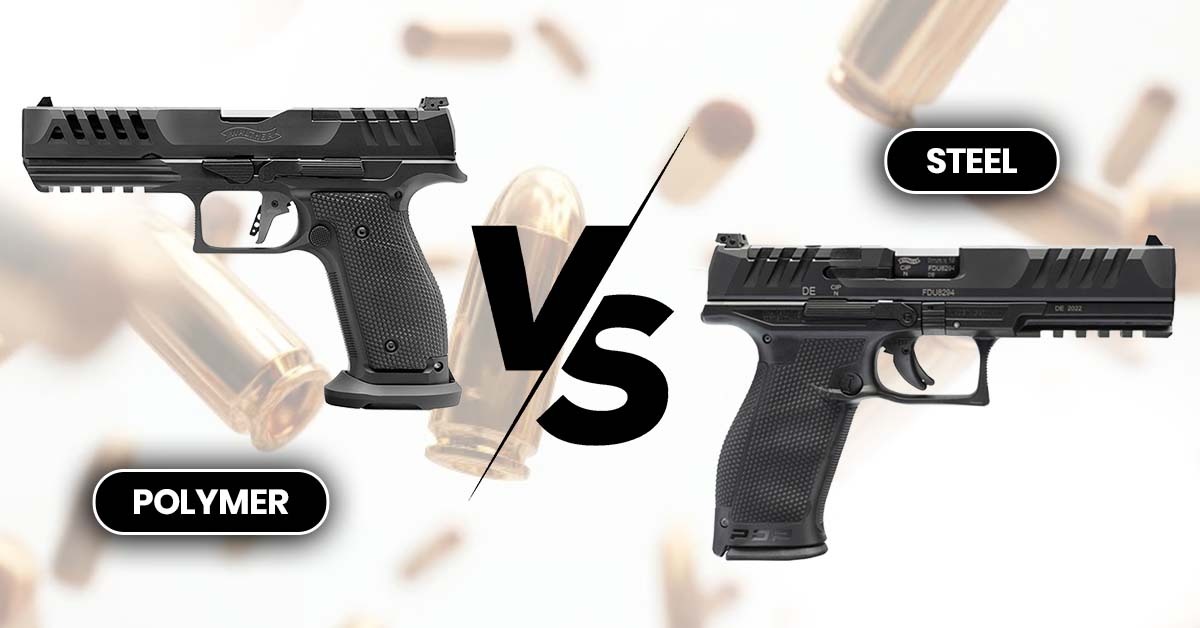
If you’ve ever stood in a gun shop or scrolled through pages of handguns online, you’ve probably hit this exact wall: steel frame or polymer frame? It sounds like a simple question. It isn’t.
The frame of your handgun is its backbone. It houses the trigger group, absorbs recoil, and directly determines how your gun feels in your hand over 500 rounds, 5,000 rounds, or 50,000 rounds. Getting this choice wrong doesn’t just affect accuracy, it affects safety, comfort, and long-term value.
In this guide, we break down the real-world durability, longevity, and tradeoffs of steel vs polymer frame handguns, not marketing fluff, but what actually matters when your life or livelihood depends on your firearm.
What We’ll Cover
- What Makes a Frame Material Matter
- Steel Frame Handguns, Strengths & Weaknesses
- Polymer Frame Handguns, Strengths & Weaknesses
- Which Lasts Longer? The Honest Answer
- Steel vs Polymer: Head-to-Head Comparison Table
- Best Use Cases for Each Frame Type
- FAQs, Your Real Questions Answered
What Makes a Frame Material Matter?
A handgun frame isn’t just a shell. It’s the structural foundation that determines:
- How the firearm handles repeated stress cycles (each shot is a mini-explosion)
- How well the gun resists environmental factors like humidity, saltwater, and temperature swings
- The overall weight, and how that weight distributes in your hand
- Long-term dimensional stability (does the frame flex or warp over thousands of rounds?)
Both steel and modern polymer frames are engineered to meet or exceed military and law enforcement standards. But they do it differently, and those differences matter in the real world.
Steel Frame Handguns: Built Like a Tank
Steel frames, whether carbon steel, stainless steel, or alloy steel, have been the standard in handguns for well over a century. Designs like the 1911 have proven that properly maintained steel firearms can outlast their owners.
Why Steel Frames Excel
Steel’s primary advantage is raw durability and dimensional stability. Over tens of thousands of rounds, a well-made steel frame maintains tight tolerances. This matters enormously for competition shooters and anyone who runs their gun hard.
- Proven longevity: Many steel-framed handguns, like the CZ 75, Beretta 92, and 1911-pattern pistols, are still running reliably after 30, 40, even 50+ years of service
- Better heat dissipation: Steel absorbs and disperses heat more efficiently during rapid fire
- Superior felt recoil management: The added weight of steel naturally dampens muzzle flip, which experienced shooters often prefer
- More forgiving under extreme heat: Steel doesn’t soften or deform under temperatures that could stress polymer components
- Tight tolerance retention: Metal-to-metal contact points maintain their fit longer under sustained use
Where Steel Falls Short
- Weight: A full-size steel pistol can weigh 35-45 oz loaded, significantly more than polymer alternatives
- Corrosion vulnerability: Carbon steel requires consistent maintenance to prevent rust, especially in high-humidity environments
- Cost: Quality steel-framed handguns typically cost more to manufacture, and to buy
- Concealed carry challenges: The added weight makes all-day carry more fatiguing
Polymer Frame Handguns: Modern Engineering at Its Best
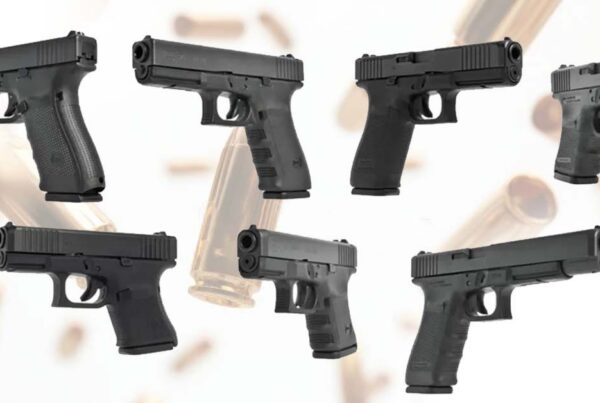
When Glock introduced its polymer-framed pistol in the early 1980s, it was controversial. Today, polymer frames dominate law enforcement, military contracts, and civilian carry markets worldwide. The technology has matured dramatically.
Why Polymer Frames Excel
Modern polymer frames, particularly glass-filled nylon like that used in Glocks, Smith & Wesson M&Ps, and Sig Sauer P-series pistols, aren’t the brittle plastic of consumer goods. They’re engineering-grade composites designed specifically to handle the stresses of firearm use.
- Lightweight: A polymer-framed pistol can weigh 20-25% less than its steel equivalent, a real advantage for everyday carry
- Corrosion resistance: Polymer doesn’t rust. Full stop. It’s immune to the moisture and salt exposure that eats steel
- Cost efficiency: Polymer frames are less expensive to manufacture, which often translates to better price-to-performance ratios
- Temperature resilience: Polymer is largely unaffected by cold temperatures that can make steel frames feel brutal in the hand
- Flex tolerance: Modern polymer frames have a slight engineered flex that can actually help absorb impact energy
Where Polymer Falls Short
- Heat sensitivity: Sustained rapid fire can stress polymer components over time, though this is rarely an issue in normal use
- UV degradation: Long-term exposure to direct sunlight can degrade some polymer formulations over many years
- Perceived feel: Some experienced shooters feel polymer lacks the ‘premium’ feel of a steel-framed handgun
- Recoil: Lighter weight means the gun moves more under recoil, which some shooters find harder to manage
Which Lasts Longer? The Honest, Real-World Answer
Both can last a lifetime with proper maintenance. But the path to longevity looks different for each.
Steel frames, when maintained properly, are virtually indestructible. There are 1911s and CZ 75s still in active service after 50,000+ rounds. The question isn’t whether steel can last, it’s whether you will maintain it consistently.
Polymer frames, particularly from established manufacturers like Glock, are tested to minimum round counts of 35,000–50,000 rounds before qualification. Many far exceed this. Glocks routinely hit six-figure round counts without frame failure. The frames don’t corrode, they don’t need oil to survive, and they’re far more forgiving of neglect.
Here’s the practical breakdown:
- If you’re a diligent maintainer who cleans and oils regularly, steel will outlast everything
- If you carry daily in varied conditions and want minimal maintenance, polymer wins on longevity for real-world use
- For competition shooting with high round counts, steel frames hold tighter tolerances longer
- For defense/carry guns that must work even if neglected, polymer is more reliable in harsh or humid environments
Steel vs Polymer: Head-to-Head Comparison
|
Factor |
Steel Frame |
Polymer Frame |
|
Weight |
Heavier (35–45 oz loaded) |
Lighter (22–28 oz loaded) |
|
Longevity (maintained) |
50,000–100,000+ rounds |
35,000–75,000+ rounds |
|
Corrosion resistance |
Moderate (requires maintenance) |
Excellent (nearly immune) |
|
Recoil management |
Excellent (dampens naturally) |
Good (lighter = more muzzle flip) |
|
Heat dissipation |
Excellent |
Good |
|
Carry comfort |
Moderate (heavier) |
High (lightweight) |
|
Cost |
Generally higher |
Generally lower |
|
Maintenance requirement |
High |
Low to moderate |
|
Best for |
Competition, home defense, range use |
EDC, duty carry, humid environments |
Which Frame Type Is Right for You?
Choose Steel If You…
- Are a competition shooter who prioritizes accuracy at high round counts
- Prefer a heavier gun that naturally manages recoil
- Enjoy traditional firearms with a proven century-plus track record
- Don’t mind, or actively enjoy regular maintenance as part of gun ownership
- Are buying a home defense gun that won’t be carried daily
Choose Polymer If You…
- Carry concealed daily and want to minimize weight fatigue
- Live or work in humid, wet, or coastal environments
- Want a low-maintenance firearm that’s forgiving of less-than-ideal storage conditions
- Are a first-time buyer who wants a proven, reliable platform at a reasonable price
- Need a duty weapon that must function reliably across extreme temperature ranges
Find the Right Handgun for Your Needs
Not sure which specific model fits your frame preference and budget? The team at Golden Brothers Co carries a carefully curated selection of both steel and polymer-framed handguns from the most trusted manufacturers in the industry. Whether you’re looking for a classic steel 1911 or a modern polymer EDC pistol, browse the Golden Brothers Co collection to find exactly what you need, with expert guidance available to help you make the right call.
Frequently Asked Questions
Steel VS Polymer Framed Handguns? What’s Right For You?
The right choice depends entirely on your use case. For everyday concealed carry, polymer frames win on weight and corrosion resistance. For competition shooting, home defense, or traditional tastes, a steel frame offers superior feel, natural recoil management, and proven multi-decade durability. Neither is universally “better” the best gun is the one that fits your life, your maintenance habits, and your shooting goals.
Which Gun Frame Reigns Supreme? Polymer vs. Steel Frame
There’s no universal “supreme” frame and any source that tells you otherwise is oversimplifying. Steel reigns supreme in sustained high-volume use with proper maintenance. Polymer reigns supreme in real-world carry conditions, humid environments, and low-maintenance situations. Modern polymer frames from reputable manufacturers have closed most of the performance gap that existed 30 years ago.
Will polymer guns last as long as their stainless steel counterparts? (Over 100 years)
Realistically, reaching the 100-year mark depends more on storage conditions and usage patterns than frame material alone. Well-maintained stainless steel firearms can genuinely reach 100 years of functional service examples exist. Polymer frames, being a relatively newer technology, don’t yet have 100-year track records, but modern engineering-grade polymer formulations show no signs of critical structural degradation under normal conditions. For heirloom-quality longevity, stainless steel is the safer bet for the century mark.
Do polymer frame guns wear out faster than aluminium and steel frame guns?
In controlled testing and real-world use, high-quality polymer frames do not wear out faster than aluminum frames, and can outlast aluminum in corrosive environments. Aluminum frames are prone to their own forms of wear, including oxidation and surface scoring. Steel frames, when properly maintained, typically outlast both polymer and aluminum in raw mechanical wear resistance. However, polymer frames often outlast aluminum frames in real-world service due to superior corrosion resistance and lower susceptibility to stress fractures from temperature cycling.
Are polymer guns better than steel?
“Better” is context-dependent. Polymer guns are better for: everyday concealed carry, high-humidity environments, low-maintenance use cases, and budget-conscious buyers. Steel guns are better for: high-volume competition shooting, cold environments where polymer grips feel slippery, shooters who prefer heavier weight for recoil management, and collectors who value traditional craftsmanship. The modern firearms market has largely voted with polymer for practical daily use, but steel remains the gold standard for serious competition and traditional firearms enthusiasts.
The steel vs polymer debate isn’t going away, and that’s actually good news, because it means both technologies genuinely serve different shooters well. Steel frames offer unmatched proven longevity with proper maintenance. Polymer frames offer superior real-world durability in varied conditions with less upkeep required.
The best handgun frame is the one you’ll actually maintain, carry comfortably, and shoot accurately under pressure. Both steel and polymer can meet that standard when properly matched to the right shooter.
Ready to find yours? Visit Gun shop in Thomasville, Georgia and explore our full collection of steel and polymer-framed handguns from the industry’s most trusted manufacturers.