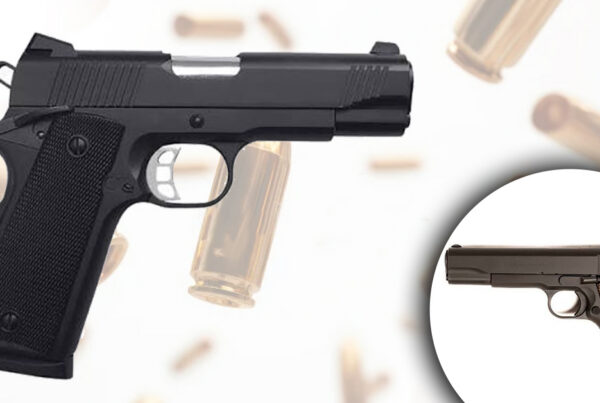


The Glock 22 has earned its reputation the hard way, on the hips of law enforcement officers, in the hands of home defenders, and through decades of proven reliability in .40 S&W. It’s not the flashiest gun in the safe, but it doesn’t need to be. What it needs is to work every single time you pull the trigger.
Here’s the thing, though. The factory Glock 22 is a starting point, not a finished product. The right upgrades don’t just make the gun look better, they make you shoot better, react faster, and trust your equipment more in the moments that actually matter. Whether you’re a patrol officer looking to improve your duty setup or a homeowner who wants the most capable home defense configuration possible, this guide walks you through the upgrades worth your money and the ones you can skip.
Why the Glock 22 Still Matters in 2026
Before we talk about upgrades, let’s talk about why people still choose the Glock 22 when there are plenty of newer pistols on the market.
The .40 S&W cartridge was literally designed for law enforcement applications, it was the result of a joint FBI and Smith & Wesson project in the early 1990s, and the Glock 22 became the most widely issued police sidearm in American history for a reason. The .40 S&W round hits harder than 9mm and offers more magazine capacity than .45 ACP, sitting in a practical middle ground that made it the go-to caliber for departments across the country.
The Gen 4 and Gen 5 variants introduced improved ergonomics, the nDLC finish, and a more refined trigger, but the bones of the platform remain the same. That’s actually good news for upgrade-minded owners, because aftermarket support for the Glock 22 is massive.
1. Trigger Upgrade — The Highest-Impact Change You Can Make
If there’s one upgrade that will immediately and noticeably improve your shooting, it’s the trigger. The stock Glock trigger has a factory pull weight of around 5.5 pounds with a slightly mushy reset that can work against you during rapid follow-up shots.
What to look for:
A quality aftermarket trigger should give you a cleaner, crisper break with a shorter, more tactile reset. You’re not looking to turn your duty gun into a competition race gun, you’re looking for consistency. A trigger pull in the 4.5 to 5-pound range with a definitive reset wall is the sweet spot for a duty or defensive application.
Brands that have built real reputations in the Glock trigger space include Apex Tactical, Ghost Inc., and Overwatch Precision. The TAC trigger from Overwatch, for example, is designed specifically to keep the factory safety geometry intact while dramatically improving the feel.
Important: Any trigger work that reduces the pull below 3.5 pounds or alters the safety system is not appropriate for a duty or home defense firearm. You want reliability, not a hair trigger.
2. Night Sights — Because Threats Don’t Wait for Daylight
The factory plastic sights that ship on the Glock 22 are adequate on a square range in good lighting. In a darkened hallway at 2 AM, they become a liability.
Tritium night sights are the single most practical safety upgrade you can make for home defense. The tritium vials glow continuously with no batteries required, they’re always on. Most quality night sight sets use a three-dot configuration with a front sight that’s slightly larger or brighter than the rears to help the eye naturally find the front dot first.
The top options in this space:
Trijicon’s HD XR sights are widely considered the benchmark, the front sight uses a larger tritium lamp with an orange painted ring around it that snaps into focus quickly under stress. Ameriglo also makes excellent options, and their I-Dot Pro set is popular with officers who want a simplified sight picture.
Fiber optic sights are worth mentioning too. They collect ambient light and glow brightly during the day but go dark in low light, which is why many serious shooters choose sights that combine fiber optic for daytime and tritium for low-light, like the Trijicon HD.
For home defense in particular, night sights are not optional. They’re mission-critical equipment.
3. Optics-Ready Setup (RMR or Red Dot)
This one depends on your application. For patrol officers, a red dot mounted on a pistol slide is increasingly common and supported by growing research showing that dot-equipped officers shoot faster and more accurately under stress. For home defense, the calculus is similar, a properly zeroed red dot can help you confirm your point of aim quickly in a way that iron sights can’t match.
The Glock 22 Gen 5 MOS (Modular Optic System) variant ships optics-ready from the factory. If you have an older model, you’ll need a slide milled by a quality gunsmith to accept a mounting footprint.
Red dots commonly chosen for duty/defensive applications:
The Trijicon RMR Type 2 is the gold standard, it’s been torture-tested extensively and is approved by numerous law enforcement agencies. The Holosun 507C and 509T are strong alternatives that bring solid glass and proven reliability at a lower price point. The 507C’s large window and “shake awake” feature make it genuinely practical for defensive use.
Battery life matters here. For a defensive firearm, choose a red dot with at least 20,000 hours of battery life on a moderate setting, and set a calendar reminder to change the battery every year regardless of the indicator.
4. Extended Magazine Release
The Glock 22’s factory magazine release is deliberately small and recessed, Glock designed it to prevent accidental drops. That’s a reasonable choice for a military or duty context, but for home defense where you may be wearing gloves or dealing with stress-induced fine motor skill degradation, a slightly extended magazine release can be the difference between a fast reload and a fumble.
Several aftermarket options extend the release button by 2 to 4mm, which is enough to allow activation without shifting your grip. Glock’s own extended magazine release (part number SP01700) is a clean, drop-in option that doesn’t look aftermarket and maintains the factory geometry. Vickers Tactical also produces a highly regarded option that’s been adopted by a number of instructors and military units.
This is a simple, inexpensive upgrade that takes about 10 minutes to install and requires no gunsmithing.
5. Recoil Spring Assembly — Upgrading for Longevity and Control
The factory recoil spring assembly on the Glock 22 is a captured dual-spring unit that functions well but has a finite service life. Glock recommends replacement every 5,000 rounds, and most serious shooters replace it preventatively at that interval regardless of observed wear.
Aftermarket options from Wolff Gunsprings and ISMI offer slightly heavier spring weights, typically 20 or 22 pounds versus the factory’s 17-pound configuration, which can soften felt recoil and extend the service life of the slide’s locking surfaces over time. For a home defense gun that may see infrequent but high-intensity use, a quality recoil spring replacement is cheap insurance.
This is also a worthwhile upgrade if you’re running .40 S&W +P ammunition, which generates additional pressure and cycles the slide more aggressively than standard loads.
6. Grip Enhancements — Traction Where It Counts
The Gen 4 Glock 22 introduced interchangeable backstraps, which was a significant ergonomic improvement over earlier generations. The Gen 5 refined the texture and added flared magazine well geometry. But for shooters who find the factory grip texture inadequate, especially in wet conditions or without gloves, grip tape or a stippling job can make a real difference.
Grip tape options like Talon Grips offer a peel-and-stick solution that doesn’t permanently modify the frame. They come in rubber and granulate textures depending on your preference. For a duty gun that may need to be returned to factory configuration, tape is the practical solution.
Stippling is a more permanent modification where a heated tool is used to add raised texture to the polymer frame. When done well by a competent gunsmith, it significantly improves adhesion in all conditions. When done poorly, it’s irreversible and looks terrible. If you go this route, choose a gunsmith with a portfolio of Glock work specifically.
A stippled or taped grip is particularly relevant for home defense, where your adrenaline levels, potential injuries, or the simple reality of wet hands from washing dishes can all affect your grip security.
7. .40 S&W Ammunition Selection — The Upgrade That Actually Matters Most
All the hardware in the world means nothing if you’re running the wrong ammunition. For a home defense or duty application, your ammunition selection is arguably more important than any mechanical upgrade.
For home defense:
Hollow point ammunition is the standard for defensive use. The Federal HST in .40 S&W 180gr has consistently performed at the top of independent gel testing, it reliably expands to roughly double its original diameter while maintaining adequate penetration in the 12 to 18-inch range that the FBI uses as its standard. Hornady Critical Defense and Speer Gold Dot are also well-regarded options that have been adopted by law enforcement agencies nationally.
Avoid steel-cased or aluminum-cased ammunition for a defensive firearm. It’s economical for practice, but quality brass-cased hollow point ammunition is what belongs in the chamber and magazine of a home defense gun.
For training:
You should train with ammunition that approximates the recoil characteristics of your defensive load. Full metal jacket 180gr .40 S&W rounds in brass cases are the standard training choice. Running cheap steel-case ammunition exclusively and then switching to your carry load means you’re training with different recoil impulse. not ideal.
At Golden Brothers Co, you’ll find a solid selection of .40 S&W ammunition including defensive hollow points and range-ready FMJ loads. Having your training and defensive ammunition from the same source keeps your supply consistent and ensures you know exactly what’s in your gun.
8. Weapon Light — Essential for Home Defense, Optional for Duty
A white light on a defensive firearm is not optional for home defense. The ability to identify your target before engaging is not just a tactical advantage it’s a legal and ethical requirement. Shooting at a movement or a sound in the dark is how tragedies happen.
The Streamlight TLR-1 HL and the SureFire X300U are both proven options that mount directly to the Glock 22’s accessory rail. The TLR-1 HL outputs 1,000 lumens, which is more than adequate for any residential scenario. The SureFire X300U is a step up in build quality and switch ergonomics but comes at a premium price.
For a home defense configuration, mount the light, learn how to operate it one-handed, and practice your target identification routine as part of your defensive shooting training. A light is only useful if it’s a trained part of your system.
Putting It All Together — Priority Order
Not everyone needs every upgrade at once. Here’s how to prioritize based on budget and application:
First priority (do these first): Night sights and defensive .40 S&W ammunition. These have the most direct impact on your ability to use the gun effectively in a real scenario.
Second priority: Weapon light for home defense. Extended magazine release. These are relatively inexpensive and add meaningful capability.
Third priority: Trigger upgrade from a reputable source. This improves your shooting but isn’t as immediately safety-critical as the first two tiers.
Fourth priority: Red dot optic if your slide is MOS-compatible. Grip enhancement. These are genuine improvements but require more investment and adaptation time.
A Note on Legal Compliance
Before making any modification to a firearm, especially a duty weapon, it’s worth understanding the relevant regulations. The Bureau of Alcohol, Tobacco, Firearms and Explosives (ATF) maintains guidelines on firearm modifications, and your department’s policy will govern what’s permissible on a duty gun. You can review the ATF’s official firearms regulations at atf.gov to ensure any modification you’re considering is fully compliant with federal law. For duty firearms specifically, always confirm with your department’s armorer before making modifications.
Where to Shop for Your Glock 22 and .40 S&W Ammo
Whether you’re starting from scratch or building on a Glock 22 you already own, having a reliable source for handguns and ammunition matters. At Golden Brothers Co, you’ll find a curated selection of handguns from trusted manufacturers alongside a full lineup of handgun ammunition including .40 S&W defensive and range loads. As a licensed FFL dealer since 1909, Golden Brothers brings over a century of expertise to every transaction, online orders ship nationwide to your local FFL dealer, and the team knows these platforms from real-world experience, not just spec sheets.
Final Thoughts
The Glock 22 is a proven platform that rewards thoughtful investment. You don’t need to spend a fortune to have a genuinely capable duty or home defense pistol, but the right sights, a weapon light, quality .40 S&W hollow points, and a clean trigger will move you from a stock configuration to one that’s actually optimized for the job it needs to do.
Start with the basics. Train regularly. Know your equipment cold. That’s what separates a defensive firearm from a gun that just lives in a drawer.