
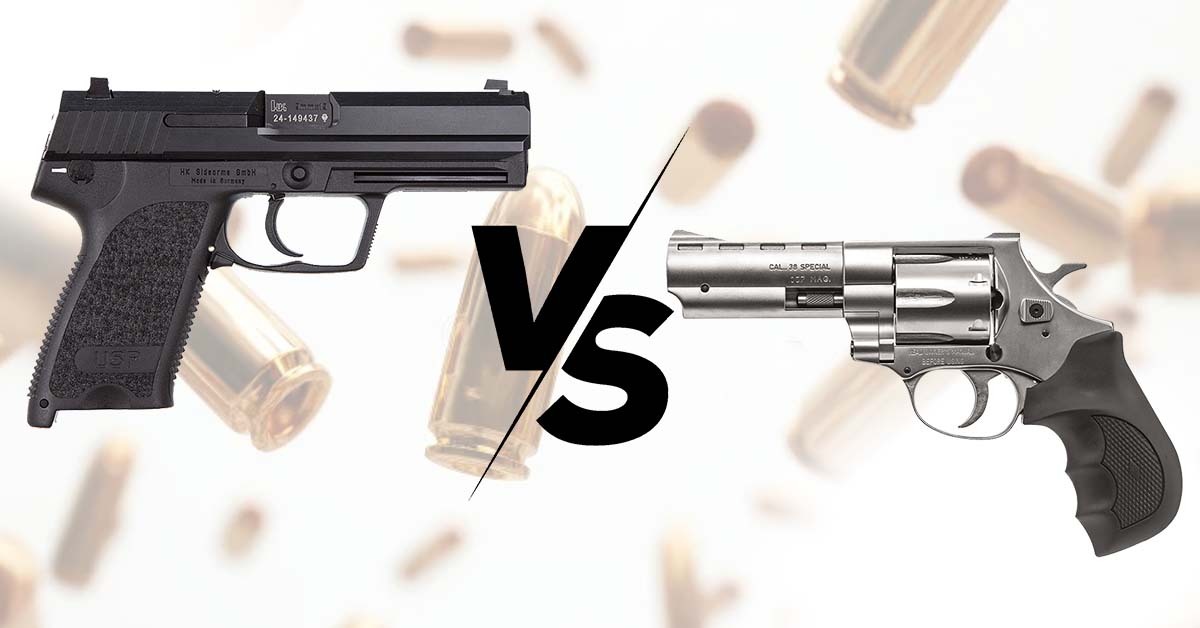
Walk into any gun shop and you will hear this question within the first five minutes: semi-auto vs revolver, which handgun is right for you? It is one of the oldest debates in handgun ownership and one of the most personal. There is no single right answer. But there is a right answer for you, and this guide will help you find it.
We are keeping this focused. This is not a broad overview of every handgun on the market. Instead, this semi-auto vs revolver comparison offers a direct, honest look at how these two action types perform in the areas that matter most when choosing a handgun for concealed carry, home defense, or range use.
How Each Action Works?
Before you compare them, you need to understand what separates them mechanically, because that mechanical difference drives almost every advantage and disadvantage on this list.
The Semi-Automatic Pistol
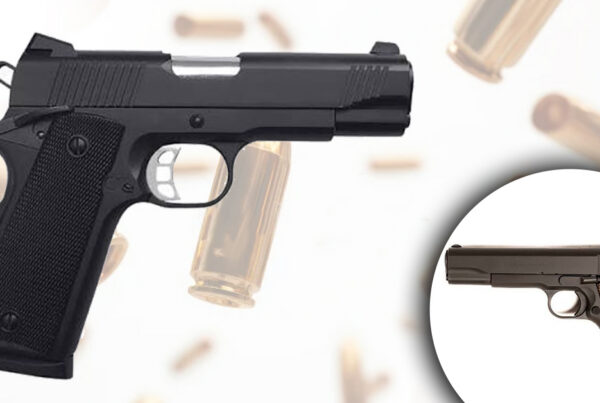
A semi-auto uses the energy of each fired round to eject the spent case, chamber a fresh cartridge from the magazine, and reset the firing mechanism. Pull the trigger once, one round fires, the gun automatically readies the next. Magazines typically hold 10 to 17+ rounds depending on caliber and frame size. The Glock 17 in 9mm holds 17+1. The Sig P365 holds 10+1 in a compact frame. Ammunition is stored in a detachable box magazine.
The Revolver
A revolver uses a rotating cylinder that holds 5 to 8 cartridges depending on the model and caliber. There is no magazine. Each trigger pull rotates the cylinder, aligns a fresh chamber with the barrel, and fires. When all chambers are empty, you manually eject the spent cases and reload, either one by one or with a speedloader. The Smith & Wesson 686 in .357 Magnum is a classic example holding 6 rounds.
Head-to-Head Comparison
| Category | Semi-Auto | Revolver |
|---|---|---|
| Capacity | 10–17+ rounds | 5–8 rounds |
| Reload Speed | Magazine swap — 2–3 seconds trained | Speedloader, slower, requires practice |
| Mechanical Simplicity | More parts, feeding mechanism | Fewer parts, no magazine dependency |
| Malfunction Handling | Tap-rack-ready drill required | Pull trigger again, cylinder advances |
| Trigger Pull | Short, light (striker-fired: ~5–6 lbs) | Long, heavy (DA: 10–12 lbs) |
| Concealability | Flat profile, easier to conceal | Cylinder width adds bulk |
| Maintenance | More components to clean | Simpler takedown and cleaning |
| Ammo Flexibility | Caliber-specific to slide/barrel | .357 Mag revolvers also fire .38 Spl |
| Beginner-Friendly | Requires slide manipulation skill | Load, point, pull, no slide needed |
Semi-Auto: Where It Wins
Advantages
- Higher round capacity, more shots before reloading
- Faster magazine reloads under stress
- Flatter profile, better for concealed carry
- Lighter trigger pull improves shot-to-shot accuracy
- Wide variety of optics-ready models available
- Dominant platform in law enforcement and military
Limitations
- Magazine-related stoppages (though rare on quality guns)
- Requires racking the slide can be difficult for some
- More components to maintain and clean
- More training required for malfunction clearing
The semi-auto’s biggest advantage is capacity combined with reload speed. In a self-defense scenario that requires more than six rounds, which is rare but possible, the semi-auto gives you more room to work. For concealed carry, the flat profile of a compact or subcompact semi-auto like the Sig P365 or Glock 43X is significantly easier to conceal than a revolver’s cylinder.
Revolver: Where It Wins
Advantages
- Virtually no feeding malfunctions
- Pull trigger again if primer fails, cylinder advances
- Mechanically simpler, fewer parts to fail
- No magazine to lose, break, or forget to seat
- .357 Mag can also chamber .38 Special, versatile
- Ideal for those with limited hand strength (no slide)
Limitations
- 5–6 round capacity in most defensive revolvers
- Slower reloading, even with speedloaders
- Heavier, longer double-action trigger pull
- Cylinder width makes concealment harder
The revolver’s core strength is mechanical reliability without dependence on a feeding mechanism. There is no magazine to fail, no round to misalign on the feed ramp, no extractor to break. Pull the trigger, the cylinder rotates, the next chamber fires. If a round fails to fire, you do not need to run a malfunction drill. You pull the trigger again and the cylinder moves to the next live round.
For home defense where the gun may sit in a drawer or safe for years at a time, the revolver’s simplicity is genuinely valuable. A quality revolver in .38 Special or .357 Magnum will fire reliably after years of storage, no magazine springs to weaken, no feeding issues from old hollow-points.
Which Is Right for You?
Choose a semi-auto if capacity, concealability, and reload speed are priorities, especially for everyday carry. Choose a revolver if you value mechanical simplicity, do not want to manage a slide, or are buying a dedicated home defense gun that will spend most of its life in a safe. Neither choice is wrong. Both choices require training.
The semi-auto wins the capacity and concealment argument clearly. Fifteen rounds of 9mm in a flat, sub-inch-wide pistol is hard to argue against for daily carry. But the revolver wins the simplicity argument equally clearly, and for some users, that simplicity is exactly what the situation demands.
If you are buying your first handgun and plan to carry it, most modern trainers will point you toward a striker-fired semi-auto in 9mm. If you are buying a home defense firearm for a partner or family member who is not interested in regular training, a quality .38 Special revolver requires almost no instruction to operate safely and effectively.