
If you have spent more than five minutes on a gun forum, you already know that caliber debates never end. Everyone has an opinion. Everyone has a story. And almost nobody agrees. This guide cuts through the noise to help you understand the best handgun calibers for self defense in 2026.
We are not going to tell you what sounds toughest or what your grandfather carried. We are going to look at what the data says, what terminal ballistics testing shows, and what law enforcement and self-defense instructors actually recommend in 2026.
By the end of this post, you will know exactly which caliber fits your specific self-defense situation, whether that is concealed carry, home defense, or both, and why the answer might not be what you expect.
If you are still in the early stages of choosing your first defensive handgun and want a broader overview, start with our Complete Handgun Buying Guide (2026) first, then come back here for the deep dive on calibers.
What Makes a Caliber Good for Self Defense?
Before we rank anything, let us define what “best” actually means in a self-defense context. A caliber that is great on paper but impossible to shoot accurately under stress is not a good self-defense caliber.
The four factors that matter most are:
1. Terminal Performance
This is the technical term for what a bullet does when it hits a target. In self-defense, you need a bullet that reliably penetrates 12–18 inches in ballistic gelatin (the FBI standard), expands consistently, and creates a permanent wound cavity large enough to be effective. A caliber that fails to expand reliably or under-penetrates is a liability.
2. Recoil Manageability
More power does not mean better results if you cannot put accurate rounds on target quickly. A caliber you can control and shoot accurately — especially for fast follow-up shots, is more effective than a cannon you flinch behind.
3. Ammunition Availability and Cost
You shoot what you train with. If your defensive caliber is expensive or hard to find, you will train less, and training less costs you accuracy under stress. Widely available calibers win on this front.
4. Magazine Capacity
In a real-world defensive encounter, more rounds available without reloading is a meaningful advantage. Calibers that allow higher-capacity magazines in a given frame size have a practical edge.
With those criteria established, let us get into the rankings.
The Ranked List: Best Handgun Calibers for Self Defense in 2026
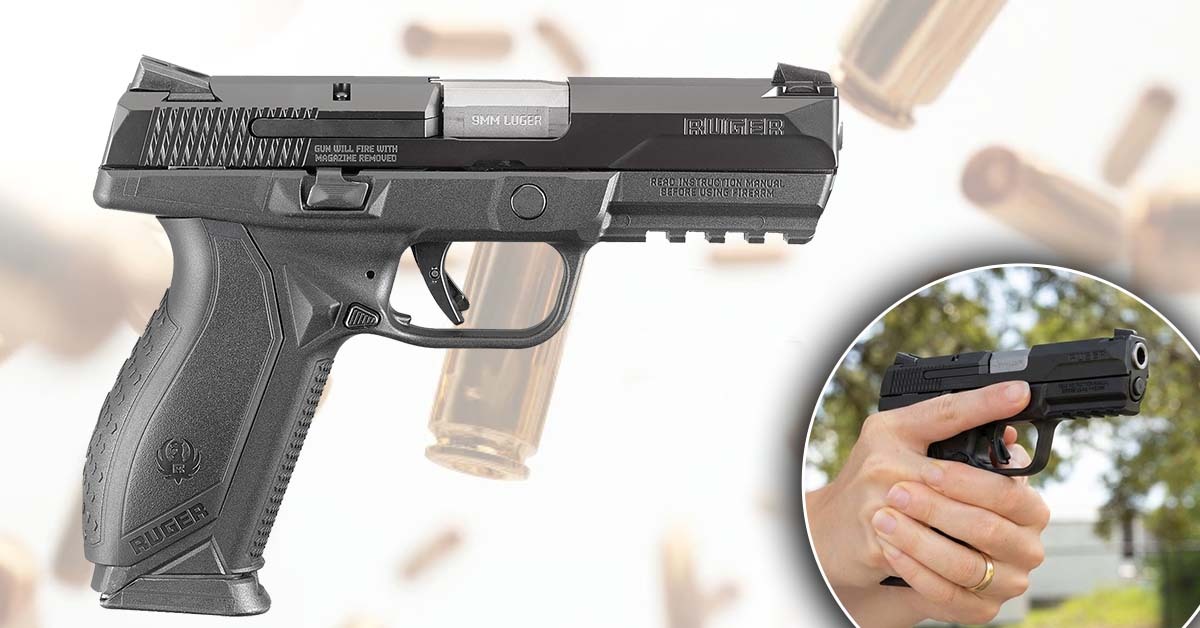
1 : 9mm Luger: The Undisputed Standard
Verdict: Best overall for the vast majority of self-defense situations.
The 9mm has won the caliber debate in 2026. That is not a bold opinion, it is the conclusion reached by the FBI, most major law enforcement agencies, and the overwhelming majority of professional self-defense trainers after decades of real-world data and ammunition development.
Here is why 9mm dominates:
Modern ammunition changed everything.
The 9mm of 1985 is not the 9mm of 2026. Federal HST, Speer Gold Dot G2, Hornady Critical Defense, and Winchester Defender loads have transformed 9mm into a legitimate fight-stopper. FBI testing shows modern 9mm hollow points produce terminal performance comparable to .40 S&W and approaching .45 ACP, at lower recoil and higher capacity.
Capacity advantage is real.
A full-size 9mm pistol typically holds 15–17 rounds. A comparable .45 ACP holds 8–10. In a home defense scenario or a situation requiring multiple threat engagement, those additional rounds matter.
Recoil is manageable for nearly everyone.
Shooters of all experience levels, hand sizes, and physical strength can shoot 9mm well with basic training. Faster, more accurate follow-up shots are possible for most people compared to .40 S&W or .45 ACP.
Ammunition is everywhere and affordable.
Practice ammunition runs roughly $0.20–$0.30 per round in 2026. You can train seriously without breaking your budget.
FBI made the call.
After years of carrying .40 S&W, the FBI switched back to 9mm in 2015, explicitly citing modern ammunition performance and improved hit probability due to lower recoil. Most major metropolitan police departments have followed.
Best 9mm Defensive Loads for 2026:
- Federal Premium HST 147gr JHP
- Speer Gold Dot G2 124gr +P
- Hornady Critical Defense 115gr FTX
- Winchester PDX1 Defender 147gr
Shop 9mm Luger ammunition at Golden Brothers Co and stock up on both practice and defensive loads.
Bottom Line: If you own one handgun for self defense, it should almost certainly be chambered in 9mm. The data supports it, the ammo selection is unmatched, and the capacity-to-recoil ratio is best in class.
2 : .45 ACP: Still Effective, Still Relevant
Verdict: Excellent choice for experienced shooters with the right platform.
The .45 ACP has been defending Americans since 1911 literally, given the iconic pistol it helped make famous. And it remains a fully capable self-defense round in 2026.
The argument for .45 ACP has always centered on bullet diameter. A .45 caliber bullet is 0.452 inches wide. A 9mm bullet is 0.355 inches. That difference in frontal diameter means a .45 creates a larger permanent wound channel, even without expansion. When you add modern hollow point expansion, .45 ACP loads are undeniably effective.
Where .45 ACP earns its place:
Modern .45 ACP defensive loads like the Federal HST 230gr, Speer Gold Dot 230gr, and Hornady Critical Duty 220gr +P perform exceptionally well in gelatin testing. Penetration is consistent, expansion is reliable, and terminal damage is serious.
For shooters already trained on the 1911 platform or who simply shoot .45 more accurately than 9mm, caliber-switching is not necessary. A caliber you shoot well beats a theoretically superior caliber you shoot poorly.
The honest trade-offs:
Lower magazine capacity is real. Most .45 ACP pistols hold 8–10 rounds in standard configurations. The Springfield Armory XD-M .45 and Glock 21 push that to 13 rounds, but even those lag behind 9mm equivalents. Ammunition costs roughly 30–40% more than 9mm. And felt recoil, while manageable for trained shooters, is substantially more than 9mm.
For a home defense pistol that lives in a drawer and fires infrequently, these trade-offs may be irrelevant. For a daily carry gun where every ounce and every round count, 9mm has a measurable advantage.
Best .45 ACP Defensive Loads for 2026:
- Federal Premium HST 230gr JHP
- Speer Gold Dot 230gr JHP
- Hornady Critical Duty 220gr +P
- Winchester Defender 230gr
Bottom Line: .45 ACP is a legitimate self-defense choice, particularly for 1911 enthusiasts and experienced shooters. It does not outperform modern 9mm meaningfully in terminal tests, but it absolutely gets the job done.
3 : .40 S&W: Solid but Declining
Verdict: Capable but no longer the right choice for most new buyers.
The .40 S&W had a good run. Developed in 1990 as a direct response to FBI requests for more power after the 1986 Miami shootout, it became the dominant law enforcement caliber through the 1990s and 2000s. Today, most agencies that carried .40 have transitioned to 9mm.
What .40 S&W does right:
Terminal performance with quality loads is genuinely good. .40 S&W pushes a heavier bullet faster than 9mm and produces solid wound channels. Used guns chambered in .40 especially service-grade Glocks, Smith & Wesson M&Ps, and Sig P226 variants, can often be found at significant discounts as agencies clear inventory.
The honest problem:
Recoil is sharper and snappier than 9mm, particularly in polymer-frame compact pistols. Modern 9mm loads have matched .40 S&W terminal performance in most credible tests. The only practical advantage .40 S&W retains over 9mm is marginal, and it costs more accuracy and capacity to achieve it.
For buyers shopping used police trade-ins at reduced prices, .40 S&W can still represent solid value. For anyone buying new in 2026, 9mm is the better investment in almost every scenario.
Best .40 S&W Defensive Loads:
- Federal HST 180gr JHP
- Speer Gold Dot 180gr JHP
Shop .40 S&W ammunition if you already own a pistol chambered in this caliber.
Bottom Line: If you own a .40 S&W pistol, it remains fully capable of defending your life. If you are buying new, choose 9mm unless you have a specific reason for .40.
4 : .357 Magnum: The Revolver King
Verdict: Outstanding terminal performance; best choice for defensive revolver shooters.
If revolvers are your preference, the .357 Magnum is in a class of its own for self-defense. The .357 Mag produces genuine muzzle energy advantages over any standard handgun cartridge in its size class, and its terminal performance in full-size revolvers is devastating.
Why .357 Magnum stands out:
Penetration and expansion with quality defensive loads, Federal 158gr JHP, Speer Gold Dot Short Barrel 135gr, Hornady Critical Defense 110gr, are consistently strong across test media. The .357 Mag was one of the few calibers that passed all elements of the original FBI protocol before the protocol was adapted for auto-loaders.
The dual-caliber capability is a practical advantage. Revolvers chambered in .357 Magnum also fire .38 Special, giving you the option to practice with mild, affordable .38 Special loads and carry full-power .357 Mag for defense.
The trade-offs:
Recoil from a snub-nose .357 Mag is substantial, more than most people expect and more than most people shoot well with quickly. Full-size revolvers absorb it much better. Capacity is the fixed limitation of revolver design: five or six rounds, and reloads are slow even with a speedloader.
For home defense where a revolver’s simplicity and absolute reliability are priorities, a 4-inch barrel .357 Magnum, Ruger GP100, Smith & Wesson 686 — is an outstanding choice.
Best .357 Mag Defensive Loads:
- Federal Premium 158gr JHP
- Speer Gold Dot Short Barrel 135gr
- Hornady Critical Defense 110gr FTX
Shop .357 Magnum ammunition to stock up on both .357 and .38 Special.
Bottom Line: Best revolver caliber for self-defense, full stop. Recoil and capacity limitations are real, but terminal performance is exceptional.
5 : .38 Special: Reliable and Underrated
Verdict: Solid choice for home defense revolvers and lower-recoil carry situations.
The .38 Special lacks the glamour of magnum cartridges, but it has been reliably defending people since 1898 and continues to do so. In a medium-frame revolver with quality +P defensive loads, .38 Special is more than adequate for self-defense.
Standard pressure .38 Special loads are mild enough for new shooters, elderly shooters, or anyone sensitive to recoil. +P loads step up velocity and terminal performance meaningfully. Hornady Critical Defense +P, Federal HST +P 150gr, and Speer Gold Dot Short Barrel +P are all credible defensive choices.
The limitation is the same as .357 Mag: revolver capacity. But for a nightstand gun or a simple, reliable option for someone who does not want to learn the manual of arms of a semi-automatic, a .38 Special revolver is a completely legitimate choice.
Shop .38 Special ammunition for defensive and practice loads.
6 : .380 ACP: Last Resort Carry, Not First Choice
Verdict: Acceptable for deep concealment when nothing else is manageable; not ideal as your primary defensive round.
The .380 ACP (9mm Short) occupies a specific niche: ultra-compact pistols that are genuinely pocketable. The Ruger LCP, Sig P238, and Glock 42 are popular .380 options that fit in a front pants pocket.
Modern .380 defensive loads have improved significantly. Federal HST .380 99gr JHP performs reasonably well in gelatin and is probably the gold standard for the caliber. Hornady Critical Defense .380 FTX is another credible option.
The honest limitations:
.380 ACP is underpowered compared to 9mm. Penetration can be marginal with some loads, particularly if fired from short barrels through intermediate barriers like heavy clothing. The FBI’s 12-inch minimum penetration standard is difficult to meet consistently with .380 in real-world conditions.
For a deep-cover backup gun or a situation where nothing larger is manageable due to physical limitations, .380 is better than no gun. But if you can shoot a 9mm subcompact like the Sig P365 or Glock 43, and most people can, do so. The terminal performance difference is meaningful.
7 : 10mm Auto: Powerful Specialist
Verdict: Too much for most self-defense use; excellent for outdoors and threat-specific scenarios.
10mm Auto is a high-velocity, high-energy round that sits between .40 S&W and full magnum rifle calibers in terms of raw power. The Glock 20 and 29, Colt Delta Elite, and Springfield XDM chambered in 10mm are serious pistols for serious purposes.
For self-defense against four-legged threats, bear country hiking, remote outdoor work, 10mm is genuinely useful. For urban self-defense, the recoil is more than most people shoot well, the pistols are large, and the terminal performance advantage over 9mm in human-threat scenarios is not worth the trade-offs.
Shop 10mm Auto ammunition if you run a 10mm platform.
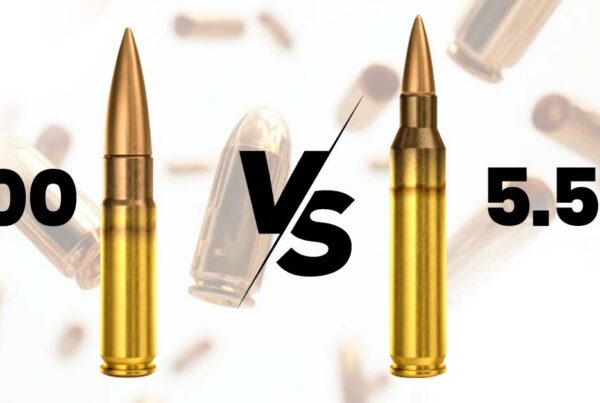
Head-to-Head: 9mm vs .45 ACP, The Classic Debate
No caliber comparison generates more debate than 9mm vs .45 ACP. Here is the honest summary:
| Factor | 9mm Luger | .45 ACP |
|---|---|---|
| Magazine Capacity | 15–17 rounds (full-size) | 8–10 rounds (full-size) |
| Felt Recoil | Moderate | Substantial |
| Terminal Performance | Excellent (modern loads) | Excellent (modern loads) |
| Ammo Cost | Lower | Higher |
| Platform Options | Widest selection | Strong selection |
| Training Efficiency | Higher (lower recoil) | Lower (more recoil) |
The verdict: For most shooters in most situations, 9mm wins on practical grounds. For shooters who genuinely shoot .45 more accurately, prefer the 1911 platform, or simply want a larger-diameter bullet, .45 ACP is fully capable and there is nothing wrong with that choice.
The Role of Ammunition in Caliber Performance
A mediocre caliber with great ammunition will outperform a great caliber with mediocre ammunition. This is worth stating clearly: the specific load matters as much as the caliber.
For any self-defense caliber, use quality hollow-point defensive ammunition from reputable manufacturers. Full metal jacket (FMJ) range ammunition is for training only, it does not expand reliably on impact and poses over-penetration risks.
The brands that consistently lead in independent gelatin testing:
- Federal Premium : FBI contract loads, HST series
- Speer : Gold Dot, Law Enforcement standard for decades
- Hornady : Critical Defense, Critical Duty lines
- Winchester : PDX1 Defender series
Once you select your defensive load, test at least 50–100 rounds through your specific firearm to confirm reliable function. Not every pistol feeds every load without issues.
Matching Caliber to Your Self-Defense Situation
Daily Concealed Carry:
9mm in a compact or subcompact pistol is the practical answer. Sig P365, Glock 43X, or Smith & Wesson Shield Plus give you a balance of concealability, capacity, and shootability that no other caliber matches.
Home Defense:
9mm in a full-size or compact pistol, or .357 Magnum/.38 Special in a revolver if you prefer the simpler manual of arms. Capacity and controllability favor 9mm. Simplicity and reliability favor the revolver.
Home Defense in Bear Country or Remote Areas:
10mm or .44 Magnum revolver. Urban-optimized calibers are not what you need when the threat profile changes.
New Shooters:
9mm, without exception. The lower recoil allows faster skill development, and modern 9mm defensive loads are terminal-performance equals of anything in this list.
Experienced Shooters Who Prefer .45 or .357:
Carry what you shoot well. The best caliber is the one you can put on target accurately under stress.
Frequently Asked Questions
Q: Is 9mm enough for self defense in 2026?
Yes. The data is unambiguous. Modern 9mm defensive loads meet and exceed FBI minimum standards for penetration and expansion. The FBI, DEA, Secret Service, and most major police departments carry 9mm for a reason.
Q: What caliber does the FBI carry?
The FBI transitioned from .40 S&W to 9mm in 2015. The current service load is the Federal Premium HST 147gr. Most FBI field agents carry Glock 19s or Sig Sauer P226s in 9mm.
Q: Is .45 ACP better than 9mm for self defense?
Not meaningfully, no, especially with modern ammunition. Independent ballistic testing shows quality 9mm loads matching .45 ACP terminal performance in most real-world conditions. The practical advantages of 9mm (capacity, recoil, cost) tip the scales in most scenarios.
Q: What is the most powerful handgun caliber for self defense?
From a raw energy standpoint, 10mm Auto or .44 Magnum. From a practical self-defense standpoint, power matters less than reliability, capacity, and the shooter’s ability to place accurate shots quickly. More power than you can control is a liability, not an asset.
Q: What handgun caliber do most police carry?
As of 2026, 9mm is the dominant law enforcement caliber in the United States. The .40 S&W transition has largely reversed back to 9mm across agencies of all sizes.
Q: Should I use +P ammunition for self defense?
+P loads are loaded to higher pressure than standard, producing higher velocity and often better terminal performance. They are safe in firearms rated for them, check your manual. +P is a strong choice for 9mm and .38 Special defensive loads, particularly in shorter barrels where velocity loss is most significant.
Last Updated: 2026 | Golden Brothers Co — South Georgia’s Most Trusted Firearms & Ammunition Since 1909
Store Location: 1710 Smith Ave, Thomasville, GA 31792 | Mon–Fri: 7:30AM–5:30PM | Sat: 7:30AM–12PM