
Let me be straight with you, the Glock 30 is not the first gun people think of when they hear “concealed carry.” It’s chunky, it’s chambered in .45 ACP, and if you hold one next to a slim 9mm carry pistol, you might wonder why anyone would choose to carry this thing under a shirt all day.
But here’s the thing: thousands of people do, every single day. Off-duty cops, veterans, and experienced everyday carriers keep coming back to the G30. There’s a reason for that.
This guide breaks down everything you actually need to know, the real size, the real carry experience, who it works for, and who should probably look elsewhere.
What Exactly Is the Glock 30?
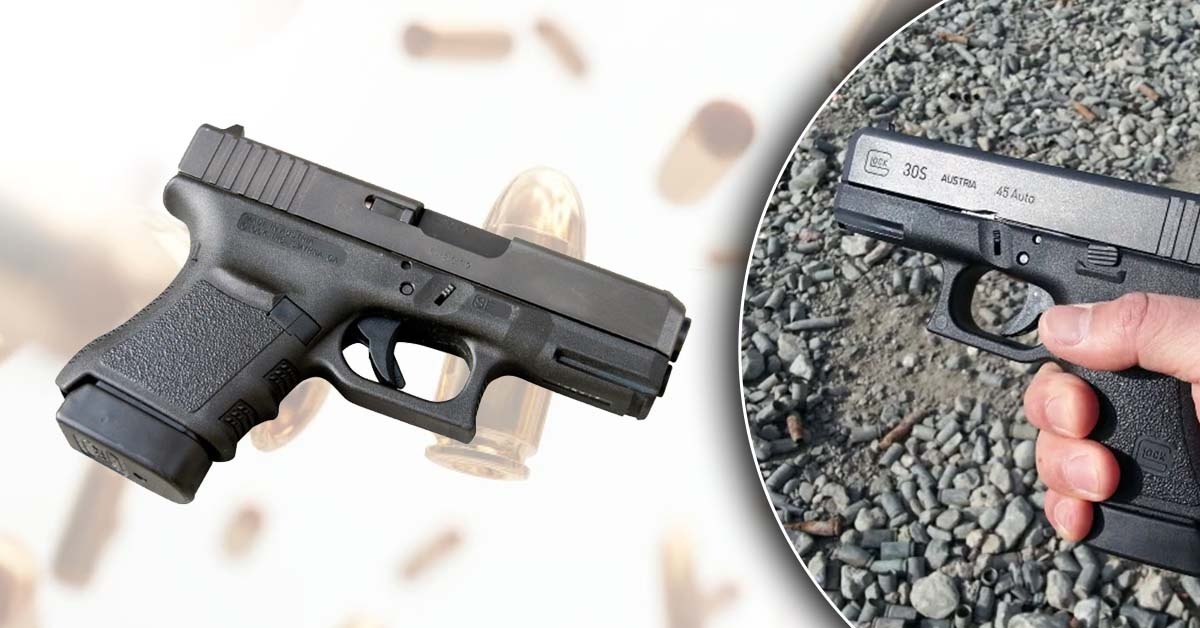
The Glock 30 is Glock’s subcompact .45 ACP pistol. It was designed to pack the terminal performance of the full-size Glock 21 into a frame small enough for concealed carry. And honestly? They pulled it off better than most people expected.
Here are the key specs:
- Caliber: .45 ACP
- Barrel Length: 3.77 inches
- Overall Length: 6.96 inches
- Height: 4.8 inches
- Width: 1.27 inches
- Empty Weight: 23.99 oz
- Magazine Capacity: 10+1 rounds (standard)
- Frame: Gen 3, Gen 4, and Gen 5 variants available
That width number, 1.27 inches is important. It’s wider than most single-stack subcompacts, but it’s not as dramatic as people make it sound. The double-stack .45 ACP design is what gives it that grip, and that grip is what lets it hold 10 rounds of one of the most effective self-defense calibers ever developed.
Size and Concealability: Honest Talk
Here’s where a lot of reviews sugarcoat things, so let me be real.
The Glock 30 is not a “pocket pistol.” It’s not going to disappear under a thin t-shirt the way a Glock 43 will. If you’re in a hot climate and wearing lightweight summer clothes, you’ll need to think harder about your holster, your carry position, and your wardrobe.
That said, it is absolutely concealable for most people with the right setup:
IWB (Inside Waistband) carry at 3-4 o’clock works really well for most body types. The shorter grip compared to a full-size .45 means there’s less to print. The width is the bigger challenge, but it’s manageable under a loose button-down or a light jacket.
AIWB (Appendix Carry) is more of a mixed bag. Thinner, lighter pistols print less at appendix. Some people make it work with the G30, but if you’re sitting down a lot throughout the day, you’ll notice it.
OWB (Outside Waistband) under a cover garment is honestly where the G30 shines for concealment. A good OWB holster with a quality belt, under even a light jacket, makes this gun disappear.
The bottom line on size: if you’ve already carried a Glock 19 concealed, you can carry the G30. It’s slightly thicker but shorter overall. Most people who struggle with the G30’s concealability simply haven’t found the right holster for their body type yet.
The .45 ACP Argument: Does Caliber Still Matter?
The caliber debate in the concealed carry world gets exhausting fast. Everybody has an opinion, and the truth is, modern defensive ammunition in 9mm has genuinely closed a lot of the gap between calibers.
But here’s what doesn’t change: the .45 ACP is a wide, heavy bullet. It creates a large wound channel. At close defensive distances, which is the reality of most civilian self-defense situations, that matters to a lot of people psychologically and practically.
If you’ve built your confidence around the .45 ACP over years of training and carrying, switching to a 9mm just because it’s slightly slimmer isn’t automatically the right call. The best defensive caliber is the one you shoot accurately and carry consistently.
The G30 gives you 10+1 rounds of .45 ACP in a package that’s smaller than any other double-stack .45 pistol you’ll find. That’s a real achievement in engineering, and it’s a genuine advantage for people who are committed to the caliber.
How Does It Actually Feel to Carry All Day?
This is the question that matters more than any spec sheet.
The weight, around 24 ounces unloaded, closer to 33 ounces fully loaded, is noticeable. It’s not back-breaking, but you will feel it. A good gun belt is non-negotiable with this pistol. Carry it on a cheap nylon belt and you’ll be miserable by noon. Carry it on a proper reinforced leather or Kydex-backed gun belt and it distributes the weight properly.
The grip itself is comfortable. Glock’s grip texture on the Gen 4 and Gen 5 models is grippy without being abrasive, and the shorter grip profile actually aids concealment significantly compared to the full-size G21.
Recoil is manageable. .45 ACP has a reputation for being punishing, but the G30’s polymer frame absorbs a good amount of it. The recoil impulse is more of a firm push than a sharp snap, experienced shooters generally describe it as softer than .40 S&W, just heavier.
One thing worth knowing: if your hands are larger, the G30 can feel slightly compressed. It was built for a wide range of hand sizes, but people with very large hands sometimes find the grip a bit short. The good news is that the G30 accepts Glock 21 magazines, which extend the grip and add capacity, a useful option for a spare mag.
Who Should Carry the Glock 30?
The G30 isn’t for everyone, but it’s the right gun for a specific type of carrier:
It makes sense if you:
- Are already committed to .45 ACP and don’t want to retrain on a different caliber
- Prioritize stopping power over ultimate concealability
- Have experience concealing mid-size to compact pistols
- Carry in cooler climates or professions where looser clothing is the norm
- Want Glock’s legendary reliability with a proven defensive caliber
- Are transitioning from a full-size duty pistol to something smaller but familiar
It may not be the best fit if you:
- Need to carry in very hot weather with minimal clothing year-round
- Are new to concealed carry and find the weight/bulk intimidating
- Have serious hand strength limitations that make racking a heavier slide difficult
- Prioritize maximum round count above all else
There’s no shame in either category. Knowing which one you fall into is how you make a smart buying decision instead of an expensive mistake.
Glock 30 vs. Glock 30S vs. Glock 30SF, What’s the Difference?
You’ll see these three variants come up often, and it’s worth knowing what sets them apart:
Glock 30 (Standard) : The original. Slightly larger grip frame, standard Glock finger grooves. Gen 3 variants are still widely available and carry a loyal following.
Glock 30SF (Short Frame) : Same slide and barrel as the standard G30, but the grip is slightly slimmer front-to-back. Better for shooters with smaller hands or those who want a slightly reduced profile.
Glock 30S : This one is interesting. It combines the slim slide from the Glock 36 (single-stack .45 ACP) with the double-stack frame of the G30. The result is a noticeably thinner profile overall, which improves concealability without sacrificing the 10-round magazine capacity. For concealed carry specifically, the G30S is often the top recommendation.
If concealment is your primary concern, go G30S. If you want the most widely available model with the broadest aftermarket support, the standard G30 Gen 4 or Gen 5 is hard to beat.
Reliability: The Part That Actually Matters Most
Everything above is academic if your carry gun isn’t reliable. This is where Glock earns its reputation.
The G30 shares the same basic operating system as every other Glock, the Safe Action trigger system, the polymer frame, the tenifer-treated slide. This platform has been tested by military and law enforcement agencies around the world for decades. It runs dirty, it runs wet, it runs dry, and it keeps running.
In .45 ACP, the G30 is known to be particularly reliable with a wide range of ammunition types. Unlike some compact pistols that become finicky with certain hollow point loads, the G30 feeds modern defensive ammunition consistently.
The only real reliability concern people report occasionally is with extremely limp-wristed shooting technique. Like most semi-autos, the G30 needs a firm grip to cycle properly. It’s not unique to this pistol, but it’s worth knowing if you’re training with new shooters.
Upgrades and Accessories Worth Considering
If you’re carrying the Glock 30 daily, a few upgrades can genuinely improve the experience:
Night Sights : Factory Glock sights are functional but plastic. Upgrading to tritium night sights (Trijicon or AmeriGlo are popular choices) makes low-light sight acquisition significantly better. For a carry gun, this isn’t optional.
Extended Magazine Baseplate : Adding a +2 or extended baseplate to your spare magazine gives you a few extra rounds and a longer grip for reloads.
Quality Holster : This matters more than almost anything else. A molded Kydex IWB holster with solid retention and adjustable cant transforms the carry experience. Don’t cheap out here.
Gun Belt : Already mentioned this, but worth repeating. A reinforced carry belt isn’t a luxury for a gun this size. It’s a requirement.
If you’re looking to outfit your G30 properly before you start carrying, browsing the handgun selection and accessories at Golden Brothers Co is a good starting point, they carry a solid range of pistols and ammunition from trusted brands, and their team has been in the business long enough to give you straight answers instead of sales pitches.
What Real Carriers Say About the Glock 30
Beyond spec comparisons, the real test is what people who actually carry the G30 daily think of it.
The consistent theme you hear from experienced G30 carriers is trust. Once you’ve put several hundred rounds through it and confirmed it runs flawlessly, there’s a confidence that comes with carrying a double-stack .45 ACP that’s hard to replicate with anything else. It’s not the lightest option, it’s not the slimmest option, but it’s a serious gun that does serious things reliably.
Long-term carriers also frequently mention that the discomfort of the first few weeks of carry largely fades as you adjust your wardrobe and gear. The gun that felt bulky in week one often becomes the gun you reach for automatically in week twelve.
Glock 30 Specifications at a Glance
| Feature | Specification |
|---|---|
| Caliber | .45 ACP |
| Barrel Length | 3.77 in |
| Overall Length | 6.96 in |
| Height | 4.8 in |
| Width | 1.27 in |
| Weight (Unloaded) | 23.99 oz |
| Magazine Capacity | 10+1 rounds |
| Action | Safe Action (striker-fired) |
| Frame | Polymer |
| Available Generations | Gen 3, Gen 4, Gen 5 |
Final Verdict: Is the Glock 30 Good for Concealed Carry?
Yes, with the right expectations.
The Glock 30 is a legitimate, proven concealed carry handgun that offers a combination of stopping power, capacity, and reliability that’s genuinely hard to match in the compact .45 ACP category. It is not the most concealable pistol you can buy, and it is not the lightest. But it is one of the most trustworthy, and for many experienced carriers, that tradeoff is more than worth it.
If you’re an experienced shooter who has carried before and wants a compact .45 with serious terminal performance and Glock’s built-in reliability, the G30 is a strong choice. If you’re brand new to carry and still figuring out holsters, belts, and wardrobe adjustments, you might want to start with something lighter and work your way up.
Either way, it’s a pistol worth taking seriously.
Frequently Asked Questions (FAQ)
Q: Is the Glock 30 too big for concealed carry?
A: Not for most people who choose the right holster and carry position. It’s wider than slim 9mm pistols but shorter overall than a Glock 19. With a quality IWB holster and a proper gun belt, it carries well under standard clothing.
Q: How many rounds does the Glock 30 hold?
A: The standard magazine holds 10 rounds of .45 ACP, giving you 10+1 with one in the chamber. The G30 also accepts Glock 21 magazines, which can hold up to 13 or 30 rounds depending on the variant.
Q: What is the difference between the Glock 30 and Glock 30S?
A: The Glock 30S uses the slimmer slide from the Glock 36 combined with the double-stack frame of the standard G30. The result is a slightly thinner overall profile, which improves concealability while maintaining the same magazine capacity.
Q: Is .45 ACP still a good self-defense caliber?
A: Yes. While modern 9mm hollow point ammunition has significantly improved, .45 ACP remains a highly effective self-defense round. It delivers a large-diameter, heavy projectile that creates substantial wound channels. Many experienced carriers continue to prefer it for this reason.
Q: Can the Glock 30 use Glock 21 magazines?
A: Yes. The Glock 30 is cross-compatible with Glock 21 magazines. This allows you to carry a higher-capacity spare magazine, and the longer grip can also help shooters with larger hands.
Q: What holster is best for Glock 30 concealed carry?
A: A molded Kydex IWB holster with adjustable retention and cant is the most popular choice for daily carry. AIWB holsters work for some body types, and OWB holsters under a cover garment offer excellent all-day comfort. Quality belt and holster pairing is essential for any carry setup.
Q: Is the Glock 30 good for a woman to carry?
A: It depends on the individual. The G30’s grip size can be challenging for those with smaller hands, though the SF (Short Frame) variant helps. Some female carriers find the weight and width manageable with proper gear; others prefer slimmer options. Hands-on range time with the pistol before purchasing is strongly recommended.
Q: How does the Glock 30 compare to a Glock 19 for carry?
A: The Glock 19 is slimmer, lighter, and easier to conceal in most scenarios. The G30 offers larger caliber (.45 ACP vs 9mm) and comparable capacity. The right choice depends on whether you prioritize maximum concealability or are committed to the .45 ACP platform.
For official information on firearm regulations, safe storage requirements, and concealed carry laws in your state, visit the Bureau of Alcohol, Tobacco, Firearms and Explosives (ATF), the federal agency responsible for firearms regulation in the United States.