
There’s a lot of noise online about plate carriers. Endless YouTube videos, Reddit arguments about MOLLE vs. slick setups, and guys who’ve never left the range telling you what “operators” run. If you’re tired of wading through that, good, because this guide is written for people who want real information they can actually use.
Whether you’re a competitive shooter, a serious home defender, a law enforcement officer building your own kit, or just someone who wants to understand how modern body armor systems work, this breakdown covers what matters and why.
Let’s get into it.
What Is a Plate Carrier, and Why Does the Setup Matter?
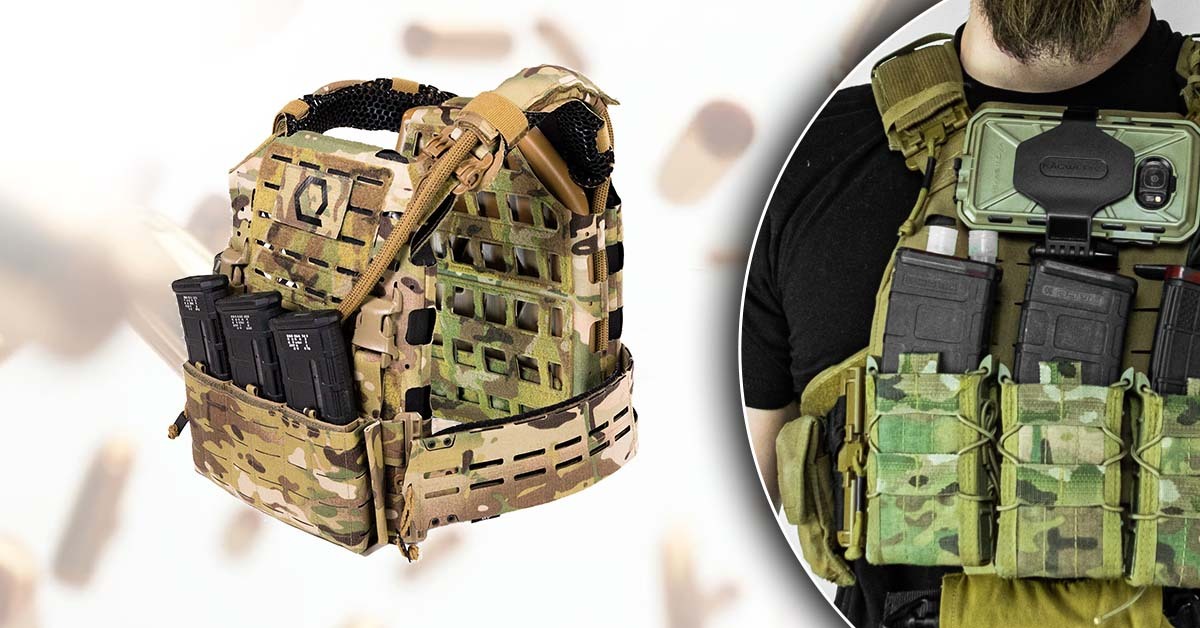
A plate carrier is a vest designed to hold ballistic armor plates, typically ceramic or polyethylene composite, over your vital zones. Unlike a soft armor vest (the kind most law enforcement wears under their uniform), a plate carrier is modular, external, and designed to handle rifle-caliber threats.
But here’s the thing people miss: the plate carrier itself is only part of the equation. The setup, how you configure it, what you attach to it, and how it fits your body, determines whether it helps you or hinders you.
A poorly configured plate carrier can slow you down, restrict your shooting position, or put weight in all the wrong places. A well-built setup disappears on your body. You stop thinking about the gear and start focusing on the task.
That’s what we’re building toward here.
The Foundation: Getting the Right Plates First
Before you buy a single piece of Velcro or a magazine pouch, you need plates that actually fit your carrier and stop the threats you’re concerned about. This is where most people make their first mistake, they buy the carrier first and the plates second.
Understanding Plate Levels
The NIJ (National Institute of Justice) sets the standard for body armor ratings in the United States. Here’s a simplified breakdown:
- Level III — Stops common rifle threats including 7.62x51mm NATO ball. A solid choice for most civilian and range applications.
- Level III+ — An industry designation (not official NIJ) that bridges the gap between III and IV, often handling M855 “green tip” .223 ammo.
- Level IV — Stops armor-piercing rifle rounds. Heavier, but the standard for military and high-threat law enforcement applications.
The ATF and NIJ publish current standards that are worth reading before you make any purchasing decisions. Their guidelines cut through a lot of the marketing language you’ll find on gear websites.
Plate Size and Cut
Standard sizing runs from 8×10 inches to 10×12 inches, with 10×12 being the most common. The “cut” refers to the shape, shooters cut (also called swimmer’s cut) trims the upper corners to give your arms more range of motion, which matters a lot if you’re raising a rifle all day. Full cut plates offer more coverage.
Most adults fit a 10×12 medium plate. If you’re smaller-framed or run a very compact setup, 8×10 might be worth considering. When in doubt, measure from your sternal notch (base of your throat) down about 7 inches, that’s roughly where your front plate should sit.
Building Your Plate Carrier Setup: The Layers
Think of your kit in layers, from closest to your body outward. This mental model helps you organize your loadout logically and keeps weight distributed properly.
Layer 1: The Carrier Itself
The carrier is your platform. It needs to fit correctly, straps snug but not restrictive, plates centered on your sternum, and the cummerbund (the wrap-around side section) secured so the carrier doesn’t shift when you move.
Popular platforms you’ll hear about include the Crye Precision JPC, the FirstSpear Strandhogg, and more budget-friendly options like the Ferro Concepts FCPC. Each has tradeoffs in weight, modularity, and price.
What to look for in a carrier:
- Quality stitching at stress points
- Adjustable shoulder straps with reliable hardware
- Front and rear plate pockets that hold your plates without excessive movement
- MOLLE webbing if you want to add pouches (or a slick panel if you don’t)
Layer 2: Your Ammunition
This is where the rubber meets the road for anyone running a plate carrier in a defensive or training context. Your magazine pouches, whether KYDEX, soft, or hybrid, need to be positioned where you can access them naturally, without looking down or breaking your grip on your rifle.
Most setups run two to three rifle magazine pouches on the front of the carrier. Single-stack horizontal pouches at the bottom of the chest panel are popular for keeping the profile low and the weight centered.
If you’re running a rifle platform chambered in .223/5.56 or .308, standard AR/M4-pattern magazines will fit most universal MOLLE pouches without issue. Make sure you’re running enough ammo for the training or use case, running dry in a match or a defensive scenario because you under-staged your kit is a preventable mistake.
For pistol backup, a single pistol mag pouch on the cummerbund or at 3-4 o’clock on a slick panel keeps your secondary reload accessible without crowding your rifle mags.
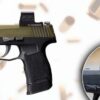
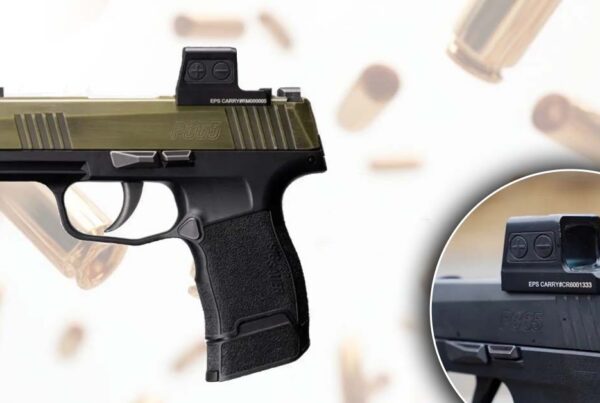
Speaking of pistol ammo, if you’re maintaining a kit that includes a handgun as a secondary, make sure your sidearm and your plate carrier setup are configured for the same hand. It sounds obvious, but cross-draw pistol holsters don’t work well under certain carrier configurations.
Layer 3: Medical and Utility
Any serious tactical setup needs a tourniquet. Full stop. The Committee on Tactical Combat Casualty Care (TCCC) has made it clear for two decades: the number one preventable cause of death on the battlefield is extremity hemorrhage. A CAT or SOFTT-W tourniquet on your non-dominant arm, accessible with one hand, costs less than a nice magazine pouch and saves lives.
Beyond the tourniquet, a small blowout kit (pressure bandage, chest seals, hemostatic gauze) on the carrier keeps your medical response tools with you even if you’re separated from your bag.
Utility pouches for a radio, phone, or small tools round out this layer. Keep it minimal, every ounce you add to the carrier comes out of your endurance and mobility.
Common Plate Carrier Configurations
There’s no single “right” setup, but a few configurations have proven themselves across different use cases.
The Slick Setup
Minimal MOLLE usage. The carrier is clean on the front, no protruding pouches. Magazines and medical go inside the carrier’s built-in pockets or on the cummerbund. This works well for vehicle work, close-quarters training, and anyone who needs to move through tight spaces. It also reduces snagging risk.
The downside: limited ammo storage without external pouches. If you’re going slick, you’re usually supplementing with a chest rig worn underneath or a battle belt.
The Full MOLLE Loadout
The front panel is maxed with pouches, three rifle mag pouches, a pistol mag pouch, admin pouch, and maybe a medical pouch at the top. This is a proven infantry-style configuration that keeps everything on the carrier and nothing loose elsewhere.
The tradeoff is weight and bulk. For competitive shooting or extended movement, this gets heavy fast.
The Hybrid / Minimalist Build
Two rifle mag pouches, one blowout kit, one admin pouch. That’s it. The rest stays in a pack or on a belt. This is probably the most practical configuration for most shooters, enough on the carrier to be functional, light enough to move without constantly fighting your gear.
Ammunition Pairing: Feeding Your Setup
Your plate carrier setup is only as good as your ability to run it consistently. That means training with the same ammo you’d carry, not just the cheap stuff on range day.
For rifle training, rifle ammo in the caliber you run is an obvious start, but think about volume. Plate carrier training is physical. You’re moving, dropping to a knee, getting up, reloading under stress. You’ll go through more rounds than a static square range session. Planning for at least 200-300 rounds per training day keeps you from cutting sessions short.
For your pistol secondary, handgun ammo in your carry caliber matters for training consistency. If you carry 9mm for your EDC and transition to a .45 ACP for your carrier-mounted secondary just because you got a deal on one, your muscle memory takes a hit. Consistency across training pays dividends.
Shotguns aren’t commonly paired with plate carriers in most configurations, but for home defense setups or certain law enforcement applications, a breaching or entry shotgun may be part of the kit. If that’s your situation, shotgun ammo selection matters, 00 buckshot for most defensive applications, slugs for longer-range precision needs.
Fit and Adjustment: The Most Overlooked Part
You can build the most expensive, well-thought-out plate carrier setup in the world and have it fail you because it doesn’t fit.
Here’s a quick checklist for proper fit:
Shoulder straps: Tight enough that the carrier doesn’t sag or bounce when you run. Loose enough that you can fully raise your rifle without the carrier pulling up and covering your chin.
Plate height (front): The top of your front plate should sit at your sternal notch. Too high and it will interfere with your chin when you get into a shooting position. Too low and you’re exposing your heart and lungs to threats above the plate.
Plate height (rear): The rear plate should mirror the front, protecting your upper back without riding up into your neck or restricting head movement.
Cummerbund tension: Firm but not constricting. You should be able to breathe deeply. If you can’t, you’ll fatigue faster and your accuracy suffers.
Put the carrier on, mount your rifle, get into your natural shooting stance, and see what feels wrong. Then fix it before you hit the range.
Training With Your Kit
A plate carrier isn’t just a piece of gear, it’s a tool that has to be practiced with. Here’s what that means in practical terms:
Wear it often. The first time you run a 200-yard dash in a loaded carrier should not be in a real situation. Put time in at the range, at dry fire sessions, doing simple conditioning work. Your body needs to adapt to the weight and the restricted movement.
Practice your reloads. Tactical reloads from a plate carrier are different from a belt or range bag. The magazine pouches are oriented differently, the weight distribution is different, and your hands are working at a different angle. This takes repetitions to become automatic.
Run the whole system together. Carrier, firearms, ammunition, medical, practice using all of it as a unit. Simulated stress drills, timer-based reloads, buddy drills. The gear only matters if the person wearing it can use it.
A Note on Legal Considerations
In the United States, plate carriers and body armor are legal for civilians to own in most states. However, a few states have specific restrictions, Connecticut, for example, prohibits purchase of body armor by civilians in face-to-face transactions (online purchases are still permitted in most cases). California has some nuances around who can possess body armor if they’ve been convicted of specific felonies.
Always verify your state’s current statutes before purchasing. The NIJ’s body armor resources page and your state attorney general’s website are your best starting points for accurate, current information. Don’t rely on forum posts or YouTube videos for legal guidance.
Final Thoughts
The “best” plate carrier setup is the one that fits you correctly, is configured for your actual use case, and that you’ve put enough range time into to run without thinking about it. Gear doesn’t make the shooter, but the right gear, set up properly, gets out of the way and lets the shooter do the work.
If you’re building your kit from the ground up, start with the plates, then the carrier, then populate your pouches based on what you actually need, not what looks cool in a product photo.
And if you’re looking for the firearms and ammunition to run alongside your kit, Golden Brothers Co has been outfitting American shooters since 1909. Rifles, handguns, shotguns, and a full selection of ammunition, all from a licensed FFL dealer that knows what it means to take this stuff seriously.
Build your kit right. Train hard. Stay ready.
Golden Brothers Co is a licensed FFL and NFA dealer based in Thomasville, Georgia. For questions about firearms, ammunition, or building a complete defensive setup, contact our team at (229) 226-9150 or visit us in store.